
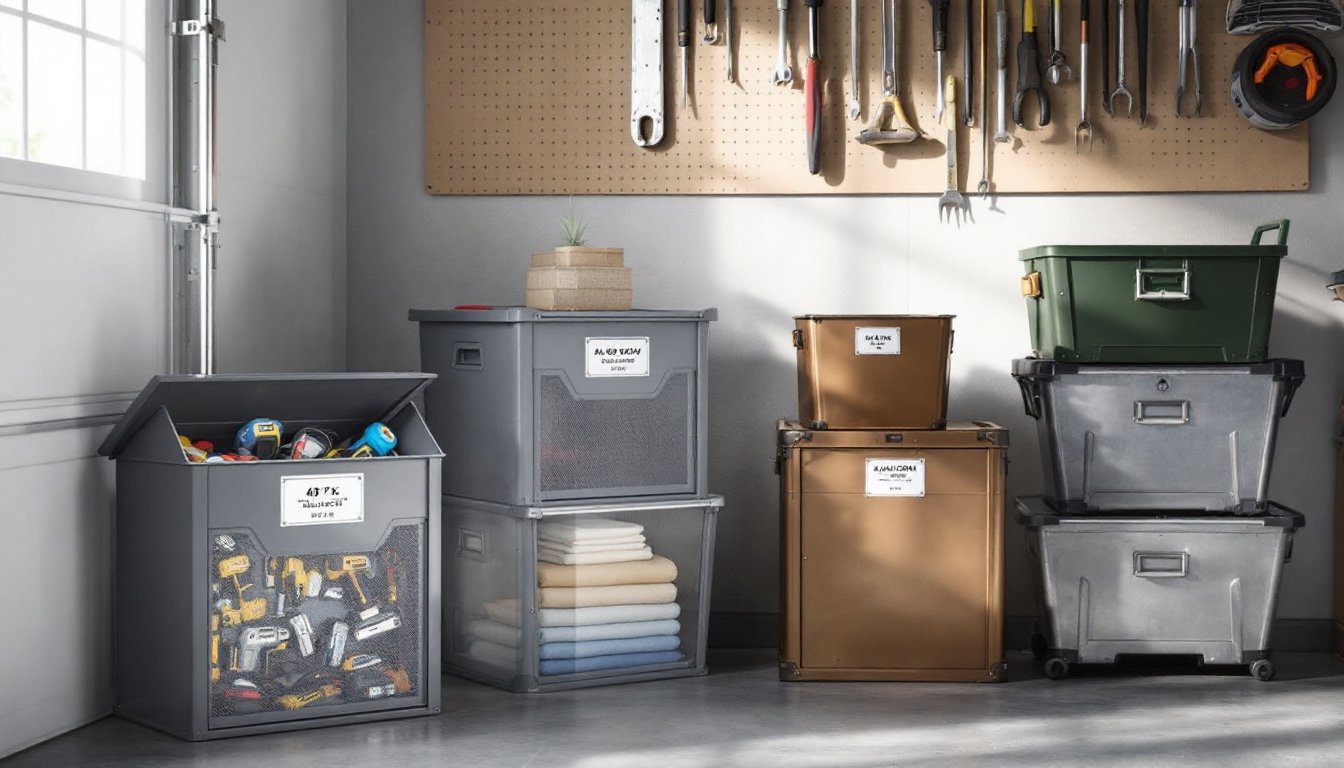
If you’ve ever stood in a cluttered garage, basement, or closet wondering where everything went, metal storage bins might be the solution you’ve been searching for. Large metal bins have become a staple for homeowners and DIY enthusiasts who want practical, durable, and visually clean storage without very costly. Unlike plastic containers that crack under weight or fabric bins that sag, quality metal bins hold up to heavy loads, resist moisture, and last for decades. Whether you’re organizing a workshop, tidying a garage, or creating stylish storage in living spaces, large metal bins offer flexibility and longevity that justifies the investment. This guide walks you through choosing, installing, and maintaining metal storage bins to transform how you organize your home.
Table of Contents
ToggleKey Takeaways
- Large metal bins provide durable, long-lasting storage that outperforms plastic and fabric containers by resisting moisture, heavy loads, and pests without off-gassing chemicals.
- Metal storage bins come in three types—industrial-duty (16-gauge steel for workshops and garages), decorative (lighter aluminum or 20-gauge steel for living spaces), and hybrid designs—each suited for different organizational needs and aesthetics.
- Proper selection requires measuring your inventory, weighing what you’ll store, calculating required bin volume with 20% headroom, and matching finishes to location for both functionality and visual appeal.
- Effective metal bin maintenance includes weatherproof labeling, internal dividers to prevent shifting, weight distribution with heavier items on bottom, and annual inspection of seams in damp spaces for surface rust.
- Decorative metal bins can be integrated into home décor by grouping varying heights, pairing with ottomans or benches, or customizing with metal-specific spray paint to match your style while maintaining storage efficiency.
Why Large Metal Bins Are Game-Changers for Home Organization
Large metal bins solve a fundamental storage problem: most homeowners have too much stuff and nowhere sensible to put it. Unlike cardboard boxes that deteriorate when stacked or wooden crates that splinter, metal bins maintain structural integrity over years of use. They don’t harbor dust mites, resist pest infiltration, and won’t off-gas chemicals into your space, a real advantage if you’re storing anything sensitive like seasonal decorations or important documents.
The durability factor matters most. A 16-gauge steel bin (roughly 1/16-inch thick) can safely hold 200–500 pounds depending on design, while thinner 20-gauge options max out around 150 pounds. This means you can stack bins vertically without worrying about the bottom ones collapsing. Metal also handles temperature and humidity swings better than wood or plastic: if your garage temperature swings from freezing to hot, metal won’t warp or become brittle.
Another overlooked benefit: visibility and accessibility. Large metal bins, especially industrial styles with slat sides or mesh panels, let you see contents at a glance without opening every container. This cuts search time and reduces the impulse to buy duplicates because you forgot what you already owned. The home organization tips found on established guides emphasize this visibility principle as crucial for systems that actually get used long-term.
Types of Large Metal Storage Bins and Their Best Uses
Metal storage bins come in three broad categories: industrial-duty models, decorative options, and hybrid designs. Knowing which fits your space prevents buyer’s remorse and ensures your bins work as hard as you do.
Industrial-Style Bins for Garage and Utility Spaces
Industrial metal bins, typically fabricated from 16-gauge to 12-gauge steel, are workhorses. These come in open-top or hinged-lid configurations, often with forklift pockets and reinforced corners for rough handling. Common dimensions include 36 × 24 × 24 inches and 48 × 40 × 42 inches, sizes that fit standard pallet racking and fit through standard doorways.
Best uses: tools, hardware, seasonal equipment, firewood, bulk gardening supplies, or anything requiring heavy-duty containment. If you’re storing anything over 200 pounds, bags of soil, cinder blocks, old power tools, industrial bins won’t buckle. Many feature slat or mesh sides, which improves airflow (critical for anything damp) and lets you spot contents without opening the lid.
One caveat: bare steel rusts without treatment. Look for models with powder-coat finishes (usually black, gray, or industrial green) or stainless-steel options if you’re in a damp climate or near salt air. The powder coat adds about 10–15% to the price but extends bin life by decades.
Decorative Metal Bins for Living Areas and Bedrooms
Decorative metal bins blur the line between storage and furniture. These typically use lighter-gauge steel (20-gauge or aluminum), come in finishes like brushed copper, aged bronze, or painted enamel, and prioritize aesthetics alongside function. Common sizes: 30 × 18 × 18 inches or 24 × 16 × 16 inches, smaller and lighter, suitable for bedside storage, entryway organization, or living room styling.
Best uses: blankets, throw pillows, off-season clothing, books, toy storage that doesn’t scream “industrial,” or decor that benefits from a curated look. These bins often feature rounded corners, tapered legs, or handle cutouts that make them functional furniture. Weight capacity runs 75–150 pounds, sufficient for most household items but not bulk materials.
Martha Stewart’s home organization guides frequently feature decorative metal bins as part of stylish, functional spaces, proof that metal storage doesn’t have to scream “warehouse.”
How to Choose the Right Size and Style for Your Space
Choosing the right metal bin requires three quick decisions: what you’re storing, how much space you have, and whether the bin needs to blend into décor or disappear into a utility corner.
Start with inventory and weight. List what you actually plan to store, not hypothetical future items. Measure the bulk of that inventory, then add 20% headroom. A single large bin (48 inches wide, 40 inches deep) holds roughly 2.5 cubic yards of loosely packed items, equivalent to filling four standard closet shelves. If you’re organizing a workshop, one large bin might hold ten power tools plus cords and bits: in a bedroom, one might hold a season’s worth of clothing. Write this down, it clarifies how many bins you actually need versus how many you’d like to buy.
Next, measure your space precisely. Don’t eyeball. Large bins are heavy when full: placing them in high-traffic areas requires clear sightlines and stable flooring. A 600-pound fully loaded bin (3 bins × 200 lbs each) on a typical garage slab is fine, but stacking near doorways creates hazards. Consider how you’ll access bins, a bin shoved in a dark corner feels like wasted space if you never use it because reaching it is a hassle.
Finally, match aesthetics to location. Industrial galvanized or powder-coat bins work anywhere you don’t care about visual continuity, garages, basements, sheds, utility rooms. Decorative metal bins belong in bedrooms, living rooms, entryways, or any space where visitors see them. The cost difference is modest (usually $30–100 per bin), so don’t compromise on aesthetics if the bin will be visible daily. A small space organizing strategy that many urban dwellers rely on is choosing dual-purpose pieces, decorative bins that store and look intentional eliminate the “hidden mess” feeling.
Practical Tips for Organizing and Maintaining Metal Storage Bins
Owning metal bins is one thing: using them effectively is another. Here’s how to keep them functional and long-lasting.
Organization inside bins:
-
Label everything clearly. Use a label maker and weatherproof labels on bin exteriors. Mark contents, date stored, and any relevant notes (“fragile” for collectibles, “do not stack” if the contents are delicate). Handwritten labels fade and peel.
-
Use dividers or smaller containers inside large bins to prevent items from shifting and to make retrieval easier. Even cheap plastic bins or cardboard dividers prevent a 48-inch bin from becoming a black hole.
-
Weight distribution matters. Put heavier items on the bottom, especially in tall bins. This prevents tip-over and makes smaller items easier to access.
Maintenance:
If your bins are powder-coated steel, wipe them occasionally with a dry cloth to prevent dust buildup. For bins in damp spaces (basements, garages near exterior walls), inspect seams and bottom corners annually for surface rust. Light surface rust can be wiped clean: if you spot deep pitting or rust spreading across panels, it’s time to replace that bin.
For stainless-steel bins, use a stainless-steel polish once or twice yearly to prevent fingerprints and minor oxidation. Galvanized bins require minimal upkeep, an occasional rinse if they’re exposed to heavy dust, but they naturally resist corrosion.
If bins are stacked, ensure the bottom row rests on level flooring. Concrete slabs are ideal: wood floors may flex over time, potentially stressing stack joints. Never stack bins higher than two tiers unless the manufacturer explicitly approves it and you’re using metal stacking frames designed for the weight.
Creative Ways to Integrate Metal Bins Into Your Decor
Metal bins don’t have to be purely utilitarian. Many homeowners blend them into décor in ways that feel intentional and stylish.
In living rooms and bedrooms: Pair decorative metal bins with a storage ottoman or bench to create a cohesive seating area that doubles as storage. A brushed-copper or aged-bronze bin placed beside a bed or under a window adds industrial-chic appeal without sacrificing functionality. Group bins of varying heights for visual interest, a large bin as a base, medium and small bins stacked or placed adjacent, all in the same finish.
In entryways and mudrooms: Use a long, low metal bin as a boot and shoe station. This keeps clutter corralled, protects flooring from tracked dirt, and looks cleaner than scattered shoe racks. Pair with hooks above for jackets or bags.
In home offices: Metal bins stacked vertically along a wall create industrial-style shelving without permanent fixtures or drilling into studs. Ideal if you rent or want to avoid permanent installation.
Finishing touches: Paint or stain the exterior of plain industrial bins to match your décor. A well-prepped, powder-coated bin can be painted with metal-specific spray paint (like Rust-Oleum High-Heat finishes), giving you custom colors at a fraction of designer bin costs. Do a test panel first to ensure paint adheres and doesn’t chip with normal handling.
Labeling as décor: Invest in decorative label templates or hand-lettered labels. This elevates the storage from “hidden clutter” to “curated, intentional space.”