
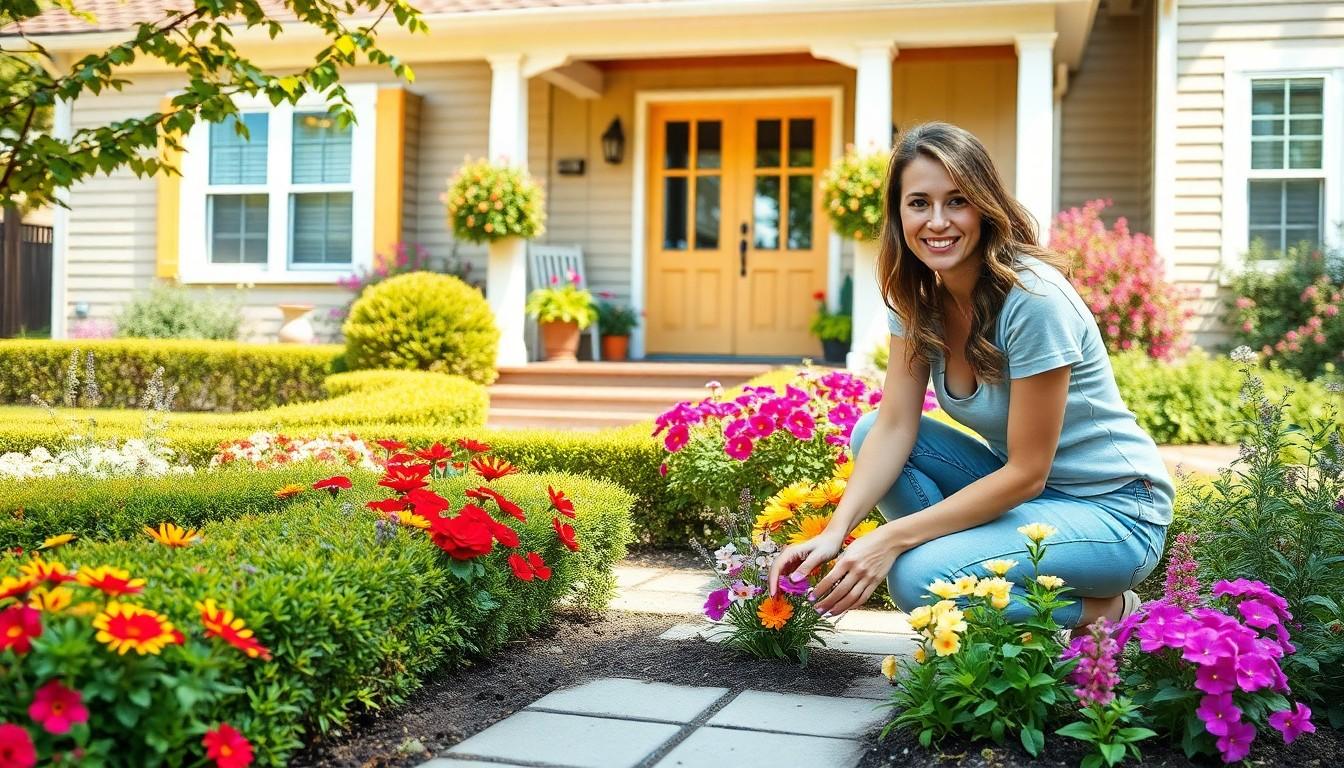
When it comes to curb appeal, the front yard is your home’s first impression, and let’s face it—nobody wants their house to look like it just rolled out of bed. A well-designed landscape can transform an ordinary facade into a welcoming masterpiece that makes passersby do a double take. Whether it’s vibrant flowers, neatly trimmed hedges, or a charming pathway, landscaping sets the tone for your home’s personality.
Table of Contents
ToggleImportance Of Landscaping In Front Of House
Landscaping in front of a house significantly impacts curb appeal. A thoughtfully designed front yard creates a warm and inviting atmosphere that attracts attention. Vibrant flowers add color, while neatly trimmed hedges provide structure. Together, these elements enhance the overall aesthetic, making a home more desirable.
An attractive landscape increases property value, often providing a return on investment. Well-maintained gardens and pristine lawns can elevate the selling price of a home by up to 15%. Local housing markets increasingly prioritize curb appeal, influencing buyer decisions.
Diverse plant selection promotes visual interest and environmental benefits. Native plants, for instance, require less maintenance and support local wildlife. Attractive walkways guide visitors and deter foot traffic through gardens, ensuring design elements remain undisturbed.
Seasonal landscaping provides year-round appeal. Spring blooms, summer greenery, and autumn foliage create changing vistas, keeping the landscape dynamic. Utilizing outdoor lighting highlights key features and enhances safety during nighttime.
Landscaping acts as an essential aspect of personal expression. Homeowners can showcase their style through different themes, colors, and materials. Practicality also plays a role; well-placed greenery can offer privacy and noise reduction, enhancing outdoor enjoyment.
Investing time and resources in front yard landscaping yields long-lasting rewards. A captivating landscape not only pleases the eyes but also creates a welcoming environment for family and friends. Overall, effective landscaping transforms a front yard into a reflection of the home’s character.
Key Elements Of Front Yard Landscaping
Key elements in front yard landscaping create a beautiful and inviting atmosphere. From plant selections to hardscaping features, every aspect enhances overall appeal.
Plant Selection
Diverse plant selections significantly enhance visual interest. Colorful flowers, sturdy shrubs, and ornamental grasses contribute to an attractive landscape. Native plants thrive with minimal care, supporting local wildlife while reducing maintenance. Seasonal blooms keep the yard vibrant throughout the year. Incorporating varying heights adds depth, creating a lush and inviting appearance. Grouping plants in odd numbers typically produces a more natural look. Consider climate adaptability to ensure plant longevity and health.
Hardscaping Features
Hardscaping features provide structure and functionality to front yards. Patios, walkways, and retaining walls serve as practical elements, guiding visitors and organizing space. Materials such as stone, brick, and pavers offer durability alongside aesthetic appeal. Incorporating raised beds creates visual interest while ensuring plants have sufficient soil depth. Well-placed benches or seating areas allow for relaxation and enjoyment of the surroundings. Finally, incorporating outdoor lighting enhances safety while highlighting key features after dark.
Tips For Effective Front Yard Design
Effective front yard design significantly enhances curb appeal. The following tips detail crucial elements for a visually appealing landscape.
Color Schemes
Choose vibrant colors for flowers and foliage to create a striking effect. Matching flowers with the home’s color can unify the landscape. Incorporating complementary colors attracts the eye and draws attention to key features. Seasonal blooms ensure visual interest throughout the year. Utilize flowering plants, perennials, and shrubs to create layers of color. Selecting plants with varying bloom times maintains a dynamic look, inviting informal exploration.
Layout and Flow
Design pathways that guide visitors through the landscape. Curved paths create a natural flow, inviting a leisurely stroll. Strategically placed seating areas encourage relaxation and enhance gathering spaces. Consider sightlines to highlight focal points like unique plants or sculptures. Grouping plants in clusters maintains visual complexity while simplifying maintenance. Mix heights and textures for added depth, making the front yard inviting from all angles.
Common Mistakes To Avoid
Overlooking maintenance can lead to a yard that appears unkempt. Regularly trimming plants, removing weeds, and refreshing mulch prevents unsightly growths and decay.
Ignoring the importance of proper plant placement often results in overcrowding. Each plant requires adequate space for growth, so organizing them by height and spread enhances visual appeal.
Neglecting seasonal considerations can detract from the beauty of the landscape year-round. Choosing a mix of seasonal plants ensures color and interest through all seasons, maintaining curb appeal.
Relying solely on plants may omit significant hardscaping elements. Adding pathways, patios, and decorative stones complement greenery and improve functionality, offering accessibility and structure.
Forgetting to create a cohesive color scheme can create discord. Unifying colors in flowers and shrubs can tie together various elements of the landscape, enhancing overall harmony.
Selecting non-native plants may lead to high maintenance needs. Native plants typically require less water and are well adapted to the local environment, promoting sustainability and reducing upkeep.
Ignoring environmental factors can hinder plant growth and health. Assessing sunlight, soil type, and drainage patterns before planting facilitates better choices, promoting thriving vegetation.
Disregarding the budget often results in overspending on landscaping projects. Setting a realistic budget helps prioritize essential features while planning for ongoing care requirements.
Underestimating the impact of lighting reduces safety and diminishes beauty. Strategically placed outdoor lighting not only enhances security but also highlights key landscape features during evening hours.
A lack of planning before beginning a project can lead to several issues. Developing a detailed design plan helps streamline the process, ensuring the final result meets expectations and enhances curb appeal.
Landscaping in front of a house is more than just an aesthetic choice; it’s a vital component of homeownership. A well-planned front yard not only enhances curb appeal but also reflects personal style and creates an inviting atmosphere. By incorporating diverse plants and hardscaping elements, homeowners can achieve a visually striking and functional space.
Regular maintenance and thoughtful design choices ensure that the landscape remains appealing throughout the seasons. Investing time and resources into front yard landscaping pays off in increased property value and a warm welcome for guests. Ultimately, a beautifully landscaped front yard transforms a house into a home, making it a cherished space for years to come.