
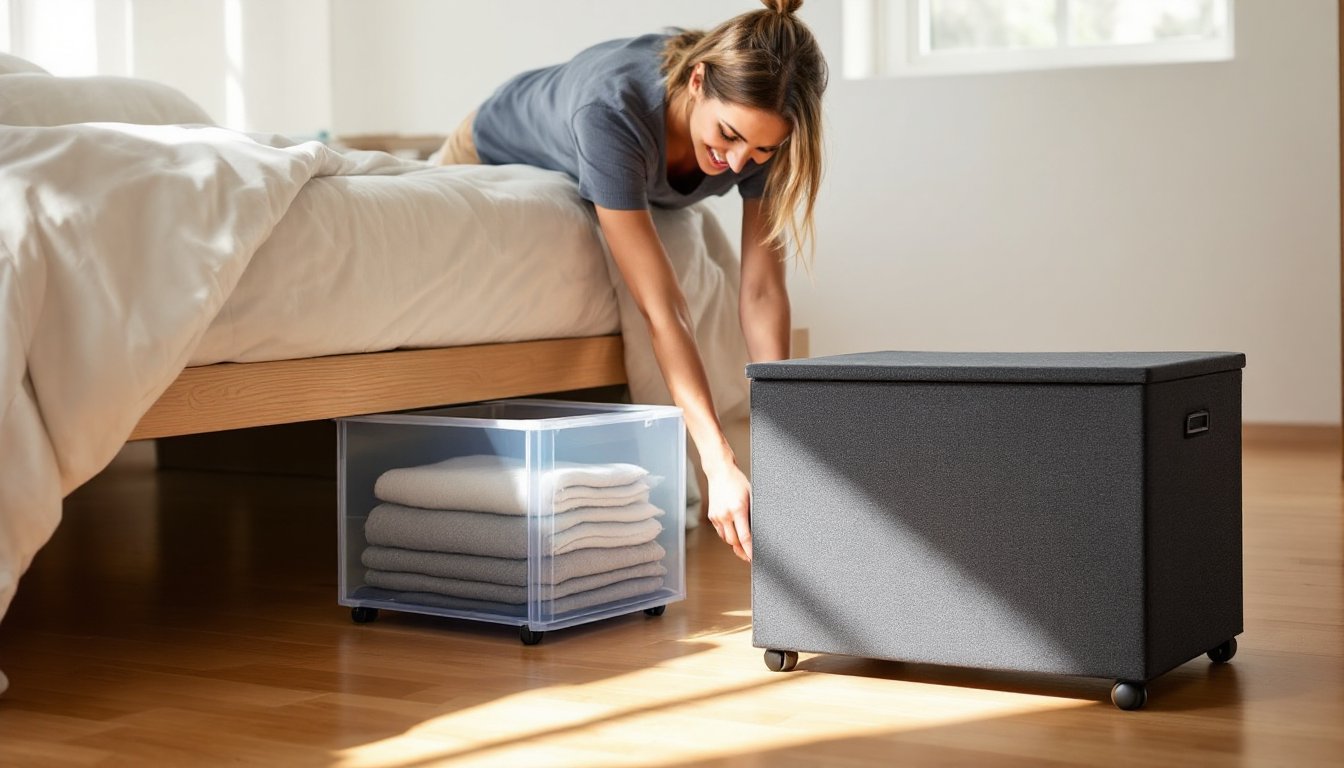
Bedroom clutter has a way of piling up fast, whether it’s seasonal clothes, extra bedding, or items you don’t reach for daily. Under bed storage with wheels offers a practical solution that works in any bedroom, from sprawling master suites to tight apartment bedrooms. Rolling storage keeps things accessible, slides in and out smoothly, and maximizes the empty square footage you already have. This guide walks you through the types available, how to measure your space, and how to set everything up for long-term organization success.
Table of Contents
ToggleKey Takeaways
- Under bed storage with wheels eliminates friction and makes accessing stored items 3–4 times more frequent than fixed solutions, turning dead space into functional organization.
- Before purchasing, measure your bed’s clearance height, usable width accounting for frame rails, and assess what you’re storing to ensure the right size under bed storage with wheels fits and meets your needs.
- Rolling drawers work best for flat items like shoes and linens, while flat rolling containers suit bulky soft goods like winter coats; always check for locking casters and sealed ball-bearing wheels to prevent dust accumulation.
- Label containers clearly, use drawer dividers inside rolling storage, and rotate seasonal items to maintain organization and prevent items from being forgotten over time.
- Avoid overloading under bed storage—most units safely handle 50–75 pounds—and always lock wheels after positioning to prevent drift when reaching underneath or moving around the bedroom.
Why Under Bed Storage With Wheels Is a Game-Changer
The area under your bed is often dead space. Without wheels, you’re stuck pushing a heavy box in and out by hand, which discourages you from actually using the storage. Adding wheels changes everything. They reduce friction dramatically, let you pull items out one-handed, and make it simple to access what’s stored without disturbing the bed frame itself.
Wheeled storage also solves the accessibility problem. With fixed under-bed containers, you’re essentially hiding items permanently. Wheels make rotating seasonal items, swapping out clothes, or finding that spare blanket a five-second task instead of a frustrating excavation. Many homeowners find they use rolling storage 3–4 times more often than fixed solutions because the effort barrier drops so low.
Another advantage: wheels allow you to clean under the bed without moving furniture. You can slide storage units out, sweep or vacuum, and slide them back. This small detail keeps dust buildup down and makes seasonal bedroom maintenance faster. Many storage solutions with wheels also come with lids or dust covers, adding another layer of protection.
Types of Under Bed Storage With Wheels
Rolling Drawers and Flat Containers
Rolling drawers sit lowest under most bed frames and offer shallow, pull-out functionality. They’re ideal for flat items, folded sweaters, seasonal linens, shoes, or board games. Most rolling drawers measure 12–18 inches tall and 24–39 inches wide, designed to fit under standard bed heights of 14 inches or more. Look for models with sealed wheels (ideally ball-bearing casters) that won’t accumulate dust and will roll smoothly even after months of storage.
Flat rolling containers, essentially low-profile plastic or fabric boxes on wheels, are the most affordable option and work well for soft goods like pillows, winter coats, or craft supplies. They typically range from 8–16 inches tall and come in various lengths. Plastic versions are easier to wipe clean: fabric-covered options tend to look more finished but require occasional vacuuming.
Both types let you store two or three units side by side under a standard queen or king bed. Make sure wheels lock or have a brake mechanism, nothing’s worse than a storage unit rolling out when you don’t intend it.
Elevated Beds With Built-In Wheeled Storage
Some bed frames ship with integrated rolling drawers built into the base. These units are custom-fit to the frame dimensions, so they use space more efficiently than aftermarket solutions. They’re more expensive upfront but eliminate the guessing game of whether storage will fit underneath.
If you’re considering a bed upgrade anyway, built-in wheeled storage can simplify your entire bedroom layout. The drawers are engineered to the frame’s specifications, meaning full-depth access and no dead corners. Some platform beds even include dual-drawer setups, effectively doubling your storage. The trade-off: you’re locked into that bed frame style, and replacing it later means losing the built-in storage advantage.
How to Choose the Right Under Bed Storage Solution
Measuring Your Space and Assessing Storage Needs
Before you buy, pull out a tape measure. You need three measurements: the clearance from the floor to the bottom of your bed frame, the width of the space on each side of any center support or leg, and the length (front to back) available for storage.
Bed height is the critical number. Standard bed frames sit 14–18 inches high: platform beds often range 12–20 inches. If your bed is only 12 inches tall, rolling containers must be no more than 10 inches high to slide underneath. If you’re uncertain, measure the actual gap, not just the bed’s listed height, metal frames sit differently than wooden ones.
Width also matters. A queen bed frame is roughly 60 inches wide, but you won’t have access to the full 60 under the bed. Subtract space for the frame rails, legs, and clearance on sides. Usually, you’ll get 45–55 inches of usable width, enough for two storage units side by side with a few inches to spare. King beds give you more wiggle room.
Next, assess what you’re storing. Bulky winter coats or pillows need deeper containers. Shoes, off-season clothes, or paperwork work fine in shallow drawers. Small families might need one rolling unit: larger households often find space for two or three. Consider rotation: if you’re storing seasonal items, you’ll want enough capacity to hold everything you don’t use in the current season.
Also think about accessibility. Will you need to pull storage out frequently, or is this a “set it and forget it” zone? If you’re accessing it weekly, buy units with quality wheels and locking casters. If it’s seasonal, a basic rolling container works fine.
Installation and Organization Tips
Installation is straightforward with most rolling storage. Assemble any drawers or containers per the manufacturer’s instructions, usually just a few snaps or bolts. Ensure wheels are attached firmly and move smoothly before sliding anything under the bed. If the wheels feel stiff, check for plastic trim or packing material still attached: remove it.
Measure clearance one more time as you slide the unit into place. Go slowly the first time, you want to confirm nothing catches on the frame or center support. Once in position, lock the wheels if they have brake mechanisms. This prevents drift if someone bumps the bed or you’re reaching underneath.
Organization makes the difference between “I know what’s in there” and “I have no idea what I stored.” Use clear plastic containers or containers with labels so you can identify contents at a glance. For fabric rolling drawers, consider drawer dividers or small boxes inside to keep items sorted. Socks, underwear, and accessories get lost otherwise.
Rotate items seasonally. When spring arrives, swap winter coats for summer linens. This keeps storage relevant and prevents the “I forgot I had this” syndrome. If you’re storing off-season clothes, add a moisture-absorbing packet (like silica gel) in humid climates to prevent musty smells.
One final tip: don’t overload rolling storage. Wheels have weight limits, most standard units handle 50–75 pounds comfortably. Overloading makes them harder to push and can damage the casters. Heavy items like textbooks or tools belong in fixed storage or a closet shelf, not under the bed.
According to 15 Best Under-Bed Storage Ideas for Every Bedroom, homeowners often pair wheeled storage with drawer dividers and clear labels to maximize both space and usability. The concept scales nicely for apartments and homes alike. Similar space-saving approaches work whether you’re managing a studio or a full bedroom, and budget-conscious bedroom refresh strategies show how rolling storage integrates into larger room makeovers without major renovation costs. If you’re designing your bedroom layout from scratch, small space living ideas demonstrate how accessible storage directly impacts how functional a room feels day-to-day.