
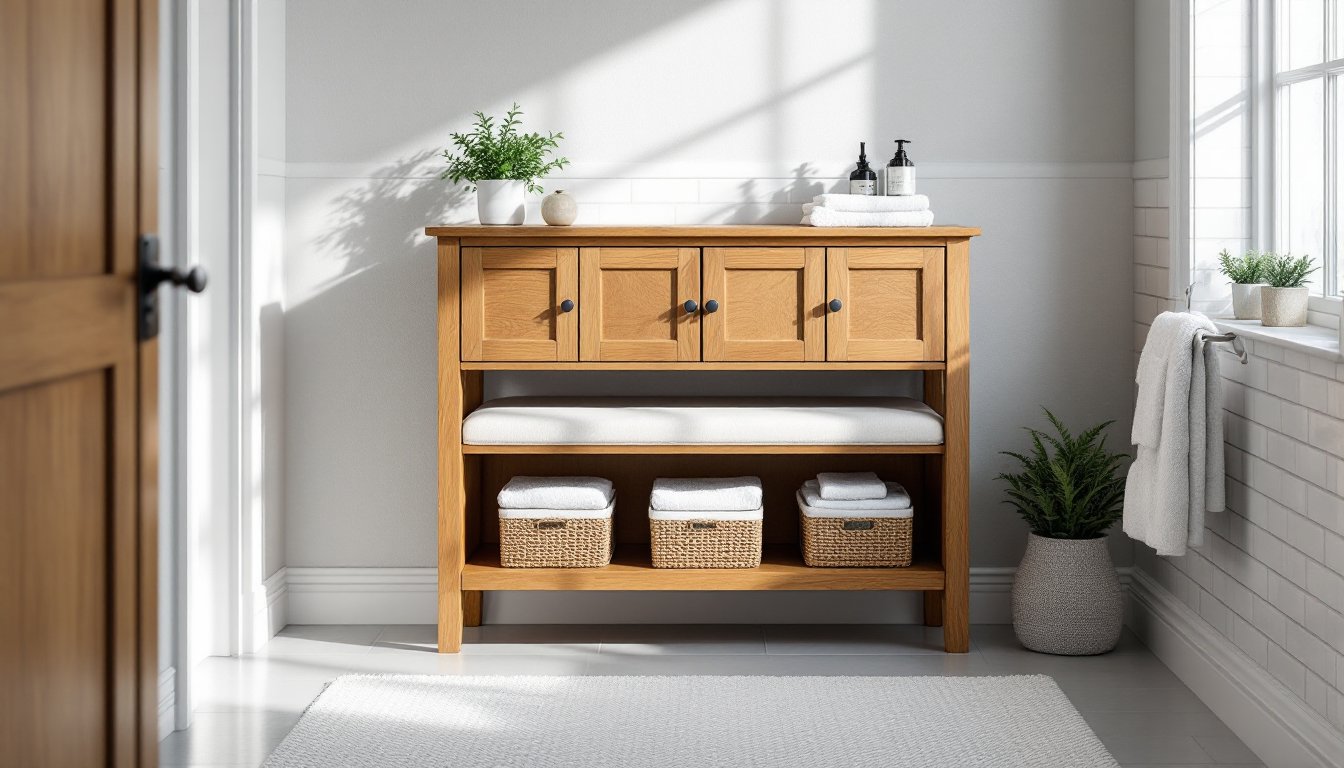
A bathroom bench with storage tackles one of the most common home storage challenges: where do you keep towels, toiletries, and daily essentials in a room with limited square footage? Unlike a standalone towel rack or shelf, a bench serves double duty as functional seating and hidden storage, making it one of the smartest additions a homeowner can make. Whether you’re working with a compact powder room or a sprawling ensuite, a storage bench maximizes vertical and horizontal space while adding a polished, intentional look to your bathroom. Modern designs range from minimalist open shelves to fully enclosed cabinets, and many fit surprisingly well into DIY renovation timelines and budgets.
Table of Contents
ToggleKey Takeaways
- A bathroom bench with storage solves clutter by combining functional seating with hidden organization for towels, toiletries, and daily essentials in limited-space rooms.
- Wooden benches with upholstered seats are the most popular style, but enclosed cabinet benches offer better moisture and dust protection, while open-shelf designs provide decorative flexibility and easier DIY construction.
- Measure carefully—standard bathroom benches run 36–48 inches wide and 12–18 inches deep—and leave 6 inches of clearance on sides and rear for comfortable access and door operation.
- Moisture resistance is critical; choose sealed finishes, moisture-resistant fabrics, and closed storage for high-humidity bathrooms, and maintain a 2-inch gap between the bench back and wall for air circulation.
- Stock benches cost $200–$500, custom pieces exceed $1,000, and DIY builds range from $150–$400, making a bathroom storage bench an affordable upgrade that works across bathrooms of all sizes and styles.
Why Choose a Bathroom Bench With Storage
A bathroom bench with storage solves the clutter problem most homeowners face. Instead of stacking linens on the back of the toilet or crammed under the sink, you gain an organized system that keeps everything accessible but hidden. This is especially valuable in smaller bathrooms where cabinet space is nonexistent.
Beyond storage, a bench provides comfortable seating, useful when applying makeup, trimming nails, or simply having a quiet moment. From a design perspective, it anchors the room and creates visual balance. A bench can transition your bathroom from purely utilitarian to a space that feels intentional.
Storage benches are also versatile. They work in master bathrooms, kids’ bathrooms, powder rooms, and even spa-like ensuites. Unlike built-in cabinetry, most benches are portable, so you can relocate them if your needs change. For renters or those hesitant about permanent fixtures, this flexibility is invaluable.
Types of Bathroom Storage Benches
Wooden and Upholstered Styles
Wooden benches with upholstered seats remain the most popular choice for bathrooms. Solid wood frames (oak, pine, or walnut) resist moisture better than plywood when sealed with appropriate finishes. The upholstered top, typically vinyl, microfiber, or moisture-resistant fabric, creates a comfortable, spa-like feel while protecting the wood underneath.
Many wooden benches feature a combination of open shelving on the bottom tier and closed storage above, giving you flexibility. Upholstery color matters: lighter tones (cream, gray, white) work in traditional or modern spaces, while darker fabrics hide water spots and stains better in high-moisture areas.
For DIY builders, wooden benches are accessible projects. A basic frame requires basic carpentry: cutting lumber to size, joining with pocket holes or mortise-and-tenon joinery, and finishing with waterproof stain or paint. Adding upholstery is trickier but achievable with a staple gun and fabric.
Open Shelf and Enclosed Cabinet Options
Open-shelf benches display baskets or rolled towels, adding decorative appeal. They’re easier to build than enclosed versions and don’t require upholstery, making them ideal for DIY projects. But, they offer less dust protection and require intentional styling to avoid looking cluttered.
Enclosed cabinet benches, where the storage compartments have hinged doors or drawers, maximize privacy and keep contents clean. These designs typically cost more and demand precision joinery. The trade-off: contents stay hidden and protected from moisture and dust.
Many homeowners choose a hybrid: an open lower shelf for display and closed upper storage for toiletries and medicines. This balances aesthetics with function. When selecting between styles, consider your bathroom’s humidity level. High-moisture ensuite baths benefit from enclosed cabinets: better-ventilated powder rooms can handle open shelving.
How to Select the Right Bench for Your Space
Start by measuring your bathroom carefully. A standard bathroom bench runs 36 to 48 inches wide and 12 to 18 inches deep: the height typically ranges from 18 to 22 inches, matching standard chair seat height. Measure the intended location, leaving 6 inches of clearance on sides and rear for doors to open fully and people to move comfortably.
Consider your bathroom’s architectural style and existing finishes. A rustic wooden bench suits farmhouse or transitional spaces: a sleek lacquered cabinet works in modern bathrooms. Moisture resistance is non-negotiable. If your bathroom lacks a exhaust fan or gets steamy, prioritize materials with closed storage and sealed finishes. Exterior water penetration causes swelling, warping, and mold, the most common failures in bathroom furniture.
Budget varies widely. Stock benches from big-box retailers run $200 to $500: custom wood pieces or designer upholstered benches exceed $1,000. DIY builds can cost $150 to $400 depending on material quality and whether you upholster yourself. The Handyman’s Daughter offers detailed woodworking project plans if you’re considering a build-it-yourself approach.
If you lack woodworking confidence, prefabricated options from home improvement stores are realistic. Look for products with adjustable shelves, moisture-resistant finishes (look for polyurethane topcoat or marine-grade sealant), and sturdy joinery, pocket holes are acceptable for hidden connections, but visible joints should be doweled or mortised.
Storage capacity matters too. Measure what you need to store: towels, toilet paper, cleaning supplies, or linens. A bench with an open lower shelf and one closed cabinet compartment holds roughly 20 to 30 pounds. If you’re storing heavy items or bulk linens, verify weight ratings before purchasing.
Don’t overlook ventilation around the bench. Leave a 2-inch gap between the bench back and the wall for air circulation, preventing moisture accumulation. If your bathroom consistently feels humid, choose a bench style with feet rather than a solid base, this allows air to flow underneath.
Resources like Remodelista’s collection of 10 storage benches showcase real-world options and styling ideas. Meanwhile, Fix This Build That provides detailed guides for those planning DIY construction, including tool recommendations and material sourcing tips.
Conclusion
A bathroom bench with storage is an investment in both function and comfort. Whether you purchase a ready-made piece or build one yourself, prioritize moisture resistance, proper sizing, and ventilation. The right bench transforms wasted space into organized storage while adding a polished, intentional touch to your bathroom. With careful planning and honest assessment of your skills and budget, this upgrade pays dividends for years.