
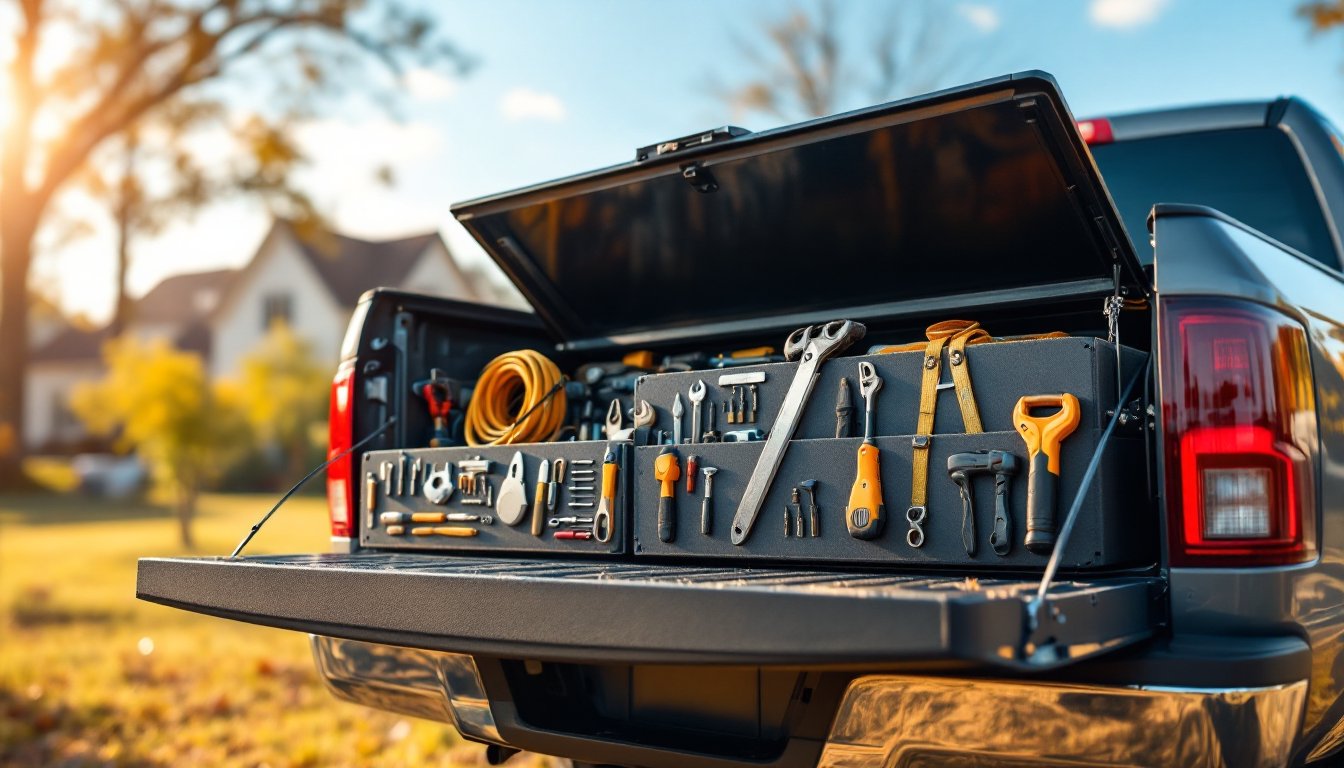
A truck bed is a tool waiting to be organized. Whether you’re hauling lumber to a weekend project, stashing camping gear, or keeping power tools safe from weather and theft, truck bed box storage transforms chaos into function. For DIYers and outdoor enthusiasts, the right bed box isn’t just convenience, it’s protection for expensive tools and materials, plus peace of mind knowing everything’s secure and accessible. This guide walks you through choosing, installing, and maintaining truck bed storage boxes that actually work.
Table of Contents
ToggleKey Takeaways
- Truck bed box storage protects expensive tools and materials from theft, weather damage, and corrosion while freeing up usable bed space for safer, organized hauling.
- Choose the right storage type based on your needs: underbed drawers for daily-use tools, over-bed boxes for larger items, aluminum chests for durability, or plastic boxes for budget-friendly non-tool storage.
- Proper installation requires grade-8 bolts, careful marking and drilling, tightening in a crisscross pattern, and verification after the first test drive to ensure a secure, rattle-free mount.
- Organize your truck bed box by category with dividers and labels, keep heavier tools low and centered for stability, and protect high-value power tools with foam or fabric wrapping.
- Annual maintenance including rust prevention, lock lubrication, hardware inspection, and bed protection extends your toolbox’s lifespan from 5 years to 15+ years and prevents costly repairs.
- Builders who organize truck bed storage in advance save 20–30 minutes per project setup, making the investment in proper storage boxes essential for both DIYers and professional tradespeople.
Why Truck Bed Storage Boxes Are Essential for DIY and Outdoor Enthusiasts
A bare truck bed invites problems. Tools rattle, bounce, and get damaged. Thieves see exposed equipment as an easy target. Rain, UV exposure, and road salt corrode metal and degrade wood, turning a $400 circular saw into rust in one season.
Truck bed storage boxes solve these problems. A locking toolbox keeps expensive drills, saws, and hand tools out of sight and weather-protected. Weatherproof sealed boxes protect lumber, insulation, and drywall from moisture swelling and warping. And a properly mounted box frees up bed space, you can stack materials higher and more safely when gear isn’t loose rolling around.
For the DIYer making regular supply runs or the tradesperson hauling equipment daily, secure storage also means faster setups and fewer missing items. You’re not hunting for your tape measure or level buried under a tarp. Everything has a place, and that’s worth the investment.
Types of Truck Bed Storage Boxes to Fit Your Needs
Not all truck bed boxes are created equal. Your choice depends on what you’re storing, how often you access it, and your budget.
Underbed Tool Drawers slide under the truck bed (typically 18–24 inches tall) and keep tools hidden and protected. They’re ideal for daily-use items and don’t eat into bed height. Most require securing bolts to the frame or bed rails: expect 1–2 hours for installation.
Over-Bed Boxes (also called chest-style or crossbed toolboxes) mount on top of the bed rails and hold larger items. They typically lock and are weatherproof, but they do reduce your usable bed space. Great for gear you don’t access constantly.
Aluminum Tool Chests are lightweight and corrosion-resistant, making them ideal for job sites and coastal areas. They’re pricier but last decades with minimal maintenance. Steel toolboxes are heavier and more affordable but require occasional rust prevention.
Plastic Storage Boxes are budget-friendly and weather-resistant. They work fine for non-tool items (camping gear, rope, covers) but lack the security or durability of locking metal boxes for expensive equipment.
Wheeled Toolbox Options
Wheeled toolboxes (often called tool carts) offer flexibility. You can roll your entire toolkit into the garage, onto a job site, or into a workshop without unloading. Look for models with locking wheels to prevent creeping, and verify the weight capacity matches your tool collection. They’re excellent for people who use the same tools across multiple locations, but they require bed space and tie-down straps to keep the box from sliding during transit.
Mounting and Installation Tips for Secure Storage
A badly mounted toolbox rattles loose, damages the truck bed, or spills tools onto the highway. Here’s how to do it right.
Inspect Your Truck Bed First. Check for rust, dents, or damage around mounting points. Minor surface rust can be wire-brushed and primed: structural rust or bed damage requires professional welding. Measure your bed length and width (trucks vary, a 6-foot bed is shorter than an 8-foot bed), and verify your box fits with at least 6 inches of clearance from the tailgate.
Gather Your Materials. You’ll need grade-8 bolts (high-strength steel), lock washers, and nuts sized to your mounting holes. Stainless steel hardware resists corrosion better than zinc-plated. Most toolboxes specify bolt diameter in their manual, typically ⅜ or ½ inch. Pick up a cordless impact driver (or drill) and a socket set: these beats hand-tightening bolts on a truck bed.
Mark and Drill. Position the toolbox centered on the bed. Use a tape measure and pencil to mark bolt holes on the bed rails or crossmembers. Drill pilot holes slightly undersized (reduces splitting and wallowing). Use a step drill bit for cleaner holes through thin truck bed material.
Bolt Down Properly. Insert bolts from underneath, add a lock washer, then thread the nut on top. Tighten in a crisscross pattern (like torquing car wheels) to distribute pressure evenly. Don’t over-tighten, you’ll strip threads or crack the box. Snug is the goal. Use Loctite thread-locker (removable strength) to prevent vibration-loosening.
Verify with a Test Drive. Take a short drive, stop, and re-check bolt tightness. Road vibration can loosen hardware the first few miles. Check again after a few days of use.
For underbed drawers, follow the same principle but mount to the frame (not the bed itself, which can shift). Most require shims to sit level and four anchor points. If your truck has a full-size spare tire underneath, confirm clearance before committing to an underbed box.
Organizing Your Truck Bed Box for Maximum Efficiency
A disorganized toolbox is almost as useless as no toolbox. You’ll waste time hunting for that one wrench, and you might double-buy tools you already own.
Divide by Category. Dedicate sections to hand tools, power-tool bits and blades, fasteners, and safety gear. Use drawer dividers, magnetic strips, or foam inserts to prevent tools from sliding during hard braking. A pegboard insert (if your box design allows) keeps frequently used hand tools visible and accessible.
Label Everything. A simple label maker or masking tape and a marker takes five minutes per drawer. Label both the location (“Bits – top left”) and what’s inside small bins (“1/8″ drill bits”). This saves you frustration on-site and prevents grabbing a wrench that’s already in your garage.
Weight Distribution Matters. Keep heavier items (angle grinders, heavy drills) low and centered. This lowers your truck’s center of gravity and reduces sway on turns. Lighter items and frequently accessed tools go in top drawers where you don’t have to reach.
Protect High-Value Items. Wrap expensive power tools in foam or fabric scraps to prevent dings and corrosion. A thin plastic bag or cloth over a drill protects the motor and chuck from dust. If you’re storing cutting blades or router bits, use blade guards or plastic cases, loose blades damage tools and eat up space.
Manage Cords and Straps. Coil extension cords and tool cords neatly. Use cable ties or cord organizers to prevent tangling. Ratchet straps and bungees should hang on hooks inside the box or on the outside, readily available but not loose in the bed.
Recent DIY project tutorials show that builders who organize tools in advance save 20–30 minutes per project setup. That time adds up.
Maintenance and Durability Considerations
A $300 toolbox should last 15 years with reasonable care. Neglect it, and rust and lock failure will shorten its life to five or six.
Protect Against Rust. If you have a steel toolbox, wash it twice a year with soapy water and a soft brush to remove salt, grit, and bird droppings. Dry completely, then apply a thin coat of paste wax or light machine oil (like 3-in-1 oil) to the exterior. For undercarriage bolts, a quick spray of penetrating oil (like WD-40) after winter keeps bolts from seizing. Aluminum and plastic boxes need only occasional washing, they’re naturally corrosion-resistant.
Inspect and Lubricate Locks. A stuck or corroded lock can leave you locked out or unable to lock up. Once a year, spray the lock mechanism with penetrating oil, work the key in and out a few times, then wipe dry. Replace weatherstripping if it’s cracked or hardened: it’s usually $15–30 per toolbox and prevents water intrusion.
Check Hardware Annually. Use a wrench to snug any loose bolts after winter (freeze-thaw cycles expand and contract metal). Replace any corroded or missing bolts immediately, a single loose corner is a weak point that gets worse.
Protect the Truck Bed. A rubber mat or bed liner under the toolbox reduces vibration, absorbs moisture, and protects the paint. If you don’t use a liner, a few layers of felt or rubber shim stock work. This costs almost nothing but prevents accelerated bed rust.
Experts discussing truck tool boxes and securing equipment emphasize that regular maintenance beats expensive repairs or replacement. A five-minute inspection every spring saves headaches and extends the box’s life significantly.
Conclusion
A truck bed without proper storage is wasted potential. The right toolbox, matched to your needs, properly mounted, and maintained, transforms your truck into an efficient mobile workshop. Whether you’re a weekend warrior or a full-time tradesperson, the investment pays for itself in tool protection, theft prevention, and project efficiency. Spend the time upfront on solid installation and organization, and your truck bed storage will serve you reliably for years.