
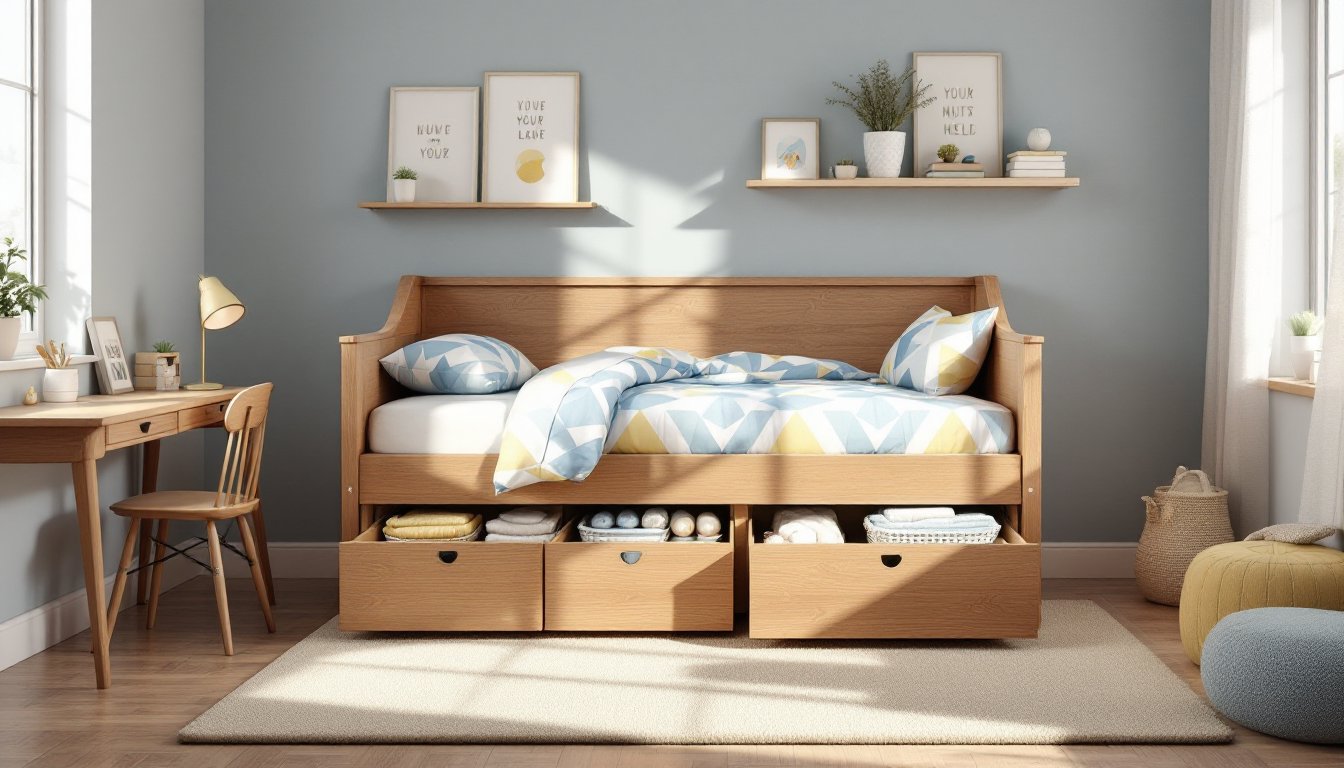
Storage beds for kids have become essential furniture for modern families managing limited bedroom square footage. A kids bed with storage combines sleeping space with built-in drawers, shelving, or under-bed compartments, turning wasted space into functional organization. Whether you’re furnishing a toddler’s room, setting up a shared bedroom for siblings, or maximizing a boy twin bed with storage or girl twin bed with storage for an older child, these designs eliminate the need for bulky dressers and toy chests. Parents appreciate how twin beds with storage for kids reduce clutter while giving children ownership of their personal space. For growing families in tight quarters, a kid bed with storage represents practical furniture that evolves with your home.
Table of Contents
ToggleKey Takeaways
- A kids bed with storage eliminates the need for separate dressers and storage bins by combining sleeping space with built-in drawers, shelves, and compartments.
- Storage beds teach children organization habits early while maximizing floor space—especially valuable in small bedrooms where loft-style and vertical designs prevent cramped feeling.
- Twin beds with storage for kids range from simple captain’s beds ($300+) to elaborate loft designs, with options for budget-conscious families through RTA furniture, secondhand markets, and DIY building.
- Safety is paramount for elevated storage beds: verify CPSC-compliant guardrails (5″ above mattress), proper ladder angles (75°), and weight capacity (200–250 lbs for twin beds) before purchasing.
- Solid wood construction outlasts engineered alternatives, and proper assembly or professional installation ensures structural integrity and prevents wobbling frames that compromise safety.
Why Choose A Kids Bed With Storage
Storage beds solve the equation most parents face: limited bedroom space but endless toys, books, clothes, and gear. Unlike a standard bed frame, storage beds incorporate drawers, shelves, or cubbies directly into the design, eliminating the need for additional furniture pieces. This is especially valuable in smaller homes, apartments, or when multiple children share a room.
Beyond space savings, these beds encourage organization habits early. Kids learn that their belongings have a home, making cleanup faster and reducing parental nagging. A boy full size bed with storage or a girls twin bed with storage teaches responsibility while keeping rooms functional for assignments, play, and sleep, not just storage.
Cost-effectiveness matters too. Rather than buying a bed, a dresser, a nightstand, and storage bins separately, one multi-functional piece handles multiple needs. Over time, this approach saves money and reduces impulse furniture purchases.
Maximizing Space In Small Bedrooms
Small bedrooms demand smart choices. A twin bed with storage for kids lifts the sleeping surface, freeing floor space underneath for additional activities or furniture. Loft-style designs are especially effective: they create usable square footage on the ground level while keeping the bedroom from feeling cramped.
Vert ical storage is your ally in tight quarters. Beds with headboard shelving, wall-mounted organizers above the bed, or tall dresser-style bases use height rather than sprawl across floor area. A kids storage bed with an open-frame design also prevents the room from feeling cave-like compared to solid wood alternatives.
Layering textures and colors within the storage bed itself, such as woven baskets in under-bed drawers or painted cabinet fronts, makes organization visually appealing, so your child actually uses the storage rather than piling clothes on the floor.
Popular Styles And Designs
Storage bed designs range from simple drawer bases to elaborate multi-level play zones. Understanding the main types helps you match your child’s age, bedroom layout, and family budget.
Captain’s Beds are the workhorse of kids’ storage furniture. The bed frame sits atop a large dresser-style base with three to four drawers spanning the width underneath. These are sturdy, offer generous storage, and work for toddlers through teenagers. A boy twin bed with storage in this style typically measures 39″ wide by 75″ long (standard twin dimensions), with the base adding 12–18″ of depth.
Platform Beds eliminate the traditional box spring, using a solid or slatted frame with built-in storage. Drawers pull from one or both long sides, and some versions include shelving or cubby holes. They’re sleek, modern-looking, and practical, especially for a twin bed with storage for kids who need quick access to daily items.
Loft and Bunk Variations maximize vertical real estate. A full loft raises the sleeping surface 5–6 feet, creating a den, desk, or play zone underneath. Bunk beds with storage combine two sleeping levels with drawers along the side steps or within the frame itself. These suit families with two children or single children who want extra play space.
Loft And Bunk Bed Variations
Loft beds transform cramped rooms. By elevating the mattress, you free up 40–60 square feet of usable floor area. Younger kids often use this space for a play corner: older kids set up a desk for assignments. The design keeps the room feeling open even though the bed taking up wall space.
Bunk beds with storage integrate drawers into the staircase or along the bed frame’s sides. This design is ideal when two children share a room and floor space is at a premium. Some models include a desk or shelving on the lower bunk, creating a workspace below while keeping the upper bunk purely for sleep.
Safety is paramount with elevated designs. All lofts and bunks must meet federal safety standards (CPSC guidelines), including guardrails at least 5″ above the mattress surface, proper ladder angles, and load-bearing capacity clearly marked. Most quality models from reputable manufacturers meet these standards, but always verify before purchasing.
How To Choose The Right Bed For Your Child
Selecting the right storage bed depends on your child’s age, room dimensions, and what you actually need to store.
Measure your space first. Account for the bed’s length, width, and height, plus clearance for doors, windows, and walkways. A boy full size bed with storage measures 54″ wide by 75″ long, significantly larger than a twin but fitting better in master bedrooms or rooms with ample square footage. A standard twin works in tighter spaces but may feel small once kids hit their teens.
Consider what you’re storing. A young child needs space for seasonal clothes, stuffed animals, and blankets. A school-age child requires room for textbooks, sports gear, and art supplies. A teen might benefit from a dresser-style base with multiple drawers for a full wardrobe. Think honestly about whether your child’s belongings justify the storage depth.
Weight limits matter. Most quality twin beds with storage handle 200–250 lbs per mattress: full-size versions support 300+ lbs. A loft bed supporting a desk and additional activity underneath should be rated for higher loads. Check the manufacturer’s specifications, cheap furniture often has questionable weight ratings.
Growth timeline is real. A toddler bed is outgrown by age 5 or 6. A twin bed lasts through early adulthood if built solidly. Investing in quality now means fewer replacements later. Conversely, don’t over-engineer a space for a 4-year-old who’ll want a completely different aesthetic by age 10.
Material choices affect durability and aesthetics. Solid wood (pine, oak, or maple) costs more but lasts decades and can be refinished. Engineered wood or MDF is budget-friendly and lighter but won’t withstand rough play or moisture as well. Metal frames are lightweight and modern but can squeak as kids grow heavier.
Safety Features And Assembly Considerations
Storage beds involve structural considerations that standard frames don’t. Safety isn’t optional, it’s foundational.
Check guardrails and ladder design. On loft and bunk beds, guardrails should be present on all open sides, running at least 5″ above the mattress surface. Ladders must have a rungs spaced 10–12″ apart and positioned at an angle of 75° for safe climbing. Younger children (under 6) shouldn’t sleep in upper bunks: the risk of falling outweighs the space savings.
Verify load-bearing capacity. The bed’s frame, connections, and support legs must handle your child’s weight plus jumping, roughhousing, and the occasional guest. A 200-lb rating is common for twin beds, but active kids can stress connections. Heavier children or boys twin beds designed for older kids should have a 250+ lb rating. Check the manual and don’t exceed specs.
Inspect hardware before assembly. Bolts, screws, and dowels hold everything together. Use the correct fasteners specified in the manual, don’t substitute. Loose bolts are a leading cause of wobbling storage bed frames. After assembly, check tightness monthly, especially in the first few months.
Assembly quality makes or breaks durability. Follow the manufacturer’s instructions precisely. If you’re uncomfortable with the process, hire a handyman. A structural mistake, misaligned rails or improperly seated supports, can compromise safety. Many stores offer assembly services for a fee: it’s worth it for peace of mind.
Mattress fit is critical. A twin mattress should sit snugly within the frame, not shifting or tilting. Improper fit creates safety hazards and voids warranties. Confirm mattress dimensions before purchasing the bed.
Budget-Friendly And DIY Options
New storage beds range from $300 for basic twin captain’s beds to $2,000+ for solid wood lofts or custom designs. Budget-conscious families have other paths.
Affordable ready-to-assemble (RTA) furniture from mainstream retailers offers decent storage beds at $400–$800. These use particleboard or plywood rather than solid wood, but they’re functional and lighter to move. Assembly takes 2–3 hours and a power drill. Check customer reviews for reports of stability issues before buying.
Secondhand market options include Facebook Marketplace, Craigslist, and local classifieds. Solid wood storage beds often show up as families upgrade. Inspect for loose joints, water damage, or damage from pets before committing. A $200 used pine captain’s bed that’s structurally sound beats a $400 flimsy new one.
DIY building is feasible if you’re comfortable with basic woodworking. Resources like Ana White offer free plans for simple storage bed frames, twin beds with drawer bases, and loft designs. These projects typically use 2×4 lumber, plywood, and standard hardware from home improvement stores.
Building a basic twin captain’s bed (frame plus two drawer boxes) requires:
- Materials: Two 2×10 boards for frame rails, 2×4 lumber for frame support, 3/4″ plywood for drawer boxes, wood screws, wood glue, and drawer slides (typically $50–$80 per set).
- Tools: Circular saw or miter saw (for cutting lumber at angles), drill-driver, square, tape measure, clamps, and safety gear (goggles and dust mask) for cutting.
- Time commitment: 12–16 hours for a competent DIYer: longer if this is your first woodworking project.
Sites like The Handyman’s Daughter and Fix This Build That feature step-by-step tutorials for beginner-friendly projects. Start with simpler designs before tackling lofts, which involve load-bearing calculations and structural integrity checks.
A key advantage of DIY: you control materials quality. A kid bed with storage built from solid 2×4 pine will outlast similar-priced RTA furniture because you’re not relying on dowels or cam locks to hold stress points together.