
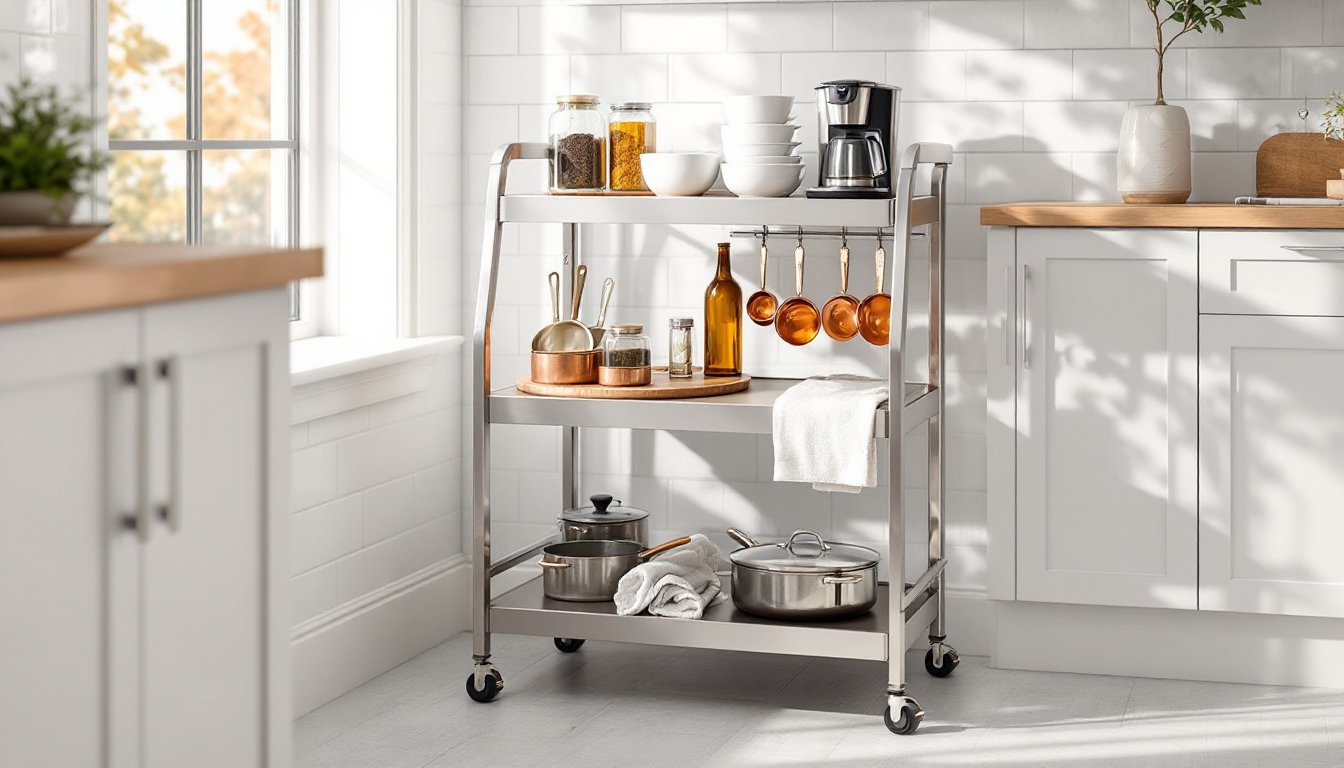
A kitchen cart on wheels transforms how you work in tight spaces. Whether you’re prepping meals in a galley kitchen, adding extra counter real estate, or creating a mobile beverage station, a rolling cart adapts to your needs without requiring renovation or permanent installation. These versatile pieces have moved beyond simple utility, today’s kitchen carts blend function with design, offering thoughtful storage solutions that fit contemporary kitchens. This guide walks you through choosing, placing, and maximizing a kitchen cart that actually works for your cooking habits and home layout.
Table of Contents
ToggleKey Takeaways
- A kitchen cart on wheels solves insufficient counter space without renovation, making it ideal for apartments and homes where permanent cabinetry additions aren’t feasible.
- Choose a three-tier kitchen cart (16–20 inches wide, 24–30 inches deep) with adjustable shelving and locking wheels for optimal storage and stability.
- Organize your kitchen cart by frequency of use—daily items on top, seasonal supplies in the middle, and heavier cookware on the bottom tier to maximize efficiency.
- Quality casters rated for 200–300 pounds and swivel wheels enable smooth movement and tight maneuvering on various flooring types.
- Position your kitchen cart perpendicular to your work triangle in galley kitchens or as a visual divider in open-concept spaces to enhance workflow without blocking pathways.
- Stainless steel carts offer durability and moisture resistance, while wood options add warmth; select materials based on your kitchen’s style and maintenance preferences.
Why a Kitchen Cart on Wheels Is Essential for Modern Home Organization
A kitchen cart solves a problem many homeowners face: insufficient counter space without the cost or disruption of remodeling. Rolling carts work in apartments, condos, and homes where cabinetry additions aren’t feasible. Unlike built-in islands, they’re portable, move them to create an extra prep station during holiday cooking, then tuck them away when space opens up.
The efficiency gain is real. A standard three-tier cart holds mixing bowls, baking sheets, pantry overflow, and cooking utensils in organized compartments. You reduce the number of steps between the stove, refrigerator, and prep area, which saves time and reduces fatigue during extended cooking sessions. Mobile storage also works for entertaining: position a cart near the sink as a self-serve beverage station or near the dining area for dessert service.
Beyond the kitchen, these carts serve home offices, craft spaces, and laundry rooms. The flexibility and immediate accessibility make them a practical investment for any homeowner managing multiple zones in a single room.
Key Features to Look for When Choosing a Kitchen Cart
Not all kitchen carts are created equal. Smart selection upfront prevents buyer’s remorse and ensures the cart actually supports your workflow.
Storage Capacity and Layout Options
Before shopping, assess what you’re storing. Are you keeping small appliances like a coffee maker or food processor? Do you need space for baking supplies, spices, or fresh produce? The answer determines tier count and depth.
A two-tier cart works for light storage and beverage service. A three-tier cart (roughly 16–20 inches wide, 24–30 inches deep, and 28–36 inches tall) offers room for mixing bowls, sheet pans, and small cookware. Some carts include a drawer, which is superior to open shelves for storing utensils, dish towels, and smaller items away from dust and splashes.
Look for adjustable shelving if you anticipate storing items of varying heights, a mixing bowl takes more vertical space than a baking sheet. Enclosed shelves or backing materials prevent items from rolling off during movement, especially on uneven flooring. Consider whether you need a towel bar, hooks, or a utensil rail on the sides.
Material Durability and Design Style
Material affects both longevity and aesthetic. Stainless steel carts resist moisture, stains, and are easy to wipe clean, ideal for kitchens with high humidity or frequent splashing. They work in farmhouse, industrial, and modern styles. Wood carts (often oak or bamboo) add warmth and fit traditional or Scandinavian aesthetics but require more maintenance and can swell or warp near heat or moisture.
Mid-range options combine wood tops with metal frames, balancing durability with style. Plastic or composite materials are lightweight, budget-friendly, and surprisingly durable for light-duty use. But, they may show wear faster and don’t age as gracefully as wood or stainless steel.
Wheel quality matters more than most buyers realize. Casters rated for 200–300 pounds per cart should handle daily use comfortably. Look for locking wheels so the cart stays put when stationary, especially on tile or hardwood. Swivel casters enable tight maneuvering: fixed casters are more stable but less flexible.
How to Maximize Storage Efficiency in Your Kitchen Cart
A kitchen cart’s real value emerges when you organize it intentionally. Random placement of items defeats the purpose.
Group by frequency of use: keep daily staples (coffee, tea, breakfast items) on the top tier where they’re easy to grab. Reserve the middle shelf for seasonal items or backup supplies. Use the bottom tier for heavier items like pots, pans, or a small appliance. This vertical zoning reduces reaching and bending.
Use drawer dividers, small bins, or wire baskets to corral loose items. Spice jars, measuring cups, and utensils stay accessible and don’t shift when the cart moves. Label containers so family members know where things belong. A lazy Susan on one shelf rotates bottles or jars within arm’s reach without removing the shelf.
If your cart has a drawer, designate it for quick-grab items: dish towels, oven mitts, small utensils, or condiment packets. Avoid cramming it full: a slightly underfilled drawer closes smoothly and items don’t jam.
Seasonal rotation keeps the cart fresh and functional. Swap out holiday baking supplies for everyday items as seasons change. This prevents clutter and ensures the cart’s weight stays manageable when moving it. A well-organized kitchen cart shouldn’t feel like a junk drawer on wheels.
Best Placement Strategies for Kitchen Carts in Different Layouts
Where you position the cart determines its utility. A cart sitting in an awkward corner provides less benefit than one placed thoughtfully.
Galley kitchens benefit most from a cart positioned perpendicular to the main work triangle (sink, stove, fridge). Rolling it between two base cabinets or along the end wall creates extra prep space without blocking the main walkway. Measure the aisle width before purchasing: even a compact cart shouldn’t reduce your passage to less than 36 inches.
In open-concept kitchens, use the cart as a visual room divider between the kitchen and living area. Position it on a rug or runner to define the space and protect flooring from wheel marks. A cart with backing or enclosed shelves on the kitchen side masks clutter from the living room view.
L-shaped kitchens work well with a cart filling the gap at the corner or positioned in the open center area. This adds counter depth at the weakest point and keeps high-traffic zones clear. For island-free kitchens, a cart mimics island function without permanent installation.
Keep carts away from direct heat sources (ovens, stovetops) and out of heavy foot-traffic lanes where people navigate constantly. Position it where you actually prep or cook, not as an afterthought in a corner. Test the placement for a few days before committing to permanent positioning, workflow often reveals the ideal spot.
Conclusion
A kitchen cart on wheels addresses real organizational challenges in modern homes. By selecting one with appropriate storage capacity, durable materials, and quality wheels, then organizing it strategically and placing it where you cook, you gain functional counter space and improved workflow without renovation. Whether you’re building a DIY version using free woodworking plans or selecting a ready-made cart, the key is matching the design to your kitchen’s layout and your actual cooking habits. A thoughtful kitchen cart becomes indispensable, the kind of investment that pays dividends every time you step into the kitchen.