
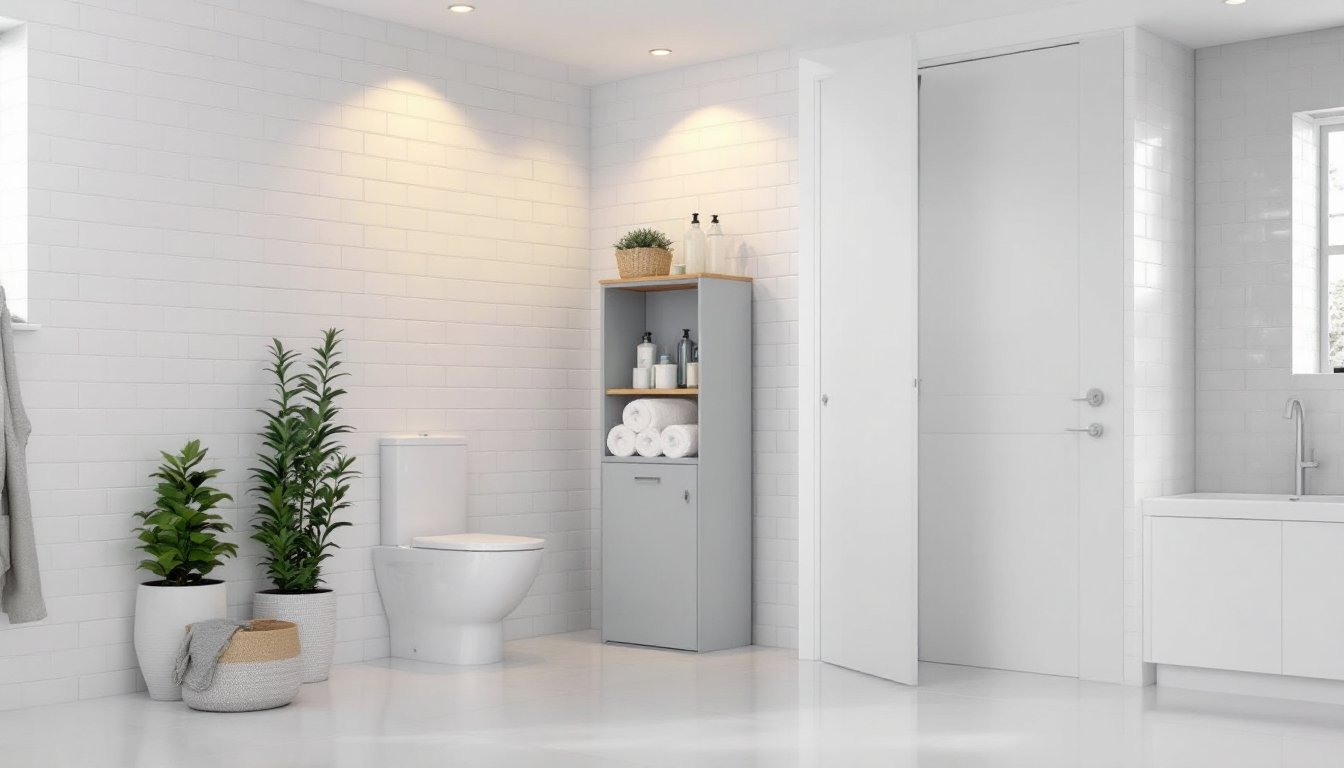
Small bathrooms often feel cramped, and clutter only makes things worse. A narrow bathroom storage cabinet is one of the smartest investments a homeowner can make to reclaim that wasted wall space and keep essentials organized. Whether you’re working with a galley-style powder room or a tiny ensuite, vertical storage solutions can transform awkward corners and gaps into functional storage that doesn’t eat up precious floor space. This guide walks you through the types of narrow cabinets available, how to choose the right one for your layout, and where to place it for maximum impact.
Table of Contents
ToggleKey Takeaways
- A narrow bathroom storage cabinet, typically 9 to 15 inches wide, fits into wasted wall spaces to maximize organization without consuming valuable floor area.
- Tall narrow cabinets (60–72 inches) maximize vertical storage in small bathrooms, while corner and wall-mounted options work best for tight layouts and powder rooms.
- Accurate measurements of wall space, door swing radius, and ceiling height are critical before purchasing to avoid installation problems.
- Material choice matters: solid wood offers durability but needs moisture-resistant finishes, while MDF and metal frames provide budget-friendly, humidity-resistant alternatives.
- Wall-mounted installation requires locating studs, using 2.5-inch wood screws, and ensuring at least two anchor points for stability and safety.
- Strategic placement above the toilet, beside vanities, or in corners, combined with monthly moisture maintenance, ensures long-term functionality and prevents humidity damage.
Why Narrow Storage Cabinets Transform Small Bathrooms
In a small bathroom, every inch counts. A narrow cabinet, typically 9 to 15 inches wide, slides into spaces where standard vanities simply won’t fit. Between the toilet and the wall, beside a narrow door frame, or in that awkward corner: these gaps become storage gold when you use the right cabinet.
Clutter on counters makes bathrooms feel smaller. A dedicated cabinet keeps medicines, towels, cleaning supplies, and personal items out of sight. The visual breathing room alone makes the space feel larger, even if you’re not actually gaining square footage. Plus, organized storage means you spend less time hunting for things (and less money replacing items you forgot you owned).
Narrow cabinets also work well in master bathrooms with limited real estate. Pairing one beside the vanity or above the toilet frees up drawer and counter space for daily essentials. For renters or those who want flexibility, some options require zero permanent installation, a genuine bonus in temporary living situations.
Types Of Narrow Bathroom Storage Cabinets To Consider
Tall Narrow Cabinets For Vertical Storage
Tall narrow cabinets (often 60 to 72 inches high and 9 to 12 inches wide) maximize vertical space in small bathrooms. These are perfect for bathrooms where floor space is minimal but wall height is plentiful. Look for models with adjustable shelves so you can customize spacing for tall bottles, stacked towels, or smaller jars. Styles range from freestanding units you can place anywhere to wall-mounted versions that anchor permanently to studs.
Freestanding tall cabinets offer flexibility. You can move them if you rearrange or renovate later. Wall-mounted models look sleeker and save floor space, but installation requires locating wall studs and using proper anchors (usually 2.5-inch wood screws into 16-inch on-center studs). Many homeowners find five tall bathroom storage cabinet ideas useful when planning layouts, especially IKEA hacks that deliver storage on a budget.
Key tip: Measure your ceiling height and account for baseboards. A 72-inch cabinet may not fit if your ceiling is only 96 inches high and baseboards eat 4 to 6 inches of space.
Corner And Wall-Mounted Options
Corner cabinets are heroes in tight layouts. They tuck neatly into the junction where two walls meet, using space that’s often wasted. Corner units come in tall, mid-height, or short sizes: choose based on what you need to store and how much visual weight you want.
Wall-mounted cabinets attach directly to studs and can sit above the toilet, beside a vanity, or in any corner. They free up floor space entirely, which is especially valuable in powder rooms or tiny ensuites. Installation requires a drill, level, stud finder, and anchors rated for the cabinet’s weight. Always check the manufacturer’s weight capacity and use the correct fasteners for your wall type (drywall anchors for non-stud mounting aren’t reliable for heavy cabinets).
Mid-height cabinets (30 to 40 inches tall) work well above toilets. They provide storage without blocking sightlines across the room, maintaining an open feel even in tight quarters.
Choosing The Right Cabinet For Your Space
Start by measuring. Note the wall space where you’re considering the cabinet: width, height, and distance from adjacent fixtures (toilet, sink, door swing). Measure twice. A cabinet that’s too wide will jam against a door or block the toilet’s swing radius.
Decide what you’re storing. Towels need different shelf spacing than medicine bottles. Medications and cleaning products might require locked or child-safe cabinets. Home storage cabinets designed for bathrooms often include adjustable shelves, which let you adapt over time as your needs change.
Consider material and finish. Solid wood offers durability and classic appeal but costs more and can warp in humid bathrooms, apply a water-resistant primer and finish. Painted MDF (medium-density fiberboard) is budget-friendly and moisture-resistant if sealed properly, but it’s less durable than solid wood if the finish gets nicked. Metal frames with glass or wood shelves blend modern and functional styles while resisting humidity.
Check depth. Standard bathroom cabinets are 12 to 15 inches deep. Shallower cabinets (8 to 10 inches) work in tight hallway bathrooms: deeper ones (15+ inches) hold more but project further into the room. Measure your actual needs before buying.
Budget matters. Freestanding cabinets start around $80 to $150 for simple styles: wall-mounted or custom options run $200 to $600+. Don’t skimp on quality if humidity is high in your bathroom, cheap finishes peel and moisture damage spreads quickly.
Installation And Placement Tips
For wall-mounted cabinets:
- Use a stud finder to locate wall studs. Mark them lightly with pencil.
- Hold the cabinet against the wall at desired height. Check level with a spirit level, uneven cabinets look sloppy and doors won’t close smoothly.
- Mark screw holes. Drill pilot holes at stud locations.
- Install the cabinet with 2.5-inch wood screws into studs. Use at least two anchor points (ideally three for heavier models).
- Install shelves and adjust to height you need.
For freestanding units:
Place on a level floor. Use shims under feet if the floor slopes slightly. Tall narrow cabinets can tip if not anchored, especially in homes with toddlers or pets, use wall straps to secure the top to a stud if stability is a concern.
Placement strategy:
Above the toilet is the obvious choice, but avoid blocking the bathroom window if natural light is limited. Beside the vanity works if you have wall space and it doesn’t interfere with doors or fixtures. Corner placement in a large master bath keeps the cabinet out of the main walkway. In a powder room, even a 9-inch-wide cabinet beside the door provides surprising storage.
Leave clearance for cabinet doors and drawer pulls. A 15-inch-wide cabinet needs a full 15 inches of unobstructed swing space. Plan your placement so cabinet doors won’t whack anyone’s shins or hit the wall opposite.
Ventilation and moisture:
Bathrooms get humid, especially after showers. Ensure your cabinet is mounted or placed where air can circulate, not directly against the exterior wall where condensation pools. Leave gaps on the sides if possible. Wipe the cabinet exterior monthly to prevent moisture buildup on the finish.
Conclusion
A narrow bathroom storage cabinet transforms clutter into organization without eating up precious square footage. Whether you choose a tall vertical unit, a corner solution, or a wall-mounted design, the key is measuring carefully and matching the cabinet to your actual storage needs and bathroom layout. Proper installation and placement ensure years of functional, good-looking storage in even the smallest bathrooms.