
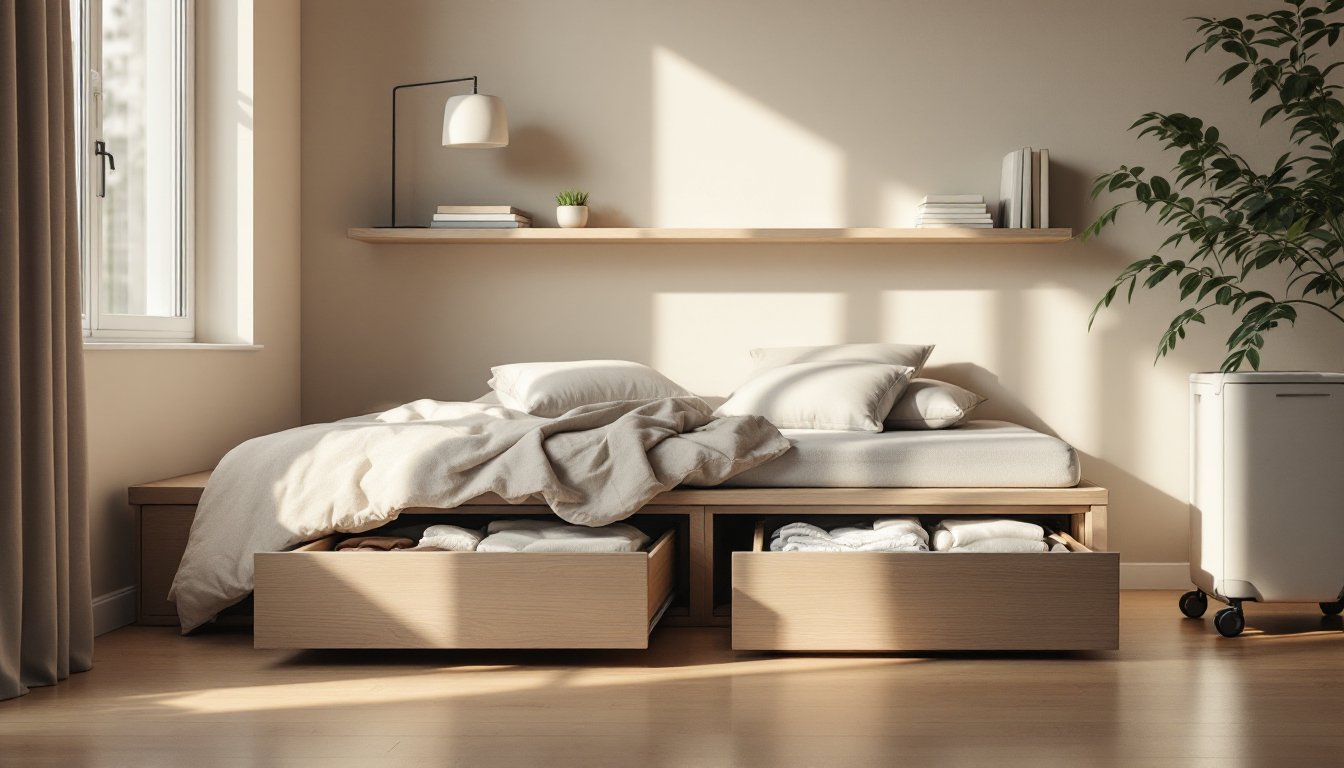
Bedroom clutter creeps up fast. Clothes, seasonal items, extra bedding, and forgotten gear pile up until your bedroom feels more like a storage unit than a retreat. The good news? A well-planned bed storage strategy transforms wasted space into functional real estate without requiring a gut renovation. Whether you’re working with a compact apartment bedroom or a sprawling master suite, smart storage solutions paired with your bed multiply usable space. This guide walks through practical options, from simple drawers to custom-built projects, so you can reclaim your room and keep daily clutter at bay.
Table of Contents
ToggleKey Takeaways
- Under-bed storage solutions, from rolling plastic containers ($20–$60) to built-in drawers ($150–$400), transform wasted space into functional storage without requiring bedroom renovations.
- Platform beds with integrated drawers and shelving eliminate floor clutter in small bedrooms, though they cost $400–$1500+ and require evaluation of drawer hardware quality and nightstand clearance.
- Headboard and wall-mounted storage, including floating shelves and cabinets, maximize vertical space and keep essentials within arm’s reach while maintaining clear sightlines above the mattress.
- Choosing the right bed storage depends on three factors: volume of items to store, budget and timeframe, and maintenance tolerance—with renters favoring removable solutions and homeowners benefiting from permanent installations.
- DIY bed storage projects like under-bed drawers and floating shelves are achievable with basic carpentry skills, typically costing $30–$100 per project and taking 4–6 hours to complete.
Understanding Your Bed Storage Options
Before committing to any bed storage solution, consider your bedroom layout, the height of your bed, and what you’ll actually store. Not all storage options work with every mattress or bed frame.
Under-Bed Storage Drawers and Containers
Under-bed storage is the fastest win for most bedrooms. The space beneath a standard bed frame sits empty, use it. You have two main routes: rolling plastic containers or built-in drawers.
Rolling plastic storage containers (typically 18″ tall or less) slide under most beds. Look for models with wheels and a fitted lid to keep dust out. These work best for lightweight items like seasonal clothes, extra pillows, or craft supplies. The drawback? They gather dust, require pulling out to access, and don’t feel built-in. Cost runs $20–$60 per unit.
Under-bed storage drawers are permanently mounted to the bed frame itself. They pull out on ball-bearing slides and feel like part of the bed. Drawers require bed frames 12–15 inches off the floor, platform beds and traditional frames usually qualify. Height matters: standard nightstands sit about 26–28 inches tall, so drawers need clearance or they block sightlines. A quality pair of under-bed drawers costs $150–$400 depending on materials and size. Wood construction (pine or plywood with a simple finish) is sturdy and affordable: premium options use dovetail joinery and hardwoods.
Measure your bed frame’s underside before ordering. Walls, heater vents, or floor registers often block depth or width.
Platform Beds With Built-In Storage
Platform beds are workhorses for storage-focused bedrooms. Instead of a traditional frame with legs, a platform sits low to the ground (12–16 inches) and features built-in drawers, shelving, or cubbies underneath. Some designs include headboard storage too. The upside: zero wasted space beneath the mattress and a cohesive look. The downside: they’re pricier ($400–$1500+ for solid wood) and harder to move.
When evaluating a platform bed, confirm mattress support. A good platform distributes weight evenly with slats spaced 3–6 inches apart (some cheap options have sparse support, which voids warranty). Check whether drawers use full-extension ball-bearing slides, cheaper hardware sticks and wears out fast. Also verify: Will drawers still open if nightstands or dressers sit next to the bed? Does the headboard depth eat into wall space behind the bed? These details affect whether the storage actually works day-to-day.
Headboard Storage and Wall-Mounted Solutions
The wall above and around your bed is prime real estate often left blank. Headboard storage and wall mounts add visual interest while keeping items within arm’s reach.
Headboard storage shelves work especially well in small bedrooms. A floating shelf or recessed headboard with cubbies holds books, a lamp, phone charger, and small decor without adding bulk. Standard depth is 8–10 inches: deeper shelves can feel top-heavy. Install shelves at least 48 inches above the mattress top to avoid bumping your head and to maintain clear sightlines. Floating shelves require wall studs and proper anchors, toggle bolts or heavy-duty drywall anchors if studs aren’t aligned. For structural confidence, consult your home’s framing layout or use a stud finder.
Wall-mounted cabinets or cubbies offer closed storage, which hides clutter and dust. A 4-cubby unit above the headboard can hold seasonal items without requiring floor space. Depth typically runs 6–12 inches: check clearance to ensure the unit doesn’t protrude into walkways.
Hanging organizers (fabric or canvas pockets mounted to the headboard) cost $20–$50 and suit lightweight items like phones, glasses, or books. They’re renter-friendly since they attach with command strips or adjustable hooks. The tradeoff: they look casual and don’t suit a polished bedroom aesthetic.
Wall solutions require identifying studs if you’re mounting anything over 20 pounds. Standard wall studs are 16 inches on center: a stud finder costs $15–$50 and saves a lot of guess-and-check frustration.
Choosing the Right Storage for Your Space
Your bedroom’s layout and lifestyle determine which storage option makes sense. Ask yourself three questions:
1. How much stuff are you actually storing? If you’re stashing an extra comforter and a couple of boxes, under-bed drawers or a shelf suffice. If you rotate seasonal wardrobes or have hobby supplies, a platform bed with multiple drawers or combination solutions (wall shelves + under-bed storage) work better. Be realistic about volume, overstuffing beds and shelves defeats the purpose and makes accessing items a chore.
2. What’s your budget and timeframe? A rolling plastic container costs $30 and takes five minutes to set up. Built-in drawers run $150–$400 and require installation or a compatible bed frame. A new platform bed costs $500–$2000 installed. If you’re renting, favor rolling containers or wall-mounted solutions that don’t damage walls. If you own and plan to stay, a platform bed or permanently installed under-bed drawers make sense.
3. What’s your maintenance tolerance? Under-bed storage requires pulling out containers and wiping dust. Wall shelves attract visual clutter if left unorganized and need dusting. Drawers with soft-close slides are quieter and gentler on joints but cost more than standard hardware. Built-in cabinetry is low-maintenance but is permanent.
Bedroom dimensions matter too. In a small room (under 120 square feet), a tall dresser plus wall shelves may work better than a platform bed with drawers, bed-mounted storage limits access. In a large room, a full platform bed lets you maximize vertical space without feeling cramped. Measure your room and sketch the layout before deciding.
DIY Bed Storage Projects You Can Build
If you’re handy or want a custom solution, building under-bed drawers or a simple wall shelf is achievable. Here’s what beginners and intermediate builders tackle:
Building Under-Bed Drawers
Under-bed drawers are simpler than they look. You’ll need basic carpentry skills and tools: a miter saw (or circular saw with a guide), a drill, pocket hole jigs (optional but helpful), and ball-bearing drawer slides. A typical project takes 4–6 hours per drawer.
Materials (per drawer):
- ¾” plywood or pine boards (for the box sides, front, and back)
- ½” plywood (for the bottom)
- A pair of full-extension ball-bearing slides (22–24 inches: $30–$60)
- Wood glue, 1¼” pocket hole screws or finish nails, and sandpaper
- Paint or stain (optional)
Basic steps:
- Measure your bed frame’s underside to determine drawer height (usually 10–14 inches) and depth (18–24 inches, accounting for walls and obstacles).
- Cut your plywood to size. Standard dimensions: 24″ wide × 20″ deep × 12″ tall for a compact drawer.
- Assemble the box using pocket holes (easier and stronger) or corner braces.
- Attach the bottom panel.
- Sand and finish.
- Mount slides to the box and bed frame using the hardware’s pilot hole template. Slides must be level and parallel or drawers bind, use a level.
- Slide in and test.
Resources like Instructables walk through variations (beveled corners, built-in legs, etc.). Start with one drawer to learn the workflow before building multiple.
Building a Floating Shelf
A floating shelf looks sleek above the headboard and holds books and décor without legs.
Materials:
- Solid wood board (1×10 or 1×12, 3–4 feet long) or plywood wrapped in edge-banding
- Heavy-duty floating shelf brackets (rated for 50+ pounds: $20–$40 per pair)
- ¼” or ½” toggle bolts or through-studs (if studs align)
- Wood finish (stain, paint, or polyurethane)
Steps:
- Find studs using a stud finder. Standard stud spacing is 16″ on center.
- Mark bracket locations on the wall (usually 24–32″ apart for 3-foot shelves).
- If studs are aligned, drill pilot holes into studs and screw brackets directly. If not, use heavy-duty toggle bolts into drywall.
- Slide the wood shelf onto the brackets’ support rails and secure per bracket instructions.
- Load test before placing heavy items.
Safety note: Always wear safety glasses when drilling overhead. Dust falls into eyes. Use a drill with a clutch to prevent wrist injury if the bit binds.
For detailed guidance on beginner woodworking projects, check builder-focused tutorials. Start with shelves, they’re lower-risk than drawers if measurements aren’t perfect.
When to Hire Help
If you lack tools, aren’t comfortable with power tools, or need structural modifications (wall reinforcement, stud placement), hire a carpenter or handyperson. A few hours of professional labor ($80–$150/hour) beats a botched project or safety mishap. Many big-box home improvement stores also offer assembly services for a flat fee.
Conclusion
Bed storage doesn’t require magic or expensive renovations. Rolling drawers, platform beds, floating shelves, and DIY projects each solve real space problems at different price points and effort levels. Start by measuring your bed, assessing what you’ll store, and honestly weighing your budget and skills. A combination approach, under-bed drawers plus a wall shelf, often beats any single solution. The payoff is a cleaner bedroom and easier access to the things you actually use. Pick one strategy, commit to it, and you’ll wonder how you ever lived without that extra space.