
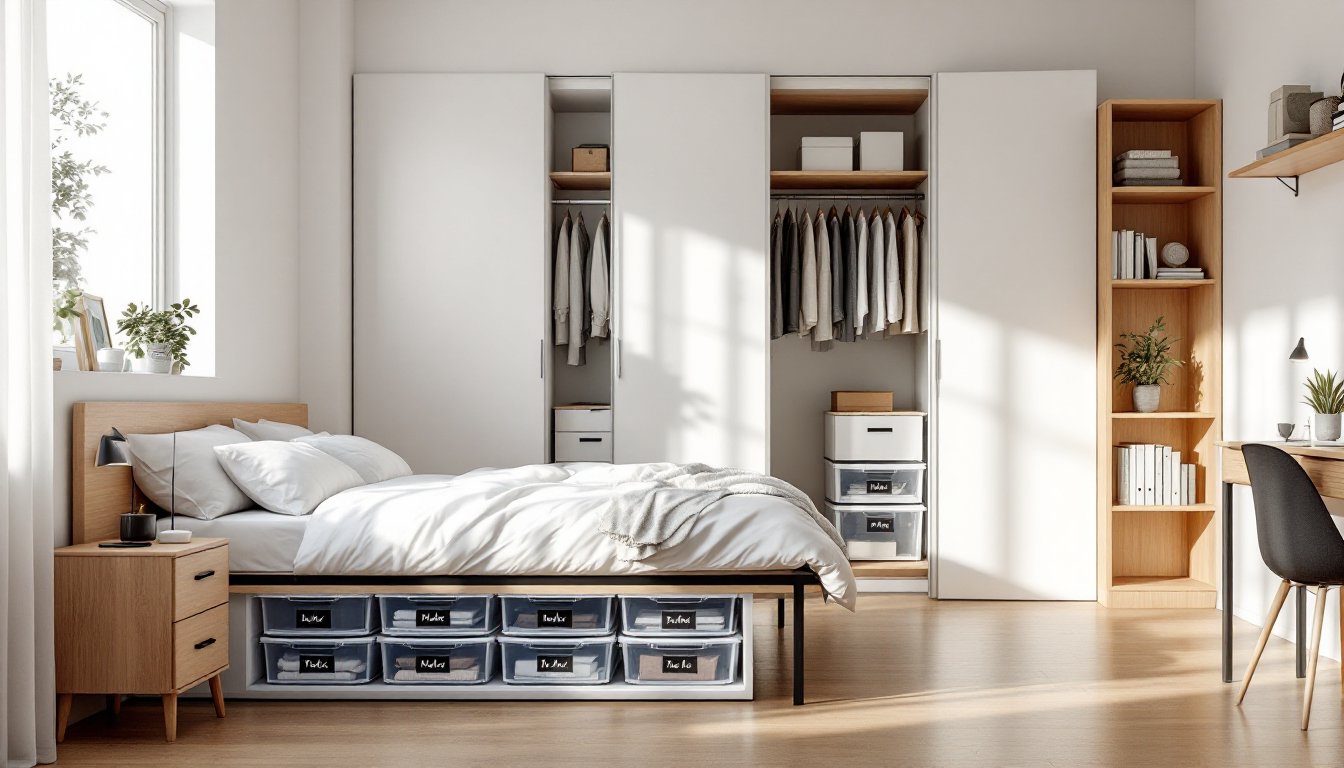
Bedroom clutter doesn’t just hide under piles of clothes, it steals peace of mind and usable floor space. Whether your bedroom is a compact apartment corner or a sprawling master suite, smart storage solutions are the difference between chaos and calm. This guide walks through practical, achievable storage improvements that work with your space, not against it. You’ll find strategies for maximizing closet systems, reclaiming under-bed real estate, leveraging vertical walls, and choosing dual-purpose furniture that earns its square footage. The goal isn’t Instagram-perfect organization: it’s creating a functional bedroom where everything has a place and you can actually find it.
Table of Contents
ToggleKey Takeaways
- Assess your bedroom space and storage needs before purchasing solutions by measuring dimensions, auditing belongings, and sorting items into daily-use, seasonal, and occasional categories.
- Install double hanging rods and shelving in closets to maximize vertical storage capacity, which costs less than room additions and instantly recovers hidden space.
- Under-bed storage with flat plastic bins and proper labeling transforms wasted floor space into accessible storage for off-season items and bedding.
- Floating shelves and wall-mounted storage eliminate floor clutter in small bedrooms by leveraging vertical walls with secure anchors into studs or heavy-duty fasteners.
- Choose multi-functional furniture like storage benches, beds with built-in drawers, and ottomans that serve your actual daily habits rather than theoretical organizational goals.
Assess Your Bedroom Storage Needs
Before you buy a single shelf or storage bin, measure your space and honestly audit what you own. Start by identifying problem areas: Does your closet overflow? Are nightstands buried under books and devices? Is floor space eaten up by piles? Take photos of the current layout, it sounds silly, but photos reveal patterns you’ll miss standing in the room.
Next, measure the bedroom’s usable dimensions. Account for door swings, window sills, heating vents, and electrical outlets. A floating shelf looks great on a wall until you realize it’s directly above a baseboard heater. Sketch a rough floor plan with measurements in inches: you don’t need architectural precision, just accurate dimensions. Note ceiling height too, this matters for wall-mounted storage that won’t feel cramped or impossible to reach.
Sort belongings into three categories: daily-use items (clothes, shoes, gadgets), seasonal items (holiday decorations, off-season wardrobes), and occasional-use items (guest linens, luggage, old projects). This breakdown tells you which storage needs quick access and which can live higher up or deeper in a closet. The goal is matching storage type to frequency of use. Daily-use items belong in accessible, visible spots: seasonal stuff goes up high or under the bed: occasional-use items can handle the back of a closet or a storage unit.
Built-In Closet Systems and Organization
Your bedroom closet is often the largest single storage opportunity. Don’t assume the builder’s standard closet rod and single shelf are the best you can do. A reorganized closet costs far less than an addition and instantly recovers hidden capacity.
Start with vertical thinking. Most bedroom closets have 8 to 9 feet of wall height but only use the top and a hanging rod. Install a second hanging rod 42 to 48 inches above the first, this creates room for shirts, pants, and dresses at two levels. Leave headroom so hangers don’t get jammed. Measure carefully before drilling: you’ll likely hit studs or need to anchor into drywall with appropriate fasteners.
Adding home storage cabinets is another upgrade many closets need. Custom closet systems (like those from California Closets or IKEA PAX) offer flexibility, but they’re pricey. Budget alternatives include wire shelving units or basic wooden shelving bought from a big-box retailer. Wire shelving is cheap and adjustable: wood is more polished but harder to modify later.
Shelving and Drawer Configurations
Narrow closets benefit most from shelving above hanging space. Install shelves 12 to 16 inches apart for folded clothes and linens. Use clear plastic bins, they let you see contents without opening them, a huge time-saver on rushed mornings. Label each bin. Drawers, if you’re building or adding them, should be deep enough for winter sweaters (about 18 inches) but accessible without having to reach to the back. Pull-out baskets work well here too and cost less than built drawers.
For shoes, avoid floor piles. Shoe racks that hang from the closet rod or door-mounted organizers keep pairs visible and contained. If you have floor space, a low shoe shelf frees up wall room. Rotate out-of-season shoes into under-bed storage or a top shelf to reduce daily clutter. The key principle: vertical space before floor space.
Under-Bed Storage Solutions
Under-bed real estate is either wasted or brilliant, depending on how you use it. A standard queen bed sits roughly 18 to 24 inches off the floor (platform beds sit lower: adjustable beds sometimes higher). That gap is perfect for off-season storage, extra bedding, and rolled luggage.
Flat plastic bins with lids are the standard choice for under-bed storage. They slide in and out easily, protect contents from dust, and stack if your bed height allows. Label the front edge so you don’t have to pull them out to remember what’s inside. Avoid stacking more than two bins deep unless you have excellent mobility in the room, retrieving something from the back becomes a chore.
Rolling bed risers lift a standard bed frame 4 to 6 inches, dramatically expanding under-bed room. This works if your mattress and frame can handle the weight (check manufacturer specs) and if higher clearance suits your bedroom proportions. Risers also make vacuuming and dusting easier. The tradeoff: a bed that sits noticeably higher can feel less cozy and may be awkward to climb into, especially for kids or older adults.
For soft items like off-season clothes, vacuum-seal storage bags compress items to one-third their original size. Just ensure items are clean and completely dry before sealing, moisture trapped in plastic can cause mildew. Pull items out a few weeks before you need them so they can re-inflate fully. They work, but many people find vacuum bags a pain to manage long-term.
Wall-Mounted and Vertical Storage
Vertical walls are underused in most bedrooms. A single floating shelf above a nightstand or desk reclaims surface clutter. Wall-mounted shelves, cabinets, and hooks transform dead space into functional storage without consuming floor area, critical in smaller bedrooms.
Floating shelves must be anchored securely into wall studs or installed with heavy-duty fasteners into drywall. A stud finder ($15–$30) is essential. Studs run 16 inches apart horizontally, so you’ll likely hit at least one. If a shelf location falls between studs, use toggle bolts or heavy-duty drywall anchors rated for the weight you plan to load. A shelf holding books or decorative boxes needs serious support: something rated for 50+ pounds is standard for bedroom use. Never trust a shelf to cheap plastic anchors.
Floating Shelves and Wall Cabinets
Floating shelves come in dozens of styles and materials. Solid wood (oak, pine, walnut) looks high-end but costs more and requires finishing. Engineered wood (veneer over plywood) is cheaper and durable if edges are sealed. Metal-frame shelves with wood tops blend industrial and warm aesthetics. Wall cabinets with doors hide clutter and dust, useful for keeping bedrooms feeling calm and uncluttered.
Measure shelf depth carefully. A 10-inch shelf works for books and small boxes: a 12-inch shelf accommodates larger items and plants. Depths beyond 12 inches start to feel intrusive unless your wall space is generous. Keep spacing even and level, uneven shelves feel wrong and make items slide. A laser level ($20–$40) beats eyeballing, especially in older homes with uneven walls.
Wall hooks and pegboards maximize vertical storage for hats, scarves, bags, and cords. Over-door organizers (fabric pockets that hang on the back of a bedroom door) hold socks, accessories, and charging cables without taking wall space. This approach works best when you keep items lightweight and don’t overcrowd the door, it affects how the door swings and can damage hinges over time.
Multi-Functional Furniture for Dual Purpose
Every piece of bedroom furniture is an opportunity to add storage if you choose wisely. A bed frame with built-in drawers replaces a separate dresser. Storage benches at the foot of the bed hold blankets and pillows while offering a place to sit. Nightstands with shelves or drawers beat open surface nightstands. The rule: if furniture costs the same and does double duty, it’s the smarter buy.
Ottomans with hinged tops offer hidden storage for throws, seasonal clothing, or extra bedding. They’re furniture-grade seating, so they don’t feel like you’re sitting on a storage box. Wall-mounted desks with shelves above provide a workspace and storage without consuming floor area, ideal in small bedrooms that double as home offices. Creative IKEA hacks using the PAX wardrobe system or MALM dresser with added shelving are budget-friendly alternatives to custom solutions.
Wall-mounted coat racks with shelves combine hanging and resting surfaces in a compact footprint. Corner shelving units use corners that often stay empty. A tall, narrow bookcase against a wall (not a corner, which limits access) provides substantial storage without spreading outward. Weight matters here, tall, narrow furniture can tip if not anchored, especially in households with kids or pets. Secure bookcases to wall studs with L-brackets or a safety strap.
The common thread across all dual-purpose furniture: it serves your daily life first and storage second. An ottoman is great only if you actually use it for sitting or footrests. A bench is useful only if it’s accessible and you’ll actually sit on it. Clunky, awkward multipurpose pieces often end up buried under clothes because they don’t fit your actual habits. Buy for real use, not theoretical use.