
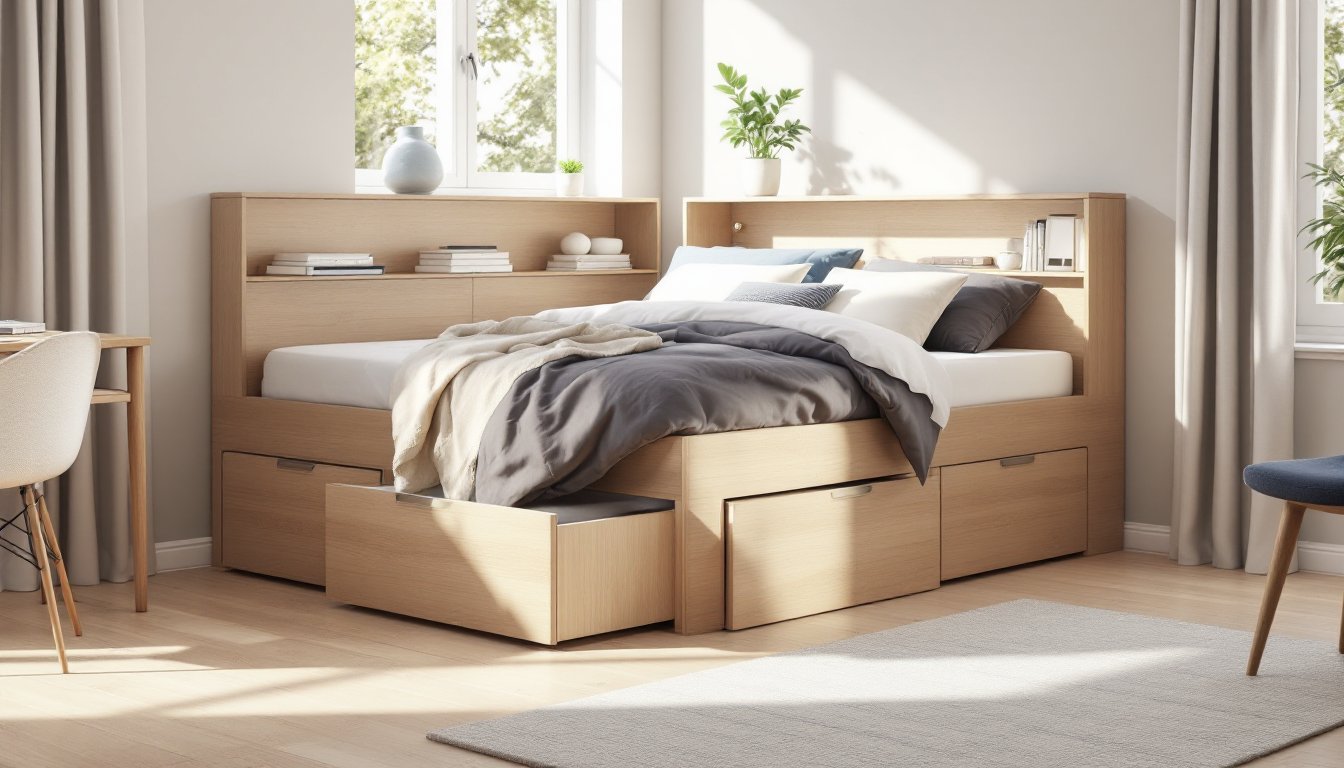
Small bedrooms don’t have to feel cramped. A corner bed with storage is one of the smartest moves a homeowner can make when floor space is at a premium. By anchoring your bed in a corner and building storage directly beneath or alongside it, you’re reclaiming square footage that would otherwise sit unused. This approach works equally well in guest rooms, kids’ bedrooms, and studio apartments. The 2026 trend toward space-conscious design has spawned dozens of stylish, functional corner bed options, from ready-made frames to custom DIY builds. This guide walks you through the styles, materials, and installation considerations to help you pick the right solution and set it up properly.
Table of Contents
ToggleKey Takeaways
- A corner bed with storage can reclaim 15–25 square feet of usable floor space compared to traditional bed and dresser setups, making it ideal for small bedrooms and studios.
- Corner beds with storage come in three main styles: under-bed drawers, built-in shelving and cubbies, and headboard storage combos, each suited to different storage and lifestyle needs.
- Choose between ready-made frames ($600–$2,500), semi-custom flat-pack kits ($300–$800), or full DIY builds ($500–$1,200) depending on your budget, customization goals, and woodworking skill level.
- Before installation, check that your corner space is level and measure walls carefully—a twin corner bed typically requires a minimum 7′ × 8′ corner area.
- Secure the frame to walls with L-brackets and use pocket-hole joinery for assembly, which is faster and more forgiving than traditional woodworking joints.
- Sand drawer slides smooth, test their operation before attaching fronts, and apply primer and semi-gloss finish to protect the frame and extend its lifespan.
Why Corner Beds With Storage Are Game Changers for Compact Spaces
Space Efficiency and Design Benefits
Corner beds do one simple thing exceptionally well: they eliminate wasted wall space. Instead of a bed consuming floor area while walls sit empty behind it, a corner unit works the geometry of the room. Storage drawers or shelving beneath the mattress platform turn dead space into functional real estate. A typical twin corner bed with built-in storage can reclaim 15–25 square feet of usable floor space compared to a standard bed and separate dresser arrangement.
The design also creates a visual anchor in the room. A well-proportioned corner bed becomes a focal point rather than an afterthought, which means the rest of your décor can be lighter and less cluttered. Kids’ rooms benefit especially, toys, bedding, and seasonal items that once crowded closets now slide into drawers or shelves. In adult bedrooms, the compact footprint frees up room for a desk, reading nook, or workout space.
From a practical standpoint, corner placement means fewer stubbed toes and easier cleaning. The bed doesn’t block pathways, and dust settles less aggressively in corners than in open floor areas.
Popular Storage Styles and Configurations
Storage corner beds come in three main flavor profiles.
Under-Bed Drawers are the most common. The mattress platform sits 18–24 inches off the floor, and drawers slide out from one or both sides. This style maximizes vertical storage while keeping the footprint minimal. Full-extension ball-bearing slides let you access items at the back without wrestling the drawer. Look for models with solid wood or plywood construction, cheap particleboard sags under weight within a few years.
Built-In Shelving and Cubbies stack open shelves around the bed frame, turning the entire corner into a storage wall. This works brilliantly in kids’ rooms or studios where you want quick visual access to books, toys, or décor. The downside: dust collects on exposed surfaces, and items must stay organized or the room looks chaotic.
Headboard Storage Combos integrate shelves, cubbies, and cabinets directly into the headboard structure. You get vertical storage at arm’s reach without eating floor space. Many DIY builders choose this route because it feels purpose-built and custom.
Each configuration suits different needs. A bedroom with limited closet space begs for maximum drawers. A shared kids’ room benefits from cubby organization. An adult guest room with a reading habit might prioritize open shelving for books.
Bed Frame Options You Should Consider
Under-Bed and Integrated Storage Solutions
You have three paths: buy ready-made, order a semi-custom kit, or build from scratch.
Ready-Made Frames are available from furniture retailers at price points from $600 to $2,500. Twin and full sizes are more common than queens: corner bed geometry is trickier at larger scales. These frames arrive assembled or semi-assembled and fit standard mattresses. The tradeoff is less customization and potential quality compromises in budget models.
Semi-Custom Kits (often from online woodworking designers) ship flat-packed with pre-cut lumber and hardware. You assemble them yourself, typically 4–8 hours with basic tools. The Twin Corner Beds System plans are a solid reference for understanding what’s involved in a real build. Cost runs $300–$800 in materials plus your labor.
DIY Full-Build means sourcing 2×10 or 2×12 lumber (actual dimensions: 1.5″ × 9.25″ or 11.25″) for the platform, adding storage boxes, and finishing the whole assembly. This approach demands woodworking chops, a miter saw, and patience, but it delivers total customization. Expect 20–40 hours of work and $500–$1,200 in lumber and hardware depending on wood species and storage features.
For beginners, semi-custom kits hit the sweet spot: they’re cheaper than store-bought, less intimidating than a blank-slate build, and finish faster. The assembly involves pocket-hole joinery (which a basic Kreg jig handles) rather than complex joinery.
How to Choose the Right Corner Bed for Your Bedroom
Start with your room’s dimensions and available corner space. Measure the wall lengths in both directions: a twin corner bed typically needs a minimum of 7′ × 8′. Do a rough mattress-size test by taping a twin or full outline on the floor so you visualize the footprint.
Next, identify what you actually need to store. If you’re replacing a dresser and nightstand, drawers are non-negotiable. If you’re adding storage to an already-furnished room, open shelving might feel like overkill. Think about moisture and humidity too, bedrooms with high humidity don’t play well with low particleboard: solid wood or plywood holds up better.
Consider mattress compatibility. A corner bed designed for a standard twin or full mattress needs exact measurements. Some custom builds require a 6–10 inch gap along walls for electrical outlets or baseboards, factor that in during selection. Check weight ratings on storage drawers: if someone sits on the bed edge frequently, drawer guides need to handle extra stress.
Finally, assess your build confidence. Budget models are plug-and-play. Semi-custom kits require tool proficiency and a weekend commitment. Full DIY builds demand real woodworking skills. Honest self-assessment prevents frustrating restarts. The Handyman’s Daughter and Fix This Build That both offer intermediate projects that can help you gauge your comfort level.
DIY Installation and Setup Tips
Before you build or assemble, prepare the room. Clear the corner completely and inspect the floor for level, use a 4-foot level to check both wall directions. Hardwood and tile are usually level enough: carpet or older subfloors may dip, which can throw drawer alignment. If the floor slopes more than ½ inch over 8 feet, address it with shims or consider a different corner.
When assembling a kit or building, lay out all parts and hardware in advance. Pocket-hole joinery (using a Kreg jig and pocket-hole screws) is the fastest method for corner bed frames, much more forgiving than traditional mortise-and-tenon joints. If you’re unfamiliar with this technique, watch a tutorial beforehand: it takes 15 minutes to learn and saves hours compared to cutting complex joints.
Always use wood glue on all joints, even pocket-hole connections, for long-term rigidity. Clamp everything square and let glue cure overnight before moving the bed into position. A misaligned frame causes drawer binding and uneven weight distribution.
Once the platform is solid, secure it to the walls using L-brackets on the back corners. This prevents tipover if someone climbs or sits heavily on an edge. Use construction screws appropriate to your wall type, drywall anchors for drywall, lag bolts for studs.
For drawers, test the slides before attaching the drawer fronts. Full-extension ball-bearing slides must be level and square, or drawers will stick. If they bind, check that the box is square: a ¼-inch discrepancy throws everything off. Sand drawer bottoms smooth so items don’t snag.
Finish is optional but extends life: primer and two coats of semi-gloss paint protect the frame and stand up to spills better than bare wood. Let finish cure fully (per manufacturer guidance, usually 48 hours) before using the bed.