
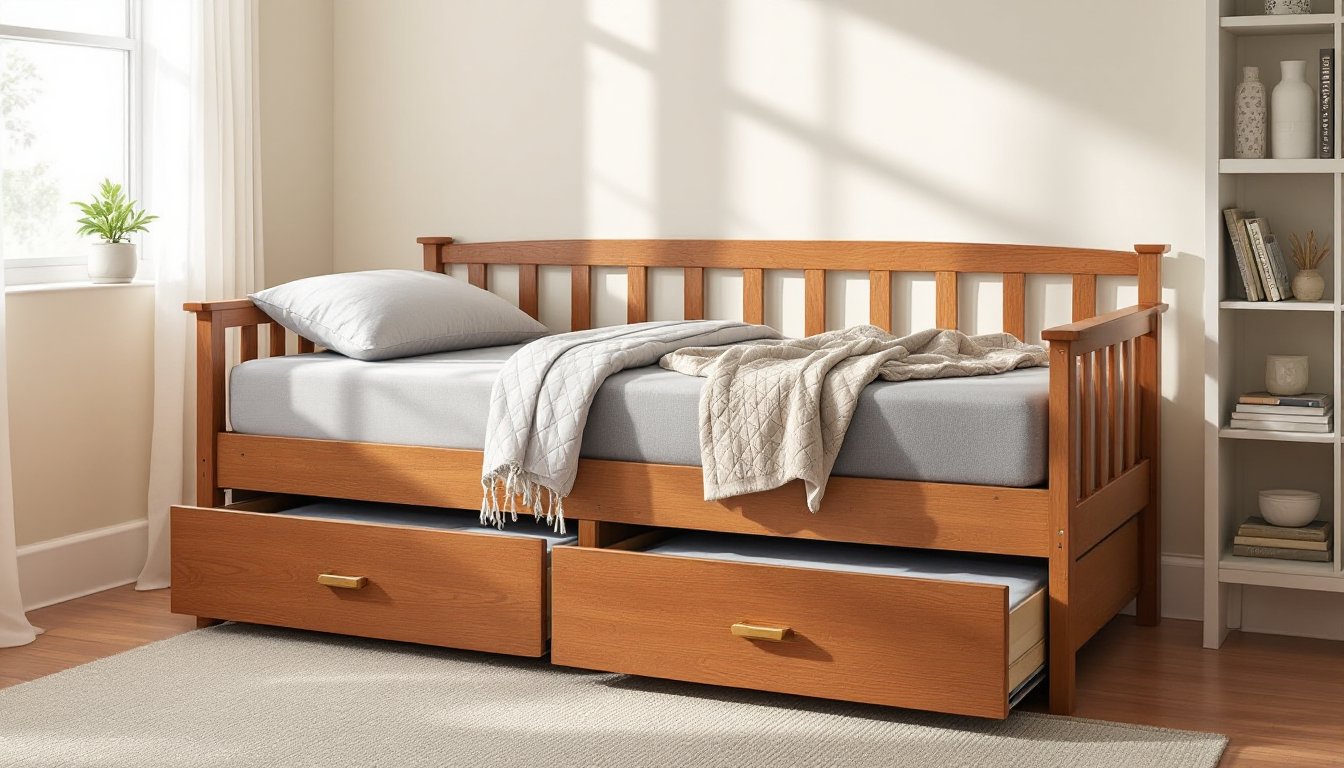
A full day bed with storage solves one of the toughest home challenges: maximizing usable space without sacrificing comfort or style. Whether you’re furnishing a guest room that doubles as a home office, outfitting a small bedroom, or creating a cozy reading nook with hidden storage, this hybrid furniture piece earns its floor real estate. A full day bed combines a traditional bed frame with integrated drawers, shelving, or compartments, eliminating the need for separate dressers, nightstands, or storage units. For homeowners juggling tight square footage, this approach transforms an ordinary bedroom into a multi-functional space that looks intentional and feels spacious.
Table of Contents
ToggleKey Takeaways
- A full day bed with storage consolidates bedroom furniture functions (bed, dresser, nightstands) into one dual-purpose piece, freeing up 35–50 square feet of floor space in tight layouts.
- Full day beds with storage come in platform-style and traditional frame-style designs, with under-bed drawers being the most practical configuration, offering accessibility via smooth-gliding mechanisms like ball-bearing slides.
- These beds feature reinforced bases and higher weight capacities than standard frames, with maximum loads exceeding 500 pounds when accounting for mattress, bedding, occupants, and loaded storage.
- A well-designed full day bed with storage creates a cohesive, intentional aesthetic that works across design styles—from farmhouse to minimalist—while reducing visual clutter and improving perceived room size.
- Integrated shelving and built-in cabinets add storage versatility, with open shelves ideal for displaying books and décor, while closed cabinets keep items out of sight and require proper weight distribution planning.
- Custom-built or DIY full day beds with storage allow homeowners to match specific room dimensions, accommodate architectural quirks, and achieve retail-quality finishes at lower costs than pre-made alternatives.
What Is a Full Day Bed With Storage?
A full day bed with storage is a dual-purpose furniture piece designed to function as both a sleeping surface and an organizational hub. Unlike a standard bed frame, it incorporates built-in compartments, typically drawers underneath the mattress platform or integrated shelving along the frame, to maximize vertical and horizontal space. The mattress itself is a full-size unit (54 inches wide by 75 inches long), offering comfortable sleeping quarters for one or two people, while the storage component reduces clutter and eliminates the need for standalone bedroom furniture.
These beds come in two primary construction styles: platform-style (a solid, low-profile frame with underbed storage) and traditional frame-style (featuring legs, a headboard, and side compartments). Some models include trundle options for guest sleeping, while others prioritize drawer depth and capacity. The design philosophy is straightforward, your bed becomes a storage solution, not just a place to sleep.
Because they’re engineered for dual duty, full day beds with storage typically feature reinforced bases and higher weight capacities than standard frames. When shopping or building one, pay attention to the mattress support system (slat-based or plywood platform) and ensure drawers or compartments use quality hardware with smooth-gliding mechanisms.
Key Benefits of Choosing a Full Day Bed With Storage
Space Efficiency and Dual Functionality
The primary advantage of a full day bed with storage is space reclamation. In a typical bedroom, a dresser occupies 20–30 square feet of floor space, plus nightstands add another 15–20 square feet. A full day bed with integrated storage consolidates these functions into a single furniture footprint, freeing up room for movement, additional seating, or other essentials.
This efficiency is especially valuable in compact layouts, studio apartments, kids’ rooms, dorm spaces, or master bedrooms in older homes with cramped proportions. The psychological impact matters too. When floor area feels less cluttered, the room feels larger, and that perception improves daily comfort and mood. Real-world users report that this setup also simplifies bedroom cleaning and furniture rearrangement because there are fewer separate pieces to move around.
Many DIY enthusiasts also appreciate that a full day bed with storage can be tailored to fit specific room dimensions. Custom-built versions allow you to match wall contours, accommodate sloped ceilings, or integrate the bed into an alcove. If you’re comfortable with basic carpentry, building one from scratch using woodworking project plans can yield a piece that fits perfectly and costs significantly less than retail alternatives.
Aesthetic Appeal and Design Flexibility
Beyond function, a well-designed full day bed with storage can anchor a room’s visual style. Unlike a traditional bedroom set with mismatched dressers and nightstands, an integrated bed creates a cohesive, intentional look. Whether you choose a rustic wood frame with shaker-style drawers, a sleek mid-century platform with hairpin legs, or a modern upholstered headboard with built-in shelving, the aesthetic feels polished rather than pieced together.
Design flexibility extends to finishes and materials. You can stain or paint the base to match existing décor, select drawer hardware that complements your style, and choose upholstery or slat colors that tie the look together. Many full day beds also work across design genres, from farmhouse to contemporary to minimalist, because the form factor is so functional that it suits diverse interiors.
For those tackling a bedroom refresh, pairing a full day bed with storage reduces the furniture footprint enough to invest in statement pieces elsewhere, a quality area rug, wall art, or ambient lighting, that elevate the whole room’s ambiance.
Popular Storage Styles and Configurations
Under-Bed Drawers and Pull-Out Compartments
Under-bed storage is the most common and practical configuration for a full day bed. Drawers typically mount on ball-bearing slides (either standard or soft-close mechanisms) and span the length of the frame, usually providing 3–6 individual units. The depth of these drawers can reach 24 inches or more, offering genuine storage capacity for seasonal clothing, bedding, or household items.
The beauty of under-bed drawers is accessibility and organization. Unlike traditional under-bed storage containers that require you to bend, reach, or lift heavy boxes, drawers glide out smoothly at waist height. Soft-close mechanisms prevent finger pinches and reduce noise, a significant quality-of-life improvement if you live in a shared household or have young children.
Pull-out compartments function similarly but often include additional features: dividers, felt linings, or even built-in hinged lids. Some premium versions integrate jewelry trays, tie racks, or pull-out desk surfaces, transforming the bed into a multi-functional workstation. If you’re building your own, sources like beginner woodworking projects guides can walk you through constructing simple drawer boxes and installing slides correctly, crucial steps that determine whether drawers operate smoothly long-term.
Integrated Shelving and Built-In Cabinets
Integrated shelving and cabinets take storage a step further by creating open or closed storage flanking the bed or running along the headboard. Open shelving (typically 3–5 shelves) suits books, decorative objects, or everyday items you want visible and accessible. Closed cabinets with doors work better for items you’d rather keep out of sight.
Built-in cabinets can sit at bed height (easier access) or below the mattress platform (maximizing underbed depth). Some designs incorporate a combination: closed cabinets on the lower half and open shelves above, creating visual interest while balancing storage privacy and display space.
The structural consideration here is weight distribution. If you’re mounting shelves to the frame or building cabinet units, ensure the bed’s base and legs can handle concentrated loads. A full-size mattress, bedding, occupants, and loaded storage can exceed 500 pounds: undersized or poorly anchored shelving can shift, squeak, or fail.
For custom designs, DIY furniture building guides often showcase how makers combine framing, cabinetry, and shelving into cohesive units. Many also provide finishing tips, stain, paint, hardware selection, that make a homemade bed feel like a polished, store-bought piece. Before committing to a design, mock it up on paper or with painter’s tape on the wall to confirm proportions and clearance (you’ll need at least 36 inches of headroom above the mattress for comfortable sleeping and bedmaking).