
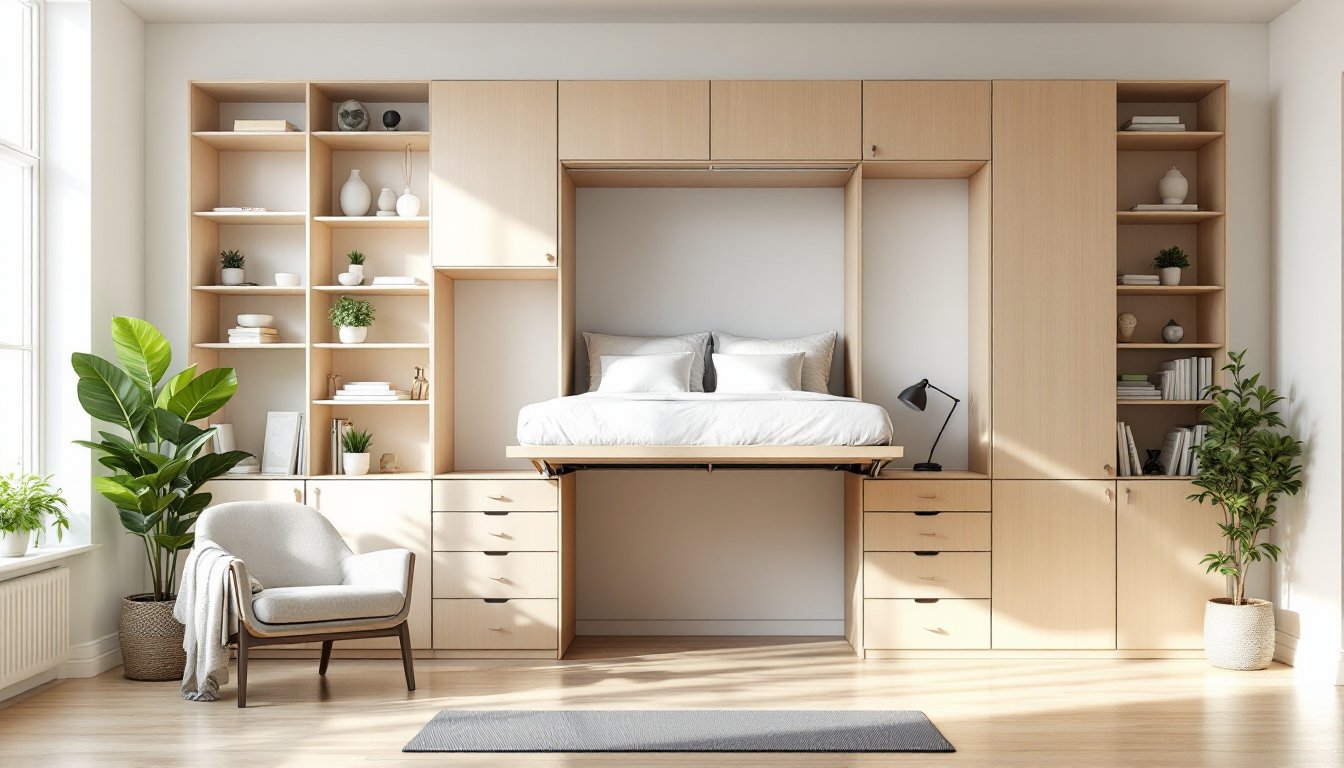
A full Murphy bed with storage transforms cramped bedrooms, home offices, and guest rooms into multifunctional spaces without sacrificing comfort or style. Whether you’re working with a 10-by-12-foot bedroom or carving out a corner of your living room, a full-size Murphy bed lets you reclaim floor space during the day while maintaining a proper sleeping surface at night. Storage-integrated designs, featuring shelves, drawers, desks, and cabinets built around the folding frame, add practical organization that keeps clutter hidden when guests arrive. This guide covers what makes these beds tick, the real benefits for small-space living, storage configurations that actually work, and how to choose the right setup for your home and budget.
Table of Contents
ToggleKey Takeaways
- A full Murphy bed with storage reclaims up to 54 square feet of floor space during the day while providing genuine full-size sleeping comfort at night.
- Storage-integrated designs featuring shelves, cabinets, drawers, and optional fold-down desks eliminate the need for separate furniture pieces and maximize small-space functionality.
- Proper installation requires anchoring all storage units to wall studs rated for 300+ pounds of dynamic load, using heavy-duty fasteners like 2.5-inch wood screws or lag bolts.
- Choose gas piston folding mechanisms ($1,200–$2,000) over spring systems for smooth, self-adjusting operation, especially if you’re uncomfortable with mechanical tuning.
- A full Murphy bed with storage costs $800–$3,500 for DIY kits, $1,200–$4,000 for semi-custom builds, or $5,000–$8,000+ for professional custom installations.
- Thorough prep work—including room measurement, ceiling clearance verification (84 inches minimum), mattress selection (6–8 inches thick maximum), and layout mock-up—prevents costly installation mistakes.
What Is A Full Murphy Bed With Storage?
A full Murphy bed is a full-size mattress (54 inches wide by 75 inches long) mounted on a hinged frame that folds vertically into a cabinet or wall cavity when not in use. The mechanism relies on a counterbalance system, springs or gas hydraulics, that makes lowering and raising the bed manageable by one person. When folded up, the bed face sits flush with the wall or cabinet front, leaving the floor completely open.
Storage integration means the surrounding wall space includes cabinets, shelving, drawers, or a fold-out desk built directly into the unit’s structure. This transforms wasted vertical real estate into functional organization. A typical full-size unit occupies about 3 to 4 inches of wall depth when closed, though models with desk attachments or deep shelving may extend 12 to 18 inches from the wall. The cabinet frame usually spans 54 to 60 inches wide and 80 to 90 inches tall, depending on storage height and design choices.
These beds come in three basic varieties: ready-made kits (pre-engineered hardware and plans), semi-custom panels (you source materials and assemble), and fully custom built-in installations. Kit versions range from $800 to $3,500 depending on included storage and mechanism quality. Semi-custom builds run $1,200 to $4,000 plus labor if hiring a carpenter. Full custom installations by a contractor or millworker can exceed $5,000 to $8,000 when factoring in cabinetry, finishes, and structural anchoring into studs.
Key Benefits of Murphy Beds for Small Spaces
The primary advantage is obvious: reclaiming 54 square feet of floor space during daytime hours. In a 120-square-foot studio or a bedroom-office combo, that’s a 45% footprint reduction. You suddenly have room for a sofa, reading nook, dining table, or clear floor for yoga and stretching.
Second, a full Murphy bed delivers genuine sleeping comfort, not a compromise. Full-size dimensions meet standard sheet and mattress availability, and you’re not sacrificing 5 inches of sleeping width like you do with twin or queen wall-mounted options. Most people fold it down nightly without hesitation because it feels like a real bed, not a gimmick.
Third, integrated storage eliminates the need for separate dressers, nightstands, or bookcases. Shelves flanking the bed frame, drawers below, and wall-mounted cabinets above consolidate what would otherwise require three or four separate furniture pieces. This streamlines the room visually and functionally.
Fourth, resale value holds steady, especially in markets where small homes and apartments command premiums. Buyers in urban areas or younger professionals see Murphy beds as clever investments, not downgrades. A well-executed installation adds perceived value without looking jury-rigged.
Storage Options and Built-In Features
Shelving and Cabinet Integration
Shelving flanking the bed frame is the most common storage approach. Open shelves (8 to 12 inches deep, 18 to 24 inches wide) positioned at arm’s reach on either side provide quick access to books, decor, or everyday items. They won’t interfere with the bed’s motion as long as you maintain at least 3 inches of clearance from the hinge mechanism.
Cabinets above the bed, typically 12 to 18 inches tall and spanning the full unit width, hide less-used items and reduce visual clutter. Position cabinet doors to swing outward rather than upward: upward-swinging doors can bump your head during setup or create a safety hazard. Drawers below the bed frame or along the cabinet base offer deep storage for bedding, clothing, or seasonal items. Standard 4-inch and 6-inch drawer depths work well: avoid drawers deeper than 18 inches unless you’re willing to climb in to retrieve items.
When integrating cabinetry, anchor all units to studs (typically 16 inches on center). A full bed can exert 300+ pounds of dynamic load during lowering, so shelving must be structural, not decorative. Use 1.5-inch pocket holes, 2.5-inch wood screws into studs, or lag bolts rated for at least 100 pounds per anchor point. Plywood box construction (0.75-inch thick minimum) outperforms particleboard for durability and weight capacity.
Material choices matter. Solid pine or birch plywood accepts stain and paint evenly and costs $40 to $80 per sheet. Melamine (white or finished veneer) runs $35 to $60 per sheet but chips easily and doesn’t accept hardware well. MDF core with veneer finishes ($50 to $100 per sheet) delivers a polished look but requires careful edgebanding to prevent swelling if exposed to moisture.
Desk and Work Surface Combinations
A fold-down or pull-out desk integrated into the lower cabinet section turns the unit into a bedroom-office hybrid. When the bed is up, the desk is accessible: when the bed is down, the desk tucks inside or folds flat against the cabinet face. This works especially well for remote workers or students who need a dedicated work zone in a small footprint.
Standard desk heights are 28 to 30 inches: ensure the lowered bed clears the desktop by at least 2 inches. A 24-inch-deep work surface is minimum for a laptop and monitor: 30 inches is better. If using a fold-down mechanism, choose hinges rated for at least 50 pounds and mount them to the cabinet frame’s vertical supports, not the back panel. Soft-close hinges (around $30 to $50 per pair) prevent slamming and extend hinge life.
For pull-out desks, heavy-duty drawer slides rated 100+ pounds smooth operation and prevent binding. Ball-bearing slides (not roller ball) are quieter and more durable. A pull-out desk measures 24 inches deep by 36 to 48 inches wide, large enough for dual monitors or a full workstation. Cable management is critical: drill a 1.5-inch grommet at the rear of the work surface and route power cords through the hollow cabinet frame down to a power strip anchored behind the unit.
Choosing the Right Murphy Bed for Your Home
Sizing, Materials, and Design Considerations
Start with your room dimensions and layout. Measure the wall where you’ll install the bed, including height and width. A full-size bed requires a minimum of 54 inches wide: for a full size murphy bed with storage on both sides, plan for 60 to 72 inches total. Check ceiling height: you need at least 84 inches from floor to ceiling for the bed to fold fully vertical. If your ceiling is shorter (common in basements or attics), a queen or twin option might be necessary, though a full still works if you angle it slightly.
Next, consider the folding mechanism. Spring-based systems (metal coil springs or piano hinges with mechanical advantage) cost less ($400 to $900 for hardware) and work reliably but require exact counterbalancing during installation. If the springs aren’t perfectly tuned, the bed will feel heavy or, worse, uncontrollable. Gas piston systems (hydraulic cylinders) cost more ($1,200 to $2,000) but provide smooth, self-adjusting lift and are forgiving if your mattress weight fluctuates. For DIYers uncomfortable with mechanical tuning, gas pistons reduce headaches.
Mattress selection affects everything. Murphy beds require foam or innerspring mattresses 6 to 8 inches thick maximum: thicker mattresses won’t fit or fold properly. Memory foam (4 to 6 inches, $400 to $1,000 for a full) compresses well and provides good support. Traditional innerspring mattresses work too but add weight, a standard 8-inch full mattress weighs 60 to 80 pounds versus 50 to 60 pounds for quality foam. Check your mechanism’s weight rating and choose accordingly.
Design and finish depend on your décor and budget. Paint-grade wood (pine or poplar) with primer and two coats of paint runs $300 to $600 in materials and accepts wall color schemes. Stain-grade plywood veneered with hardwood ($500 to $1,200 in materials) looks built-in and premium. If matching existing trim or cabinetry, save samples and have your material supplier match sheen and tone, mismatch jumps out immediately.
For inspiration and proven plans, resources like Ana White’s DIY furniture guides provide free step-by-step designs for DIY builders, and The Handyman’s Daughter offers detailed beginner-friendly tutorials for building bedroom storage solutions. Experienced builders often reference Fix This Build That for tool reviews and workshop setups tailored to furniture projects.
Finally, measure twice, buy once. A full-size murphy bed with storage isn’t a casual purchase or a quick weekend job. Order hardware and materials, verify they arrive undamaged, acclimate wood to your home’s humidity for 48 hours before assembly, and mock up your layout on the wall with tape before cutting. The difference between a smooth installation and a frustrating rebuild is usually two hours of thorough prep work.