
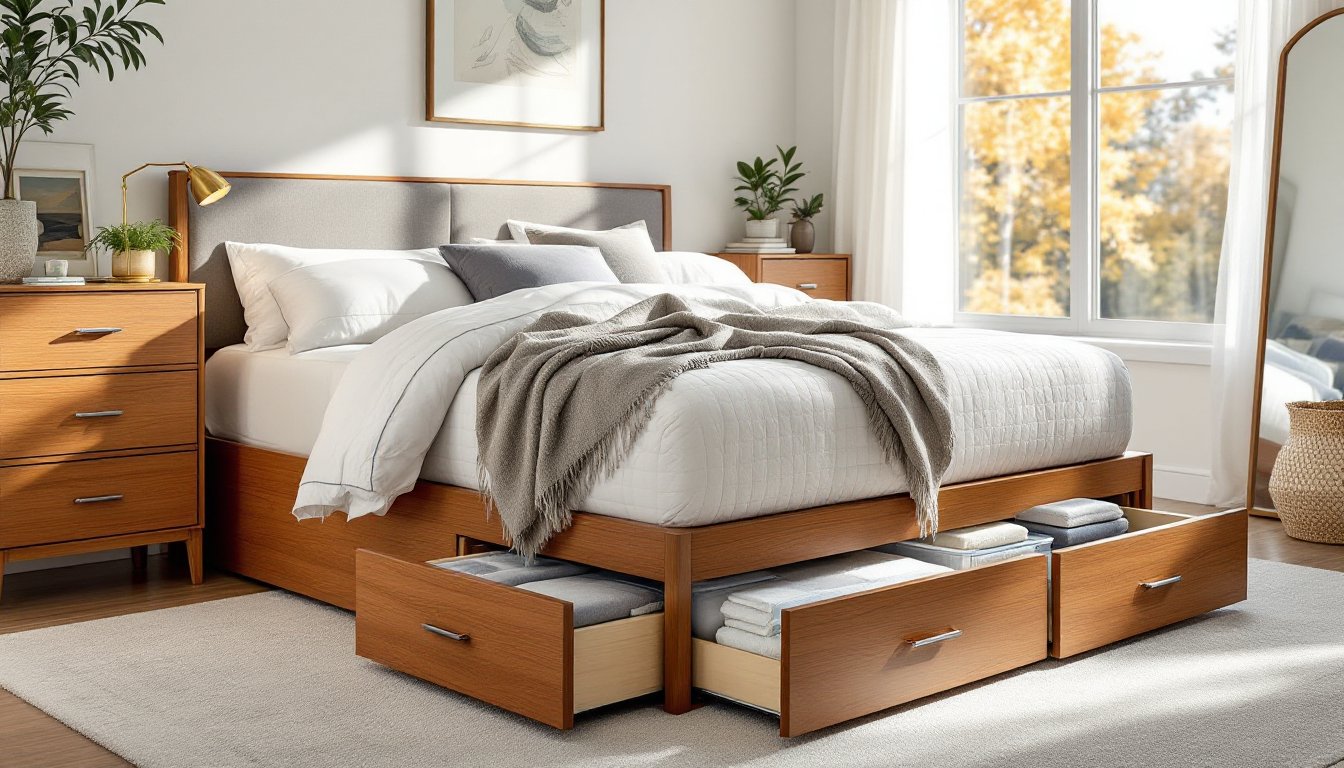
A king-size bed eats up floor space, but that doesn’t mean you should sacrifice storage. King bed frames with built-in storage solve one of the trickiest design challenges in modern bedrooms: where to stash extra linens, seasonal clothing, or just about anything else without cramming another dresser into the room. Whether you’re working with a compact master bedroom or maximizing a guest room, a storage bed frame transforms dead space under your mattress into practical real estate. This guide walks through the options, how to pick one that fits your needs, and what’s involved in getting it installed.
Table of Contents
ToggleKey Takeaways
- King bed frames with storage transform under-mattress wasted space into practical storage capacity, typically holding 2,000+ cubic inches of belongings without requiring additional furniture pieces.
- Platform storage beds with drawers offer easier organization and frequent access for seasonal items, while lift-top frames provide a sleeker design better suited for bulk storage of rarely-accessed items like extra comforters and suitcases.
- Proper planning is essential: measure your bedroom layout, account for drawer clearance (18–24 inches), consider weight distribution across drawers, and choose between pre-made frames ($400–$1,500) and DIY options based on your carpentry skills and budget.
- Storage bed frames are especially valuable for small homes, condos, and families managing multiple generations of clothing, allowing you to eliminate the need for extra dressers while making under-bed cleaning significantly easier.
- Maximize your king bed storage by grouping items by frequency of use, using clear labeled containers, adding breathable storage bags instead of plastic to prevent mildew, and incorporating cedar blocks for long-term freshness.
Why Storage Bed Frames Are Perfect for Space-Conscious Homeowners
Storage bed frames aren’t a luxury, they’re a practical fix for the bedroom storage squeeze. A standard king mattress sits on a 76-by-80-inch platform. The cavity underneath is wasted space in most traditional frames. A storage bed frame captures that area, easily holding 2,000+ cubic inches of belongings.
For homeowners in smaller homes, condos, or apartments, every square foot counts. Adding a dresser or chest to a bedroom forces you to rearrange everything else. A storage frame keeps bulk out of sight and eliminates the need for additional furniture pieces. This also makes cleaning under the bed far easier, no more squeezing into tight spaces or moving heavy nightstands.
They’re especially useful for families managing multiple generations of clothing, hobby supplies, or seasonal gear. Parents appreciate the extra capacity for off-season bedding, guest supplies, or kids’ outgrown items waiting for younger siblings. The investment pays off in space efficiency and clutter reduction over years of daily use.
Top Types of King Storage Bed Frames to Consider
Platform Storage Beds and Drawers
Platform storage beds come with bottom drawers built into the frame itself. They sit on a solid or slatted platform (rather than a box spring) and typically feature two to four large drawers on wheels or gliding hardware underneath. This design keeps your mattress at a comfortable height while maximizing under-bed capacity.
Drawers in platform beds slide smoothly on ball-bearing slides, the same hardware used in kitchen cabinets. Look for full-extension slides if you want to reach items at the very back without lying on the floor. Drawers range from 20 to 36 inches deep depending on the frame design. Since you’re dealing with a king size, total capacity across multiple drawers can store a lot. The trade-off is that platform beds usually cost more upfront than a simple bed frame, often running $600–$1,500 depending on wood type and construction quality.
Lift-Top and Gas Shock Bed Frames
Lift-top storage beds feature a hinged mattress platform that opens upward to reveal a single large storage compartment underneath. Gas-powered shock arms hold the top open, so you don’t need brute strength to access stored items. This design is clean and seamless, no drawer fronts or handles to catch on bedding.
The entire under-bed cavity becomes one unified storage zone, perfect for storing bulky items like extra comforters, pillows, or suitcases. Gas shocks come in various load ratings, typically 45–100 pounds per side. Confirm the total weight capacity matches what you plan to store. The main drawback: organizing items inside a single compartment is trickier than using separate drawers. Many owners add storage bins inside to keep things organized. Lift-top beds run $400–$1,200 depending on wood species and shock quality. Resources like woodworking project plans can help if you’re interested in building one yourself.
How to Choose the Right Storage Bed Frame for Your Space
Start with your bedroom’s layout and dimensions. Measure the space where the bed will sit, accounting for nightstands, dressers, or other furniture. A king bed itself measures 76 inches wide and 80 inches long, but add headboard depth and the space needed to open drawers. If you’re using drawers on the foot end, you’ll need an extra 18–24 inches of clearance to pull them open fully. Lift-top beds only need 3–4 feet of headspace above the mattress.
Next, consider what you’re actually storing. If you rotate seasonal items frequently, drawers make sense, you can label and access specific drawers without disturbing the mattress. If you’re storing bulk items like off-season quilts or rarely-accessed items, a lift-top compartment works fine. Think about weight distribution too. Don’t load all heavy items into one drawer: spread weight evenly across multiple drawers to prevent stress on the frame and hardware.
Budget matters. Platform beds with drawers typically cost more but offer longevity and easier organization. Lift-top frames are usually cheaper and sleeker but need interior organization systems. Wood type affects both price and durability. Solid hardwoods like oak or maple hold up better than particle board, but they cost considerably more. Particle board and plywood options can work if you don’t plan to move the frame frequently. Finally, check assembly requirements. Most pre-made frames ship partially assembled and require 2–4 hours of work plus a second pair of hands.
DIY vs. Pre-Made: Installation and Assembly Considerations
Pre-made storage beds dominate the market for good reason. They arrive mostly assembled, arrive within 2–3 weeks, and come with clear instructions and hardware. Assembly usually takes two people 2–4 hours using a drill-driver and basic hand tools. You’ll need a Phillips-head drill bit, an adjustable wrench, and sometimes an impact driver to sink bolts into heavy wood without stripping threads. Most frames arrive in boxes totaling 200–400 pounds: have a helper on hand and clear a staging area to organize parts before assembly.
DIY-built beds appeal to woodworkers comfortable with intermediate carpentry. Free plans are available from design sites like Ana White, which provides step-by-step woodworking guides for storage bed frames in multiple sizes and styles. Building one yourself means customizing dimensions, wood species, and hardware to exact specifications. But, DIY construction requires a table saw, miter saw, pocket-hole jig, or similar equipment. You’ll also need to source quality drawer slides, bolts, and finishing materials separately. Total cost for materials often matches or exceeds a pre-made mid-range frame, but quality control is in your hands.
Permit requirements depend on whether you’re making structural modifications to your bedroom. Storage beds themselves don’t need permits, but if you’re cutting into walls, adding new electrical for under-bed lighting, or altering floor framing for weight distribution, check local building codes. For a straightforward frame installation, no permits are needed. But, if the floor is soft or uneven, address leveling issues first to prevent wobbling and uneven mattress support.
Styling and Organizing Your King Storage Bed
Once installed, the real work begins: maximizing what goes underneath. Start by creating an inventory of items to store and group them by frequency of access. Items you use weekly (extra pillows, throw blankets) go in front or in the most accessible drawer. Seasonal items and backups go in back or in lift-top compartments. Use clear storage bins or plastic containers with labels so you know what’s where without pulling everything out.
For drawer-style frames, consider drawer organizers or fabric bins to keep items from shifting during movement. These prevent wrinkles in stored clothing and keep smaller items from disappearing into corners. Lift-top beds benefit from stackable boxes that fit the bed’s interior footprint, measure the inside dimensions before buying containers. Add a liner like non-slip drawer liner to prevent boxes from sliding when you open or close the top.
Ventilation matters, especially for bedding stored long-term. Avoid plastic storage directly against wood: this traps moisture and can lead to mildew or musty odors. Breathable storage bags or linen containers work better, and adding cedar blocks or activated charcoal packs keeps the air fresh. For a polished look, choose a bed frame that matches your existing nightstands or dressers in wood tone and style. Resources like IKEA hacks show creative ways to customize affordable frame options to match any décor scheme. Finally, keep the top of the bed dressed neatly with a quality mattress topper, sheets, and bedding to anchor the room visually.