
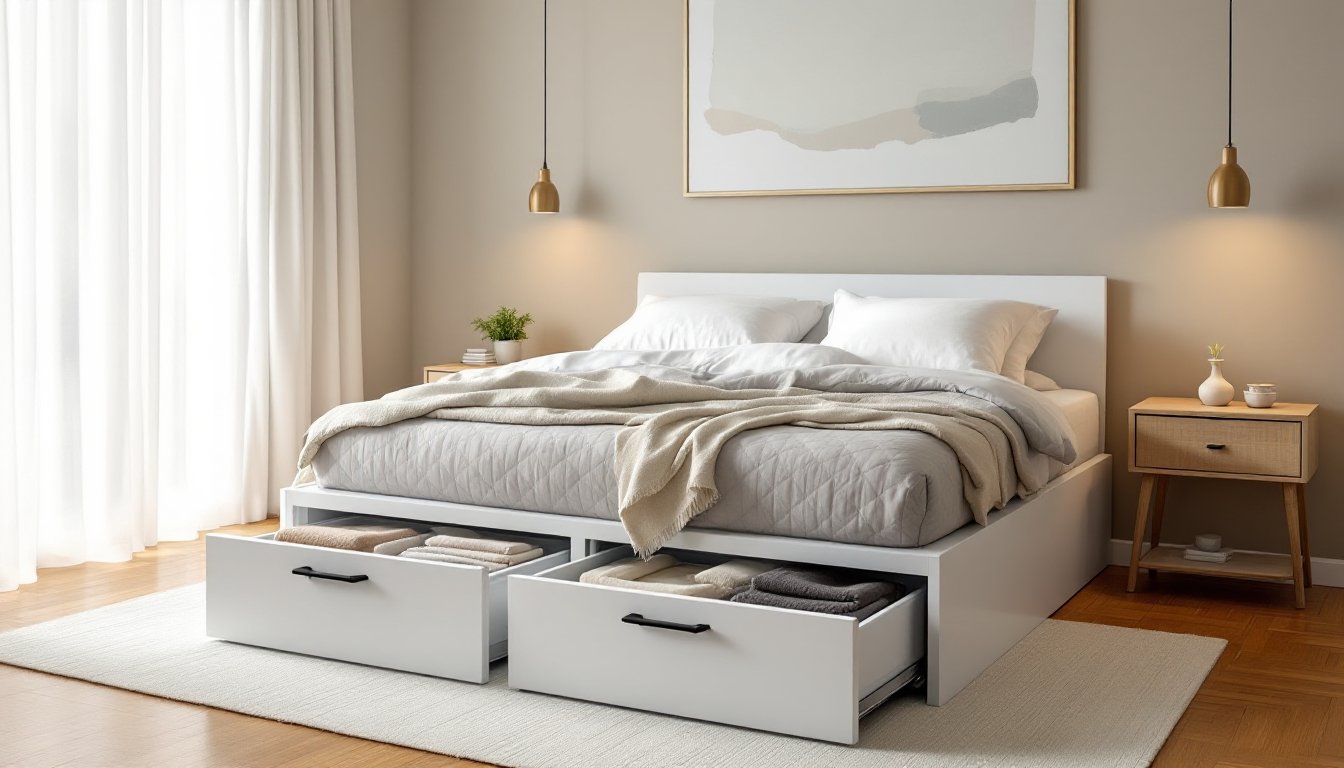
The Malm storage bed from IKEA has become a favorite among homeowners and renters who refuse to waste bedroom space. Unlike a standard frame, it pairs a solid sleeping surface with under-bed drawers that swallow seasonal clothing, extra bedding, and all those things you can’t quite throw away. For anyone working with modest square footage, this bed transforms a dead zone into functional real estate. Whether you’re furnishing a studio apartment, a guest room, or just tired of stepping over storage bins, understanding how to assemble, organize, and maintain a Malm storage bed will help you make the most of what you’ve got.
Table of Contents
ToggleKey Takeaways
- A Malm storage bed transforms bedroom space by integrating under-bed drawers into your sleeping platform, eliminating the need for a separate dresser and reclaiming valuable floor space in small apartments and modest homes.
- Successful assembly requires careful organization of hardware, proper alignment of precision components like drawer guides, and leveling the frame to prevent wobbly operation and drawer binding.
- Smart organization of Malm storage bed drawers involves using labeled bins, moisture-absorbing packets, and rotating seasonal items to prevent clutter and maintain easy access to stored clothing and bedding.
- Particleboard care is essential for longevity; clean drawer guides quarterly, avoid direct moisture exposure, and periodically tighten screws to prevent wear that can reduce the bed’s 8–10 year lifespan.
- The Malm storage bed offers better space efficiency and visual simplicity than comparable options like standard frame-plus-dresser setups or taller platform beds, especially for small-space dwellers prioritizing storage solutions.
What Is A Malm Storage Bed And Why It’s A Game-Changer For Small Spaces
Key Features And Design Elements
The Malm storage bed is a low-profile platform frame that sits roughly 6 inches off the ground, giving it a modern, minimalist look while maximizing the clearance needed for those under-bed drawers. The frame itself is typically made from particleboard with a veneer finish, available in white, black, or light wood tones that coordinate with most bedroom aesthetics. What sets it apart is the integrated drawer system, most Malm variants come with two spacious drawers that run on smooth ball-bearing guides and slide out fully for easy access.
The bed isn’t a fancy upholstered platform: it’s honest, straightforward, and designed for the person who values function over frills. It accommodates standard twin, full, queen, or king-size mattresses depending on the version, and the weight capacity runs around 600 pounds distributed evenly, which is solid for everyday use but not a trampoline. The drawers each hold approximately 40 pounds, so you’re not storing bowling balls, but winter coats, extra pillows, and out-of-season wardrobe pieces fit perfectly.
Why is this a game-changer? In urban apartments and modest homes, floor space is currency. A traditional dresser takes up 15 square feet and needs its own real estate. A Malm storage bed pulls that storage into a piece you’re already sleeping on. You eliminate clutter, reduce the visual footprint of furniture, and gain actual breathing room. For small-space dwellers, that’s the difference between a chaotic bedroom and one that feels calm.
Assembly And Setup: A Step-By-Step Guide For DIY Success
Assembly is the make-or-break moment for most flat-pack furniture, and the Malm is no exception. The good news: it’s not overly complex. The bad news: IKEA instructions can be cryptic, and missing one step often means backing up three steps later.
What you’ll need:
- Allen wrench (usually included in the hardware pack)
- Cordless drill or screwdriver (optional but saves your wrist)
- A second person (not mandatory, but the frame is awkward solo)
- Clear floor space about 7 feet by 10 feet to lay out parts
- 30–60 minutes depending on your speed and patience level
Assembly overview:
-
Unpack and lay out all parts on the floor in the room where the bed will live. This saves moving a half-assembled frame up a stairwell.
-
Assemble the frame rails first. These are the long, curved side pieces. Follow the diagram closely: the dowels and cam-lock fittings only go one way. Hand-tighten the cam locks, over-torquing strips the threads in particleboard.
-
Install the cross braces. These support the mattress and connect the rails. Make sure they’re seated fully before tightening.
-
Attach the drawer guides to the frame. These precision components ensure smooth operation: dust or misalignment here causes binding later.
-
Slide in the drawer boxes once guides are secure. Test the glide before moving forward.
-
Level the whole frame. Hardwood and tile floors vary: if one corner sits higher, adjust the legs or add shims under the feet. A wobbly bed breaks drawer slides faster than anything else.
Common mistake: rushing the hardware bag. Count and sort screws and dowels before starting: finding a missing cam lock mid-assembly is painful.
Optimizing Your Storage Potential: Organization Tips And Tricks
The drawers are cavernous, which is both a blessing and a trap. Without a system, you’ll end up with a jumbled mess of fabric and forgotten items. Smart organization starts with honest inventory: what actually needs to go under the bed, and what should live elsewhere?
Use clear storage bins or drawer dividers within each drawer. Label bins by season or content type (“Winter Coats,” “Guest Bedding,” “Off-Season Shoes”). This prevents the “I need to empty the whole drawer to find one thing” frustration. Heavy items go toward the front of the drawer so you’re not stretching to reach them.
Dry cleaning bags work well for hanging items, they compress slightly and keep garments from wrinkling in the drawer environment. Vacuum-seal bags are tempting but risky: compressed clothing develops creases that are hard to shake out, and the vacuum seal can degrade particleboard over time if bags leak moisture.
Moisture and air circulation matter more than people realize. Bedroom closets are often stuffy: under-bed storage is worse. Toss a moisture-absorbing packet or activated charcoal into each drawer to prevent mustiness, especially in humid climates. Check these every few months and replace as needed. With home organization tips and decluttering guides, you’ll find even more strategies for maximizing tight spaces.
Rotate what’s stored seasonally. After winter, swap out heavy coats for spring and summer items. This keeps the drawers functional and prevents “storage debt”, the feeling of hoarding things because they’re out of sight.
Styling Your Malm Bed: Interior Design Ideas That Work
A Malm bed doesn’t need to look bare or utilitarian. The clean lines and low profile actually make it a strong anchor for bedroom design. The key is treating it as the foundation, not the focal point.
Choose bedding in fabrics that complement the frame finish. White frames pair beautifully with soft whites, creams, and pale grays: dark frames anchor deeper jewel tones or rich neutrals. Avoid high-contrast patterns directly on the bed itself, it visually crowds the space. Save pattern and texture for pillows, a throw blanket, or wall art.
Since the frame sits low, a tall headboard or wall art above the bed draws the eye up and makes the room feel taller. If adding a headboard, make sure it doesn’t interfere with drawer openings. A floating shelving unit beside the bed or tall nightstands create vertical interest and balance the bed’s horizontal spread.
Lighting matters. A pair of small pendant lights or wall-mounted reading lamps flanking the bed feel more sophisticated than a bulky bedside lamp and free up surface space on the nightstands. According to budget home renovation and DIY furniture stories, thoughtful lighting and simple styling choices elevate even modest pieces.
Keep the floor clear around the bed frame. The low profile looks intentional when the space beneath the frame is empty or has only a thin area rug. Clutter around the base negates the visual benefit of the design.
Maintenance And Care For Long-Lasting Performance
Particleboard furniture sounds cheap when you say it out loud, but the Malm is engineered for longevity if treated with basic respect. The enemy is moisture, impact, and neglect.
Drawer care: Clean the guides quarterly with a soft brush or dry cloth to remove dust and lint. Smooth operation depends on these tracks: buildup causes binding. If a drawer starts to stick, a tiny amount of furniture wax on the rails, not spray lubricant, which attracts dust, fixes it.
Frame upkeep: Wipe the visible surfaces with a dry cloth or lightly dampened microfiber cloth. Never spray cleaner directly on particleboard: moisture causes swelling and finish damage. For scratches or scuffs, touch-up markers matched to your finish are available and work surprisingly well.
Weight distribution: Don’t overload the drawers beyond their rating. A queen-size mattress and two people sleeping on the frame is fine: jumping on the bed or sitting on the drawers while they’re open wears out the guides and stresses the frame.
Assembly tightening: After a few months of use, check all visible screws and tighten any that have loosened. Wood movement and vibration loosen fasteners: periodic tightening prevents wobbling and premature wear.
If a drawer becomes damaged beyond repair, IKEA offers replacement drawer components and parts, which is genuinely useful for extending furniture life without replacing the entire bed.
Maximizing Value: Comparing Options And Making The Right Choice
Before buying, consider what you’re actually solving for. Is it lack of floor space, insufficient storage, or both? A Malm bed excels at the latter but doesn’t add square footage, it repurposes what’s there.
Malm vs. standard frames: A standard bed frame plus a dresser occupies more space and costs roughly the same total investment as a Malm with drawers. The Malm wins on footprint and visual simplicity.
Malm vs. tall platform beds: Taller beds (12+ inches off the ground) offer more under-bed clearance for bins or storage on wheels, but they’re harder to get in and out of and look bulkier in smaller rooms. The Malm’s low profile feels intentional and modern.
Malm vs. loft beds: Lofts maximize vertical space with desk or seating underneath, ideal for studio apartments or kids’ rooms. They’re harder to assemble, require more headroom, and the under-loft area isn’t as cozy for storage. Malms are simpler and better if you just need under-bed drawers.
Material quality: IKEA’s Malm isn’t solid wood: it’s engineered particleboard with veneer. It’s not furniture-store expensive, but it’s not budget trash either. The build quality is honest for the price point. Expect 8–10 years of reliable use with care: beyond that, wear accumulates.
Where to buy: Direct from IKEA online or in-store is standard. Prices vary slightly by region and promotional timing, watch for sales if you’re flexible. Delivery and assembly services are available for an additional fee, which may be worth it if stairs or tight spaces make solo assembly miserable.