
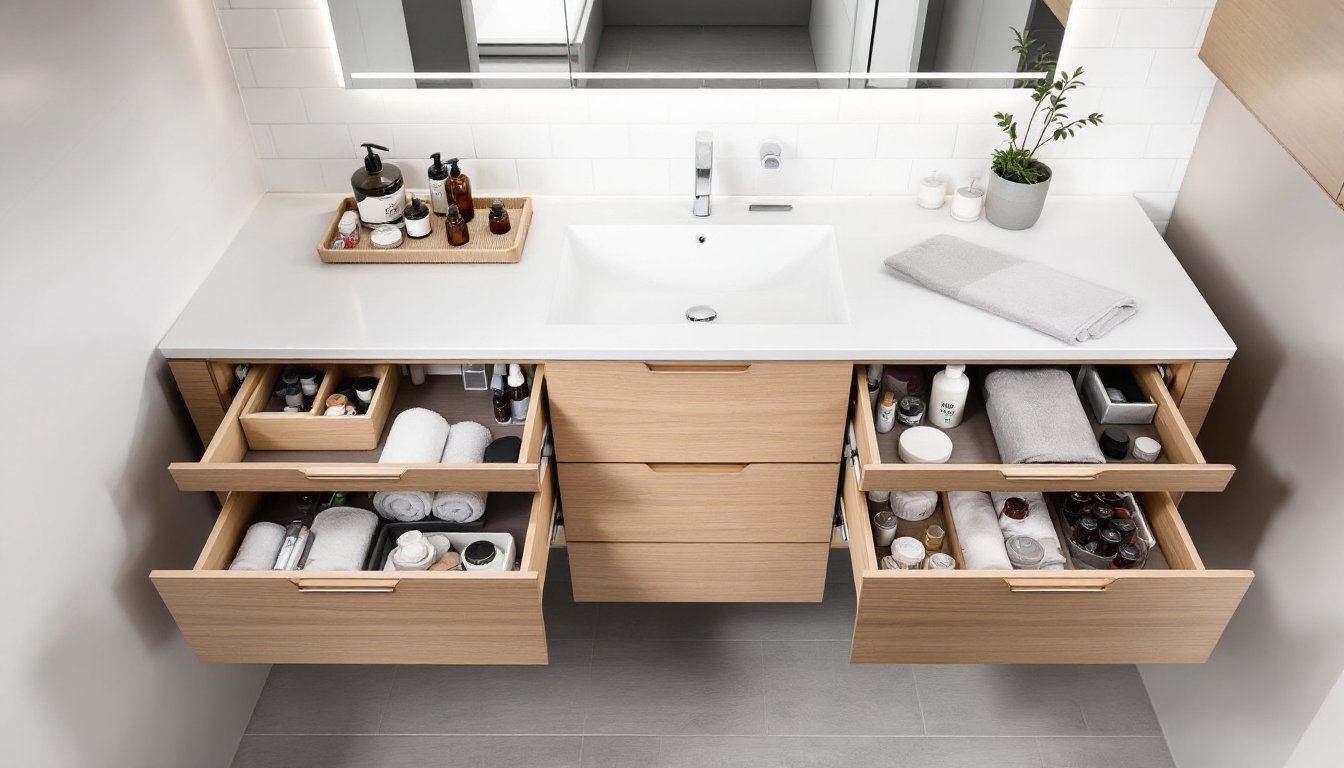
Bathroom clutter happens to everyone. Towels pile up, cosmetics scatter across counters, and medications spill from medicine cabinets. The difference between a chaos zone and a functional bathroom often comes down to one thing: smart storage with drawers. Unlike open shelving or cabinets without organized compartments, drawer storage keeps items hidden, protected from moisture, and easy to find. Whether you’re renovating from scratch or maximizing an existing space, bathroom drawer storage solves the universal problem of “where does all this stuff go?” This guide covers everything from choosing the right storage solution to organizing what goes inside, practical advice that’ll transform your bathroom in a weekend or less.
Table of Contents
ToggleKey Takeaways
- Bathroom storage with drawers solves clutter by keeping cosmetics, medications, and linens hidden from moisture and dust while making items easy to locate.
- Vanity cabinets with soft-close drawers and full-extension slides offer the best combination of durability, accessibility, and functionality for primary bathrooms.
- Moisture-resistant materials like laminate or thermofoil finishes outperform solid wood in humid bathrooms and require minimal maintenance.
- Organizing bathroom drawers requires drawer dividers, categorical grouping, vertical stacking, and seasonal rotation to maximize space and reduce mental load.
- Proper installation includes measuring twice, sealing joints with silicone caulk, anchoring to studs, and hiring professionals for plumbing reroutes to prevent water damage and mold.
Why Drawer Storage Is the Best Solution for Bathroom Organization
Drawers beat open shelves and wall cabinets for one reason: containment. Cosmetics, hair products, medications, and first-aid supplies stay dust-free and organized behind a closed face. Moisture from showers and humidity won’t degrade items as quickly when they’re tucked away, which matters if you’re storing skincare or medications that degrade with exposure.
Drawers also force you to actually organize. An open shelf lets you pile things: a drawer demands a system. Most people naturally group similar items, hair tools in one section, medications in another, cleaning supplies down below. That muscle memory means you spend less time hunting for the tweezers at 6 a.m.
Another win: accessibility. Kids can’t easily grab medications from a locked drawer. Guests don’t see your morning routine spilled across the counter. And, frankly, a clean counter makes the whole bathroom feel larger and calmer, which matters if your bathroom doubles as your sanctuary from a hectic day.
From a resale perspective, bathrooms with integrated storage, especially cabinetry with quality drawers, add tangible value. Buyers notice thoughtful organization. It signals that the home’s been well-maintained.
Types of Bathroom Drawer Storage Options
Vanity Cabinets With Built-In Drawers
Vanity cabinets with drawers are the go-to for most bathrooms. These sit under the sink and typically combine a cabinet section (for under-sink plumbing) with multiple drawers above or beside the sink top. Standard vanity widths run 24″, 30″, 36″, 48″, and 60″ wide, with depths around 18″–21″ (measured front to back).
Drawer quality matters. Look for soft-close drawer slides, these cost more but prevent the slamming that echoes through a bathroom and damages the vanity over time. Full-extension slides let you reach items at the back without hunching. Pay attention to weight capacity: most residential vanity drawers hold 50–100 lbs., which is fine for cosmetics and linens but not bulk items.
Material affects durability. Solid wood (oak, maple, pine) looks good but requires finishing to resist humidity: expect higher cost and maintenance. Plywood or MDF with veneer costs less, holds up reasonably in bathrooms with good ventilation, but can swell if moisture seeps behind the veneer. Laminate or thermofoil finishes offer the best moisture resistance and lowest maintenance, ideal if you have kids or limited ventilation.
Installation varies. Drop-in vanities sit atop the rim: under-mount models hang from brackets. Either way, plumbing and electrical rough-ins must be set before the vanity goes in. If you’re not confident with supply lines and drains, hire a plumber. A water leak behind a vanity causes mold, rot, and headaches.
Freestanding Drawer Units and Pedestals
If you can’t modify existing vanities or want flexibility, freestanding drawer units work. These roll into corners, nestle beside existing cabinetry, or stand alone as accent pieces. They range from slim 12″–18″ wide units to larger 30″+ pedestals.
Freestanding options include rolling carts with drawers, narrow tower cabinets, and pedestal units designed for bathrooms. Styles vary from modern minimalist to farmhouse, so they’re easier to match your décor than built-in solutions.
The catch: freestanding units don’t hide plumbing and take up floor space. They work great for secondary bathrooms, guest baths, or homes where you rent and can’t install permanent fixtures. For a primary bath, they’re supplementary, usually paired with a vanity rather than replacing one.
Quality ranges wildly. Cheap particle-board carts deteriorate within a year in humid bathrooms. Solid wood or quality plywood with sealed finishes last. If you go freestanding, invest a bit more: it’ll outlast the trend.
How to Choose the Right Drawer Storage for Your Bathroom Layout
Start with measurements. Measure your bathroom width, depth, and the space under the sink (if replacing a vanity). Note ceiling height, tall cabinets maximize storage but can make small bathrooms feel cramped. Factor in doorswing: a wide vanity can block entry if the door swings inward.
Consider plumbing and electrical. If you’re moving a sink, expect to reroute supply lines and drain lines. If electrical outlets or switches occupy wall space where you want storage, rerouting requires a licensed electrician (and often permits). Sometimes it’s cheaper to work around existing infrastructure than fight it.
Think about humidity and ventilation. Bathrooms with exhaust fans stay drier and extend cabinet life. If your bathroom lacks ventilation or gets steamy, prioritize moisture-resistant materials. Avoid solid wood without waterproof finish in high-moisture zones (right next to shower/tub).
Planning projects like this are easier with woodworking plans and design templates if you’re building custom solutions. Budget matters too. Vanities range from $300 (basic laminate) to $3,000+ (custom solid wood with quality hardware). Freestanding units run $150–$800. Installation labor adds another $500–$1,500 if hiring pros.
Visit showrooms if possible. Open drawers, check how smoothly they glide, and feel the material quality. Online photos lie: you need to see finishes and hardware in person.
Maximizing Organization Inside Your Bathroom Drawers
Drawer dividers are non-negotiable. Without them, everything shifts around and gets lost. Options include adjustable bamboo dividers (cheap and effective), custom drawer organizers (pricier but tailored), or DIY dividers cut from scrap wood or foam board.
Group by category. Cosmetics in one drawer, hair tools and products in another, medications and first-aid in a locked drawer if kids are around. Under-sink drawers work for cleaning supplies, extra toilet paper, and linens. This system takes two minutes to find anything.
Use vertical space. Drawer height matters: shallow drawers (3″–4″ deep) work for cosmetics: deeper ones (6″–8″) for hair products and tools. Stacking items vertically rather than flat maximizes capacity. Small bins or acrylic risers create second layers.
Label everything. A simple label maker or masking tape and marker prevent “Where’s the sunscreen?” hunts. It’s trivial but transforms usability, especially in shared bathrooms.
Home organization experts emphasize decluttering and simplifying storage systems to reduce mental load. If you’re not using something, it doesn’t belong in a drawer. Toss dried-up cosmetics, expired medications (at a pharmacy’s disposal bin, not the trash), and dried-up bottles. This opens space for what you actually use.
Rotate seasonally. Sunscreen doesn’t need drawer space in January: hair masks can trade places with holiday items. Seasonal swaps keep your most-used items accessible year-round.
DIY Tips for Installing Bathroom Drawer Storage
If you’re installing a freestanding unit, it’s straightforward: level it, anchor it to the wall (critical for stability, especially around kids), and you’re done. Use a 2-foot level and toggle bolts or studs to secure it, nothing worse than a cabinet toppling into a child.
Replacing a vanity is moderately complex. You’ll need to shut off water supply valves under the sink, disconnect supply lines, unbolt the old vanity from the wall (sometimes it’s screwed to studs), and unplug the drain. Check local building codes (many jurisdictions require permits for vanity replacement). If you’re uncomfortable with plumbing, hire a plumber for the rough-in and connection: you can handle the cabinet installation.
Measure twice, cut once. Vanities need clearance for sink faucet installation and plumbing access. If the new vanity doesn’t align with existing plumbing, you’ll reroute lines, doable but time-consuming. Prefab vanities with pre-drilled faucet holes simplify this.
Sealing is essential. Apply caulk (silicone, not acrylic) where the vanity meets the wall and floor to block water infiltration. This single step prevents rot and mold. Let caulk cure 24 hours before running water.
Forces and load matter. Vanities screwed to drywall alone fail under weight. Anchor into studs or use French cleats and reinforcement for heavier cabinets. Bathroom walls often have limited stud placement (near the vanity location), so work with what you have.
When building custom drawer units, reference project plans and workshop guidance for joinery, hardware selection, and finishing techniques. Drawers require precise measurements: tolerance of 1/8″ can mean the difference between smooth gliding and binding.
Always wear safety glasses when cutting, installing hardware, or working under the sink. Work gloves protect from sharp edges and rough materials. If removing an old vanity, watch for mold behind it, wear a dust mask and ventilate well.