
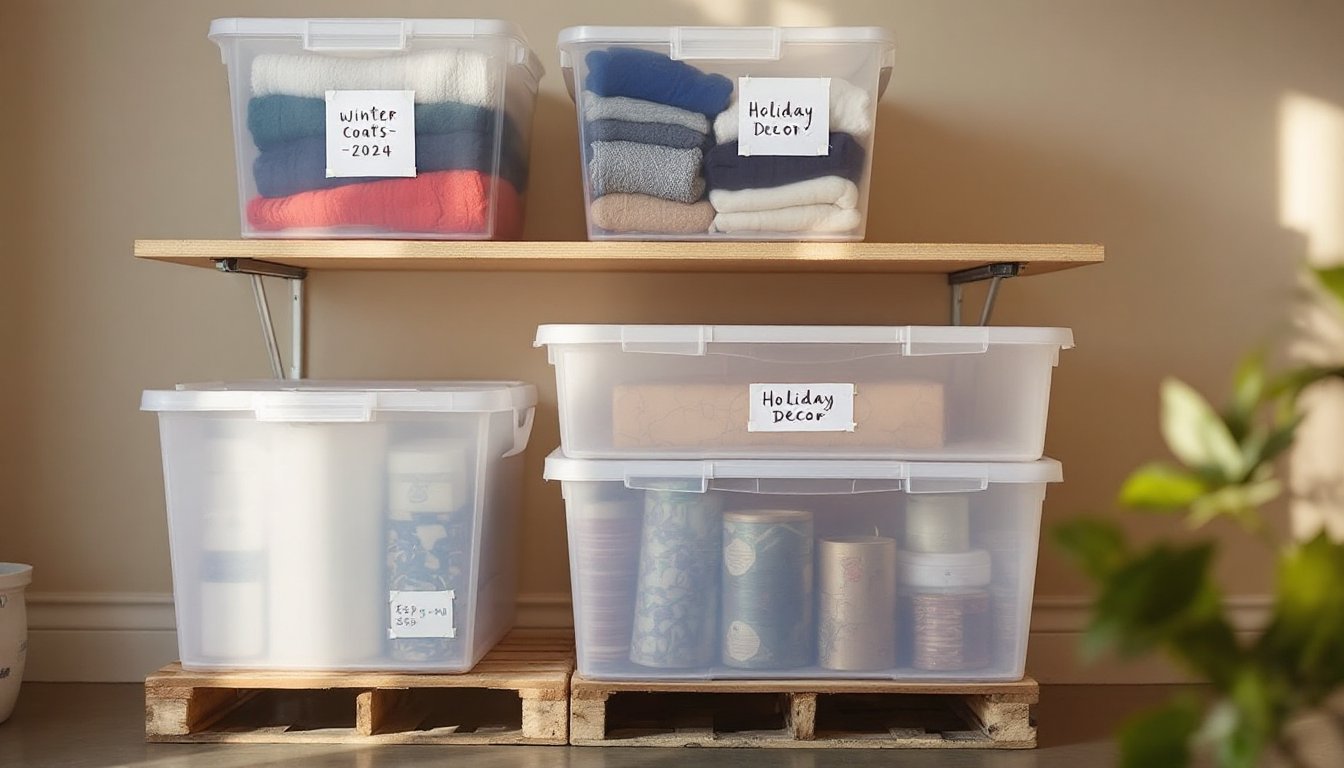
Clutter creeps up fast, whether it’s seasonal decorations, kids’ toys, or garage overflow. Stackable clear storage bins solve this problem by combining visibility with space efficiency. Unlike opaque containers, you can see exactly what’s inside without opening them, saving time and reducing redundant purchases. Their ability to stack neatly means they work in closets, basement shelves, garages, and under-bed spaces, transforming disorganized areas into functional storage zones. For homeowners ready to reclaim their space, clear bins offer a straightforward, affordable solution that doesn’t require renovations or permits.
Table of Contents
ToggleKey Takeaways
- Stackable clear storage bins save time and prevent duplicate purchases by letting you see exactly what’s inside without opening containers, making them ideal for organizing seasonal items and household clutter.
- Vertical stacking maximizes storage capacity in tight spaces like closets, basements, and under-bed areas, freeing up floor space while keeping items accessible and organized.
- Quality stackable clear storage bins cost between $5 to $30 per unit and resist moisture, UV damage, and temperature changes, making them a durable and affordable alternative to expensive custom shelving.
- Choose the right bin size for your space: small to medium bins (5-25 quarts) work best for closets and shelves, while large bins (35-70 quarts) suit garage and basement storage for bulk seasonal items.
- Label all bins clearly with categories and dates, position frequently accessed items at waist height, and use smaller bins inside larger ones to organize subcategories and maximize storage efficiency.
- Protect your stackable clear storage bins from UV yellowing by storing them in shaded areas, inspect lids and hinges regularly for damage, and never exceed manufacturer weight limits to ensure long-lasting durability.
Why Stackable Clear Storage Bins Are a Game-Changer for Home Organization
Clear bins eliminate the guessing game. When holiday decorations, holiday lights, or winter clothes live behind closed doors, you waste time digging through unmarked containers to find what you need. Stackable clear storage bins let you see contents at a glance, cutting search time in half. This simple transparency reduces the likelihood of buying duplicates, you’ll actually know if you already own three boxes of string lights.
Stacking capability maximizes vertical space. A single closet shelf or basement corner can hold three, four, or even five bins stacked safely without toppling. This vertical approach frees up floor space for actual movement and access, especially important in tight garages or under-bed storage areas. The practical design means no wasted cubic inches.
Durability and affordability make them a no-brainer investment. Quality clear home self-storage solutions cost $5 to $30 per bin depending on size and material, far less than custom shelving or expensive built-ins. Polypropylene or high-density plastic bins resist moisture, UV damage, and temperature swings, making them suitable for basements, attics, and uninsulated garages where humidity and heat fluctuate. A $50 investment in five bins often prevents costly replacement or damage to stored items.
Types and Sizes: Finding the Right Stackable Bins for Your Space
Small and Medium Bins for Closets and Shelves
Small bins (roughly 5 to 12 quarts) fit perfectly into closet shelves and bedroom cubbies without consuming the entire footprint. These hold off-season accessories, craft supplies, or children’s small toys neatly. Medium bins (15 to 25 quarts) are the workhorse size, large enough to contain a full sweater collection or craft materials, but light enough to move and rearrange without assistance. Stacking two or three medium bins vertically on a single shelf still leaves room for decorative items or access.
Measure your shelf or closet space before ordering. Standard shelf depth is 12 inches, so bins with a 10 to 11-inch depth fit comfortably with room for a label or handle. Height matters too: a 12 to 15-inch-tall bin lets you stack two or three units in a typical closet without exceeding shelf height. Clear sidewalls let light penetrate, so items remain visible even when stacked deep into a closet corner.
Large Bins for Garage and Basement Storage
Large bins (35 to 70 quarts) work best in garages, basements, and outdoor storage sheds where floor or shelf space is abundant. These hold bulk seasonal items, holiday wreaths, wrapped gifts, winter coats, or sporting equipment, in a single container. A 70-quart bin typically measures about 16 to 18 inches tall and 24 inches wide, making it stackable but substantial enough to require a clear space.
Handle design becomes critical at this size. Look for bins with reinforced handles or dual handles on opposite sides, so two people can safely grip and lift without strain. Some larger bins include latching lids that secure during stacking, preventing accidental opening if a lower bin shifts. Lids with gasket seals add protection against dust and pests, a smart feature for garage or basement use. When stacking large bins, place heavier items on the bottom: never stack more than two or three units high unless the manufacturer explicitly rates them for greater stacking load. Retailers like those featured in garage storage guides carry specialized bins designed for heavy-duty stacking and weight distribution.
How to Maximize Your Storage With Smart Organization Strategies
Label everything, even clear bins. A simple permanent marker on the plastic, painter’s tape, or adhesive labels prevents the “I know what’s in there” trap that leads to duplicate purchases or forgotten items. Include the category, date, and quantity if relevant, “Winter Coats – 2024” tells you instantly whether to rotate or discard. Label both the front and side of stacked bins so you can read them without moving anything.
Group by category and frequency. Store frequently accessed items at waist height or eye level: seasonal goods go higher or lower. Toys and craft supplies that children use daily belong on accessible shelves, while holiday decorations packed away for months can sit on top shelves or back corners. This logical hierarchy cuts search time and reduces wear on lids and hinges.
Use smaller bins inside larger ones. A 15-quart bin can hold three or four smaller containers, organizing subcategories within a single larger unit. For example, one large bin might contain three smaller containers for different craft mediums, beads, threads, and buttons, eliminating the need for five separate bins. This “bin within a bin” approach maximizes space and keeps tiny items from shifting during stacking.
Consider moisture in basements and garages. Even sealed plastic bins can collect condensation if the environment fluctuates dramatically. Place bins on concrete risers or wooden pallets (not directly on the floor) to allow air circulation underneath. In damp spaces, toss in a small desiccant pack, silica gel packets or calcium chloride pellets, to absorb excess moisture. The best clear storage bins tested by professionals often include ventilation features that prevent moisture buildup while maintaining visibility.
Maintenance and Care Tips for Long-Lasting Clear Bins
Clean bins before storing valuable or sentimental items. Dust, spider webs, and debris inside bins will degrade stored goods over time. Wipe the interior with a dry or barely damp cloth: avoid soaking plastic bins unless absolutely necessary, as standing water accelerates mold growth. Use a soft-bristle brush on corners where dust accumulates, and dry everything thoroughly before sealing and stacking.
Protect clear plastic from UV damage. Direct sunlight over months or years yellows even high-quality polypropylene bins, making contents harder to see and reducing structural clarity. Store bins in shaded areas, basements, or closets. If bins must sit in a sunny garage, cover them with a lightweight blanket or tarp, or position them away from direct window light. This simple precaution keeps bins looking new for years.
Inspect lids and hinges regularly. Hinges can crack if bins are dropped, and cracked lids no longer seal or stack properly. Before loading bins for storage, flex the lid gently and check for stress cracks. If you notice damage, separate that bin for recycling or repurposing rather than stacking it under heavier units: a failed hinge could cause a stack to collapse. Many home organization experts recommend rotating bins seasonally, removing and checking them, to catch wear before it becomes a problem.
Don’t exceed weight limits. Manufacturers specify how much weight each bin can hold and how high they can safely stack. A 70-quart bin rated for 30 pounds per unit shouldn’t hold 50 pounds of books, even if it physically fits. Overloaded bins sag, fail, and can damage items inside. When in doubt, use smaller bins for heavier items and reserve larger bins for lighter bulky goods like pillows or seasonal clothing.
Conclusion
Stackable clear storage bins are a straightforward, affordable way to reclaim home organization. Their transparency, durability, and space-saving design work across closets, basements, and garages without requiring permits, renovations, or professional installation. Start with a few medium and large bins, label them clearly, and stack strategically, you’ll notice the difference immediately in accessibility and peace of mind.