
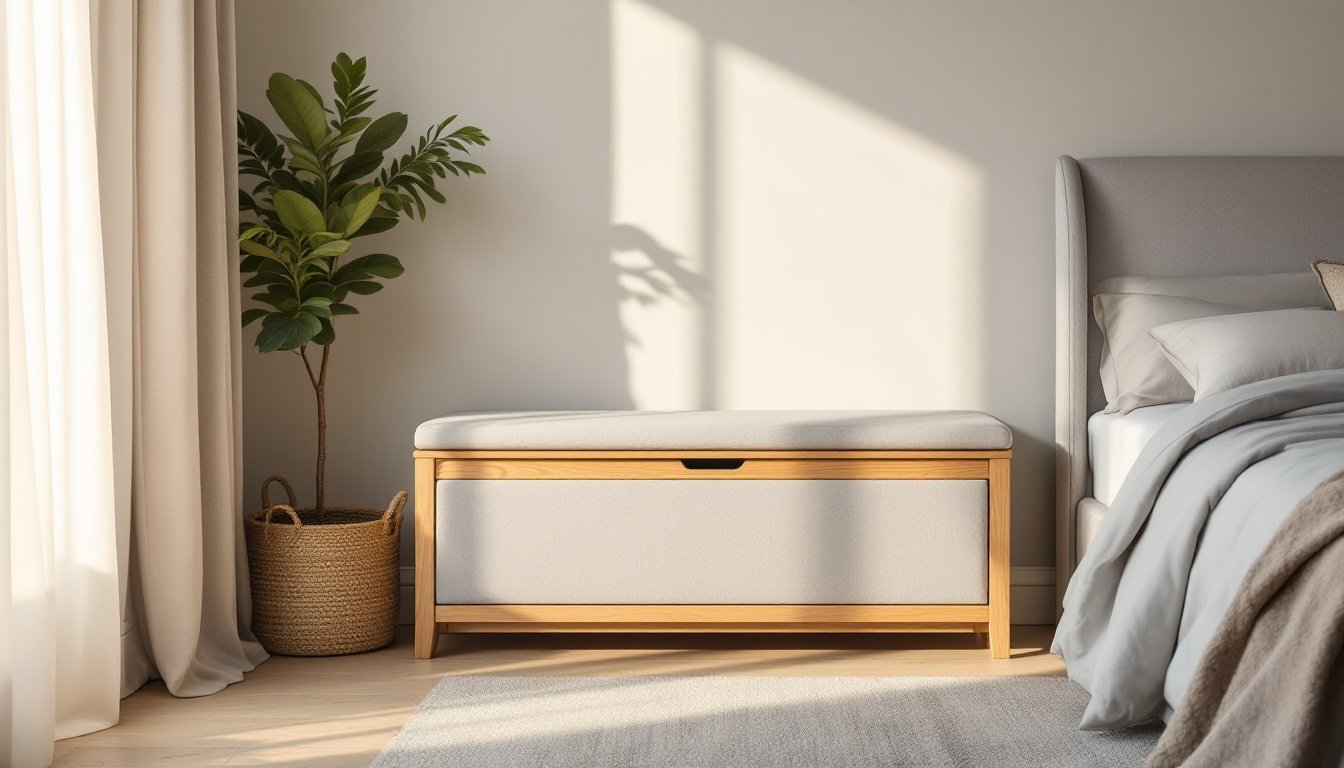
An end-of-bed storage bench solves two problems at once: it fills empty space with purpose and adds practical storage without requiring a separate furniture piece. Whether you’re working with a cramped master bedroom or a guest room that needs better organization, a storage bench delivers both function and style. It’s one of those projects where a small addition can transform how a room works, and it doesn’t demand advanced carpentry skills or a major renovation timeline. This guide walks you through what makes these pieces work, how to choose the right one for your space, and how to get the most out of the storage they provide.
Table of Contents
ToggleKey Takeaways
- An end-of-bed storage bench solves dual purposes by providing both hidden storage and functional seating while filling unused footboard space with style and organization.
- Proper dimensions matter: aim for a storage bench height of 16 to 18 inches to maintain comfortable clearance and proportion with standard bed heights of 24 to 26 inches.
- Choose between lift-top hinged access for large items or drawer-style access for smaller items, and prioritize ventilation with air gaps or drilled holes to prevent musty odors in textiles.
- Solid wood construction with weight capacity of 150 to 250 pounds ensures durability, while pocket hole joinery and polyurethane finishes provide strength and longevity for regular use.
- Maximize storage bench functionality by assigning a single category (seasonal bedding, guest linens), using labeled clear bins and vacuum bags, and keeping the bench top intentionally minimal to avoid clutter.
What Makes a Storage Bench the Perfect Bedroom Addition
A storage bench at the foot of the bed serves a practical dual purpose: it’s seating when you need to tie your shoes or fold laundry, and it’s hidden storage for seasonal bedding, extra pillows, or items you don’t reach often. The footboard area is typically unused real estate, so adding a bench makes sense architecturally and functionally.
Beyond storage, a bench anchors the visual weight of the bed and breaks up the monotony of a bare wall. It creates a defined zone at the foot of the bed rather than leaving that space to feel incomplete. Many bedrooms lose this opportunity because homeowners assume it’s just dead space, but that’s where a thoughtful storage solution changes everything.
The height of an end-of-bed bench matters. Standard bed heights range from 24 to 26 inches (from floor to top of mattress), so a bench sitting 16 to 18 inches tall leaves comfortable clearance while still being proportional to the bed. You want to be able to walk past it or sit on it without feeling cramped. If your bed is particularly low or high, adjust expectations accordingly, measure from your mattress top before deciding on dimensions.
Key Features to Look For When Selecting Your Storage Bench
When choosing or building a storage bench, several practical features separate a useful piece from one that’ll frustrate you in six months.
Access and hinge style matter more than you’d think. A lift-top bench (hinged lid) is the most common approach and works well for larger storage areas, think extra quilts or spare pillows. Drawers underneath offer easier access to smaller items without having to lift the entire lid, though they require more complex joinery. Some benches combine both: a hinged seat with drawers below. Decide what you’ll actually store and whether you prefer pulling out a drawer or lifting a lid.
Ventilation prevents musty odors if you’re storing textiles long-term. At minimum, leave a small air gap in the design or drill a few 1/4-inch holes in the back panel. If you’re storing seasonal items for months at a time, this keeps mildew risk low.
Weight capacity is a real specification. A solid wood bench should support 150 to 250 pounds without issues, depending on construction and support legs. If you’re planning to sit on it regularly, verify the design can handle that use case. Look at the frame structure, thicker stock and more support points mean better longevity.
Material, Style, and Durability Considerations
Solid wood (pine, oak, or poplar for budget builds) is durable and straightforward to work with if you’re building from scratch. Nominal lumber sizes, like a 2×12 board (actual dimensions 1.5 x 11.25 inches), are standard and affordable. Plywood or MDF cores with solid wood edges offer good value and stability, especially if you’re finishing with paint or stain.
Stain grade or paint grade depends on your budget and skill level. Paint hides minor mistakes and wood grain variation, making it forgiving for first-time builders. Stain requires cleaner joinery and knot-free wood, which costs more upfront. Prefinished veneers are another option, they look refined without the finishing work.
Durability comes down to joint quality and finish. Pocket hole joinery (using a Kreg jig) is fast and strong for face frame assembly. Mortise-and-tenon joints are more traditional but demand more skill. For the finish itself, polyurethane or conversion varnish holds up better to daily wear than wax alone. Two coats minimum: three if it’ll see heavy use.
Popular Storage Bench Styles for Every Bedroom Design
Contemporary minimalist benches feature clean lines, tapered legs, and neutral finishes, think soft gray or warm white. These work especially well in modern or Scandinavian-style bedrooms. The frame is usually simple 1x stock with a plywood or solid wood top. This style is forgiving to build and doesn’t require ornamental details.
Traditional or farmhouse benches often have a paneled face, turned legs, or a more substantial footprint. These designs hide storage visually while creating a cohesive look with matching bedroom furniture. The construction is more involved, raised panels and edge details add time, but the payoff is furniture that feels intentional.
Upholstered benches combine a wooden frame with cushioned seating. The storage compartment lives underneath or within the structure. Upholstery adds comfort and sound absorption but requires either sewing skills or paying for professional finishing. Fabric choice (performance fabrics for high traffic, linen for bedrooms) affects both durability and cost.
Built-in or low-profile benches sit flush with the wall or bed, sometimes even under a window. These maximize visual openness in smaller rooms. They’re typically harder to move or adjust later, so commit to the placement and finish before starting.
Free woodworking plans exist online for most of these styles. Resources like simple end of bed storage bench plans offer step-by-step designs with material lists and cutting dimensions, making it easier to scale a project to your exact bed size. If you’re building, verify measurements twice, a bench that doesn’t fit the space is wasted effort.
Practical Organization Tips for Maximizing Storage Space
Once your bench is in place, organization prevents it from becoming a catch-all for clutter. Assign a category to the bench from day one, seasonal bedding, guest linens, off-season clothing, and stick to it.
Use storage bins or vacuum bags for textiles. Clear plastic bins let you see contents without opening, saving time and keeping dust out. Vacuum bags compress bulky items like comforters, cutting storage volume in half. Label bins with a permanent marker or printed labels: you’ll thank yourself when digging for that spare set of sheets in winter.
Dividers or shelf inserts keep items from shifting around inside a larger cavity. Even a simple piece of 1×6 stock placed horizontally creates two zones for separate items. This prevents the bench from becoming a jumbled mess over time.
Rotate seasonal items quarterly. Spring bedding, winter blankets, guest towels, rotate them so you’re not cramming everything at once. This also prevents the “forgot what was in there” problem and keeps the bench balanced if you’re storing on one side heavily.
Keep the bench top clear or assign it minimal, intentional items. A single decorative basket or throw pillow is fine: stacking five random objects makes the space feel cluttered. The whole point is visual simplicity paired with hidden storage, don’t undo that by making the lid a display shelf.
If you’re building the bench yourself, woodworking project plans and workshop guides provide design inspiration and construction tips. For those new to furniture building, beginner woodworking tutorials break down fundamental techniques like pocket hole assembly and finishing, making the learning curve manageable.
Conclusion
A storage bench transforms an empty corner at the foot of your bed from wasted space into functional, organized storage. It’s a practical addition that solves real bedroom problems, where to keep extra linens, bulky items, or seasonal decor, while adding visual interest to the room. Whether you buy a finished piece or build one from wood, prioritize sturdy construction, thoughtful access (lift-top or drawers), and a style that complements your bedroom. Keep it organized from day one, and it’ll serve you reliably for years.