
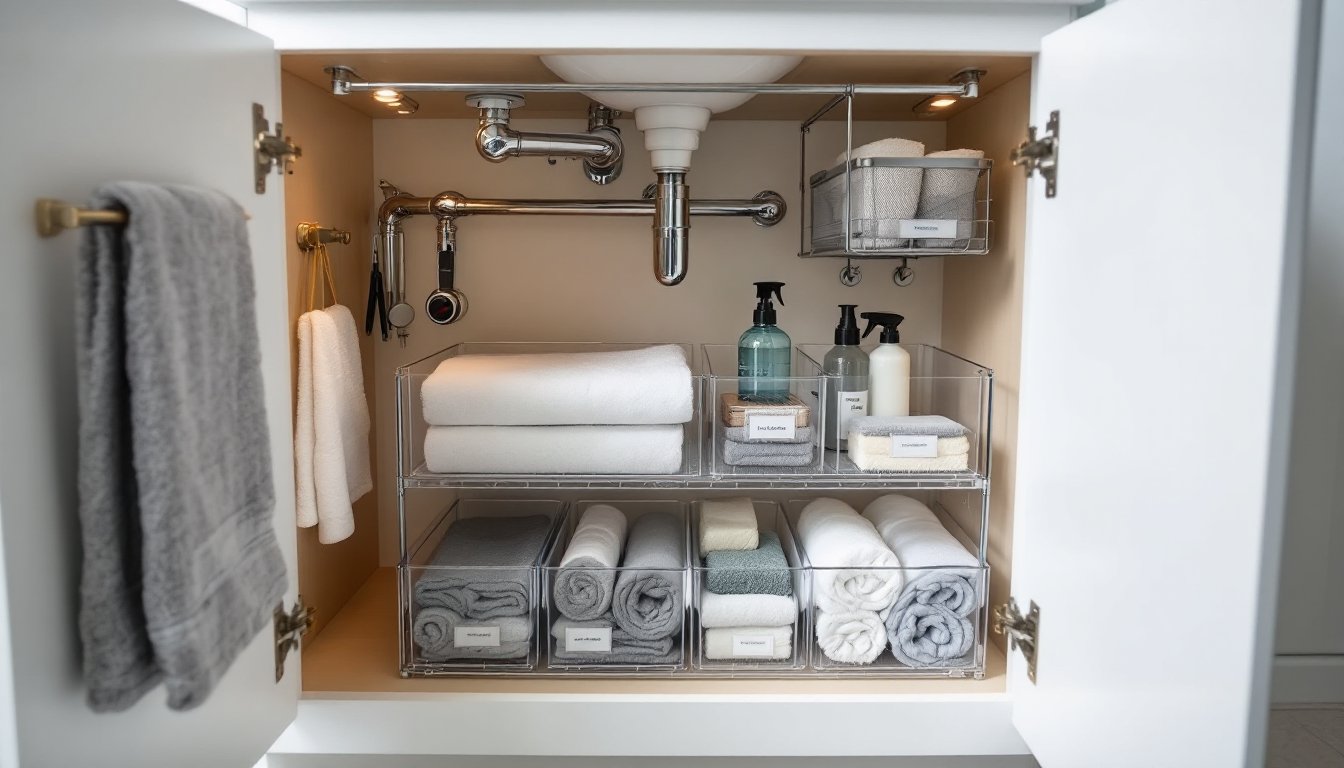
The space under a bathroom sink is prime real estate that often goes to waste. Pipes, a pedestal or vanity frame, and a tangle of cleaning supplies can make the area feel unusable, but it doesn’t have to be. With a little planning and the right organizers, that cramped under-sink area can become a functional storage zone that keeps everything accessible and orderly. Whether you’re dealing with a tiny powder room or a sprawling master bath, there’s a storage solution tailored to your layout. Let’s walk through practical ideas that actually work.
Table of Contents
ToggleKey Takeaways
- Measure your under-sink cabinet’s width, depth, and height—accounting for pipes and clearance—before purchasing organizers to ensure solutions actually fit your space.
- Pull-out baskets, drawer organizers, and cabinet risers transform under bathroom sink storage by creating compartments and doubling usable space without permanent installation.
- Wall-mounted shelving, tension rods, and over-the-door organizers maximize vertical storage and keep frequently used items visible and accessible.
- Use plastic caddies, leak-proof containers, and magnetic strips to safely contain hazardous cleaning supplies while preventing spills and moisture damage.
- Declutter ruthlessly by removing half-empty bottles and duplicate items, then reserve the back and lower corners for occasional-use products while keeping everyday essentials at eye level.
Assess Your Current Under-Sink Setup
Before buying anything, spend five minutes taking stock of what you’ve got to work with. Measure the width, depth, and height of the cabinet interior, especially the clearance above the p-trap (the curved pipe under the drain). Most standard under-sink cabinets are about 21 inches wide by 20 inches deep, but yours might vary. Check for any protruding pipes, shut-off valves, or supply lines that limit usable space. These obstacles aren’t deal-breakers: they just mean you’ll need to work around them.
Open a drawer and list everything currently stored under the sink. Cleaning supplies, hair products, razors, medications, plunger, spare rolls, the list grows fast. Ask yourself what actually belongs there versus what’s just been shoved in by default. Wet environment + cleaning chemicals = potential hazard for kids and pets, so be intentional about what stays. Once you know your space and contents, you can pick the right organizer without wasting money on solutions that won’t fit.
Drawer Organizers and Pull-Out Baskets
Drawer organizers and pull-out baskets are the workhorses of under-sink storage. They slide right into the cabinet and instantly create compartments for small items. Look for tiered shelf risers or stackable organizers made from plastic or wire, they’re inexpensive and easy to rearrange. Pull-out sliding baskets (also called basket drawers) are especially handy because they let you reach items at the back without dismantling the whole setup.
When selecting baskets, measure the internal width and ensure they clear the p-trap by at least 2 inches. Mesh or open-weave baskets let you see contents at a glance and allow air circulation, which reduces moisture buildup. Solid-sided baskets offer more dust protection but hide what’s inside. For frequently used items like extra sponges or hand towels, a pull-out caddy mounted on the cabinet door keeps them visible and accessible. Look for models with waterproof liners or drainage holes, the under-sink environment isn’t bone-dry, and you don’t want standing water promoting mold. Organize by category: cleaning supplies in one basket, hair care in another, medicines in a labeled container.
Wall-Mounted Shelving and Cabinet Risers
If you’re willing to use a drill, wall-mounted shelving transforms wasted vertical space. Install a tension rod between the left and right cabinet walls about 6 inches above the existing shelf, it’s strong enough to hold rolled towels, washcloths, or spray bottles. No drilling required, and it costs under $15. For permanent storage, lightweight floating shelves (6 to 8 inches deep) anchored into wall studs give clean lines and real capacity. Install them above the plumbing, or on an adjacent wall if the under-sink space is too cramped.
Cabinet risers (also called shelf risers or pedestal organizers) are equally smart. These plastic or metal platforms raise the cabinet floor by 4 to 6 inches, creating shelf space underneath for flat items like cleaning cloths or product boxes. They’re non-permanent, adjustable, and cost $20 to $40 per pair. Pair a riser with a pull-out basket on top and you’ve essentially doubled your storage without any installation. Some risers come with built-in hooks or rails for hanging microfiber cloths or trash liners. Stagger risers at different heights to maximize the vertical zone and accommodate items of varying sizes.
Vertical Storage with Over-the-Door and Magnetic Solutions
Don’t overlook the cabinet door itself. Over-the-door organizers with pockets, hooks, or magnetic strips turn dead space into active storage. Most fit inside the cabinet (no visible clutter), and they’re removable. Use one to hold small bottles, cotton pads, nail supplies, or a portable hair dryer. Check weight limits, they typically hold 5 to 10 pounds, so stick to lightweight items. For heavier tools like a plunger, opt for a door-mounted hook caddy rated for 15+ pounds.
Magnetic strips mounted on the inside of the cabinet door are goldmines for storing metal items: tweezers, nail clippers, bobby pins, even small scissors. They take up zero floor space and keep sharp objects accessible but contained. If you don’t have a metal door, adhesive-backed magnetic strips work on cabinet sides or the inside of a shelf. Another vertical trick: use tension rods placed horizontally between cabinet walls to hang spray bottles, cloth rags on hooks, or even a small hanging organizer pouch. A single rod, positioned about 8 inches below the counter, frees up floor area and keeps bottles where you can see them.
Declutter and Contain Cleaning Supplies Safely
Under the sink is where hazardous materials live, so containment is both practical and crucial. Plastic caddies or trays (often called “under-sink organizers”) are designed specifically for this, they corral bottles, keep spills from splashing onto cabinet floors, and make cleanup fast. Look for trays with handles: the ability to slide the whole caddy out simplifies restocking and cleaning. Use leak-proof containers for anything prone to dripping: bleach, liquid drain cleaner, concentrated floor wax. Transfer loose powders (baking soda, borax) into airtight plastic jars labeled clearly and dated. This prevents spills and keeps moisture out.
Be ruthless about what you actually use. Half-empty bottles of discontinued cleaner? Gone. Three backup plungers? Keep one. That crusty old hairspray? Toss it. Decluttering cuts storage demand in half. Keep everyday essentials (sponges, gloves, paper towels) in a pull-out caddy at eye level. Reserve the back, lower corners for occasional use items. Check building codes in your jurisdiction, some areas require hazardous materials to be stored in locked cabinets if children are present. At minimum, keep the under-sink door closed and ensure all cleaning products are clearly labeled and in original containers when possible.
DIY Custom Solutions for Awkward Plumbing Layouts
Not all bathroom sinks are created equal. If your under-sink cabinet is a plumbing obstacle course, custom solutions beat off-the-shelf organizers. If the p-trap sits high and wastes usable floor space, build a simple wooden platform or shelf that bridges around the pipes. Use 3/4-inch pine or plywood, cut to fit snugly, and support it with 1×2 cleats fastened to the cabinet sides with galvanized screws. Sand and seal any raw wood with a bathroom-grade finish (polyurethane or paint) to resist moisture. Install adjustable shelf pins if you want to raise or lower a shelf later.
For tight side-to-side fits, a tall, narrow rolling cart (12 inches wide, 24 inches tall) can slide in and out like a drawer. Pair it with stackable plastic storage boxes labeled for different categories. If you have a pedestal sink with no cabinet, wall-mounted floating shelves or a slim cabinet organizer caddy placed beside the sink does the job. Angled shelves work around P-shaped traps. Whatever you build or install, make sure it doesn’t restrict access to shut-off valves or prevent you from clearing drain clogs. Test-fit everything before fastening it down. Refer to the home storage cabinets guide for larger cabinet solutions if your under-sink space will be part of a bigger bathroom storage overhaul. Design websites like Remodelista showcase custom bathroom builds that solve plumbing challenges creatively.
Conclusion
Under-sink storage doesn’t need to be messy or chaotic. Start by measuring your space, honestly assess what you keep, and choose organizers that fit both your layout and lifestyle. Whether you go with simple pull-out baskets, wall-mounted shelves, or a custom wooden platform, the key is using vertical space, containing hazards, and keeping frequently used items accessible. Most solutions are affordable, non-permanent, and reversible. Once your under-sink zone is organized, you’ll wonder why it took so long. Home improvement resources like The Spruce and Real Simple offer additional organizing ideas and product recommendations to keep you inspired as you continue refining your bathroom space.